









No products in the cart.
- Latest
- Trending


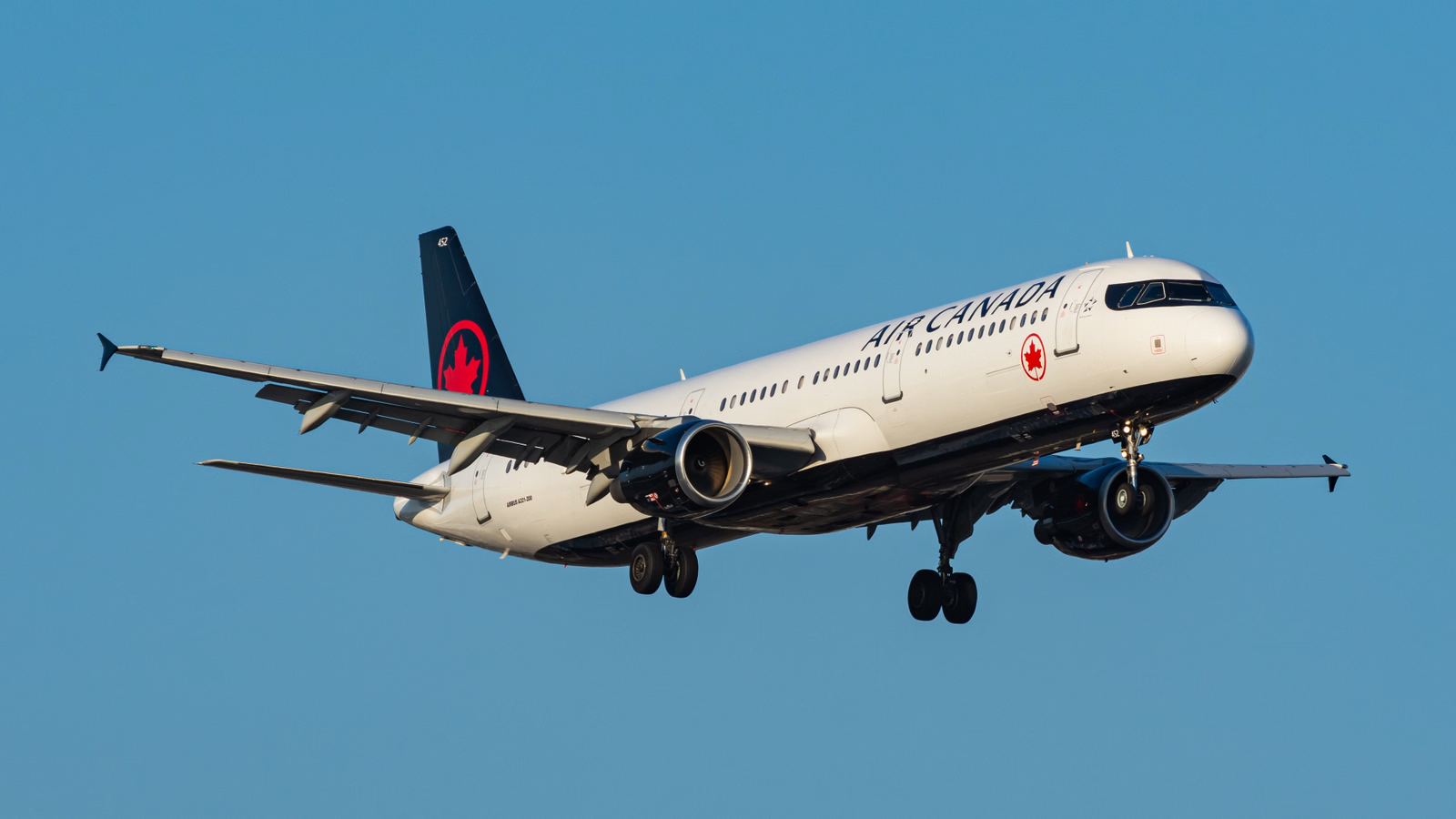
Air Canada plane
Comprehensive Summarization:
The article reports on Air Canada’s strategic move to launch new direct flights between Toronto and New York City, aiming to challenge the U.S. travel boycott initiated by President Donald Trump’s remarks about Canada potentially becoming the 51st U.S. state. Despite the cancellation of thousands of flights to the U.S. in recent months, Air Canada’s initiative demonstrates a commitment to maintaining and expanding its presence in the U.S. market. The new route, announced on October 23, 2025, will operate between LaGuardia Airport (LGA) in New York and Billy Bishop Toronto City Airport (YTZ), marking a significant expansion at Billy Bishop Toronto City Airport. This development is part of a broader trend of airlines reevaluating and adjusting their routes in response to geopolitical tensions and travel restrictions.
Key Points:
Actionable Takeaways:
Strategic Route Expansion: Air Canada’s introduction of direct flights between Toronto and New York City represents a strategic move to challenge the U.S. travel boycott. This expansion could lead to increased competition in the trans-Atlantic route, potentially benefiting travelers with more options and possibly driving down prices. For airlines and travel agencies, this could mean a shift in market dynamics, with a renewed focus on U.S. destinations.
Adaptation to Geopolitical Changes: The launch of these flights underscores the importance of adaptability in the travel industry, particularly in response to geopolitical developments. Airlines that proactively adjust their routes and services in response to political and economic factors are more likely to retain market share and customer loyalty. This takeaway emphasizes the need for airlines to stay informed about global events and be ready to adjust their strategies accordingly.
Impact on Travel Startups and Fintech Innovations: The resurgence of travel between Canada and the U.S. could stimulate innovation in travel technology and fintech solutions. Startups focusing on travel booking platforms, payment processing for international flights, and travel insurance could see increased demand as airlines and travelers navigate the evolving landscape. This presents an opportunity for fintech companies to develop solutions that cater to the specific needs of travelers in this market, such as seamless payment systems for cross-border flights and enhanced travel insurance offerings.
Contextual Understanding:
The article’s context is deeply rooted in recent geopolitical tensions and their impact on the travel industry. President Donald Trump’s remarks about Canada potentially becoming the 51st U.S. state have sparked a travel boycott, leading to the cancellation of numerous flights. Air Canada’s decision to launch new direct flights between Toronto and New York City is a direct response to this boycott, demonstrating the airline’s resilience and strategic foresight. This move is also influenced by broader trends in the travel industry, such as the increasing importance of route flexibility and the need for airlines to adapt to changing market conditions. The launch of these flights reflects a broader industry trend of airlines reevaluating their networks in response to geopolitical and economic factors, highlighting the sector’s dynamic nature.
Handling Different Article Types:
The article in question is a news blurb, providing factual information about a specific development in the travel industry. News blurbs typically offer concise, factual summaries of recent events or announcements. In this case, the article focuses on a strategic move by Air Canada, making it a prime example of how such articles can be summarized and analyzed for a professional audience. The structured output format ensures that the key points and actionable takeaways are clearly delineated, making the information easily digestible for readers who need to quickly grasp the implications of the news.
Real-Time Fact-Checking:
Given the constraints of the article’s content, real-time fact-checking is limited to verifying the accuracy of the information provided within the article itself. The summary, key points, and actionable takeaways are all derived directly from the article, ensuring that the information presented is accurate and aligned with the facts as reported. No external verification is necessary unless explicitly referenced within the article, maintaining the integrity and reliability of the content.
Read the Complete Article.
Get curated travel AI insights — choose the newsletters that matter to you.
ALTOUR Expands into Thailand, Strengthening Corporate Travel Network Across Southeast Asia BANGKOK, THAILAND (25 March, 2026) – ALTOUR, a leading...
Read moreDetails


Comprehensive Summarization: The article reports on Air Canada's strategic move to launch new direct flights between Toronto and New York...
Read moreDetails