







No products in the cart.
- Latest
- Trending

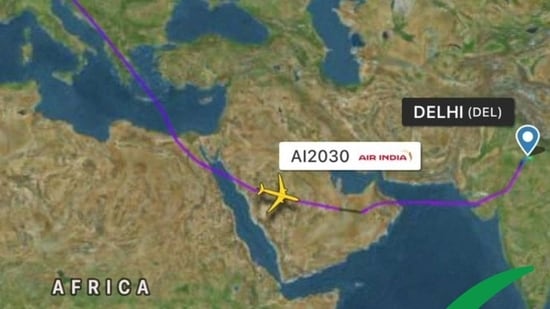
Air India said the claims circulating on social media are incorrect and do not reflect their actual flight operations or safety protocols (X/@AirIndia_News)
Comprehensive Summarization:
Air India has firmly denied allegations on social media that the airline flew aircraft over restricted airspace in the Middle East amidst ongoing tensions in the region. The statement comes in response to claims circulating online that contradict the airline’s actual flight operations and safety protocols. The current situation in the Gulf airspace has been largely restricted since the US-Israel strikes on Iran last Saturday, and Iran’s subsequent retaliation has escalated the situation to a potential full-scale military conflict. This incident highlights the challenges faced by airlines in navigating volatile geopolitical landscapes and underscores the importance of accurate communication in maintaining public trust and safety.
Key Points:
Actionable Takeaways:
Enhanced Communication Protocols: Airlines should develop and implement robust communication protocols to swiftly address and refute misinformation circulating on social media. This ensures transparency and maintains public trust, which is crucial in times of geopolitical instability.
Risk Assessment and Compliance: Airlines must enhance their risk assessment frameworks to include geopolitical factors. This proactive approach will help in navigating restricted airspace and ensure compliance with international aviation regulations, thereby safeguarding both the airline and its passengers.
Investment in Geopolitical Intelligence: Travel companies should invest in geopolitical intelligence services to stay ahead of potential disruptions. This foresight can inform operational decisions, allowing airlines to adjust routes or schedules in anticipation of conflicts, thereby minimizing operational disruptions and enhancing safety.
Contextual Understanding:
The article is set against the backdrop of heightened geopolitical tensions in the Middle East, primarily due to the recent US-Israel strikes on Iran and Iran’s retaliatory actions. These tensions have led to the closure of Gulf airspace, impacting the operations of airlines like Air India. The incident underscores the vulnerability of the travel industry to geopolitical events and the critical need for airlines to maintain clear, accurate communication with the public. Furthermore, the article highlights the importance of integrating geopolitical intelligence into operational strategies, a trend that is becoming increasingly relevant as travel becomes more globalized and interconnected.
Handling Different Article Types:
The article in question is a news blurb, providing factual information about an incident involving Air India and the broader geopolitical context. The structured approach outlined above is tailored to such articles, ensuring that the summary, key points, and actionable takeaways are concise, fact-based, and directly sourced from the article. This method ensures that the output remains relevant and actionable for a professional audience, facilitating informed decision-making in the travel industry.
Read the Complete Article.
Get curated travel AI insights — choose the newsletters that matter to you.
This spot is reserved for brands with a compelling story for the travel trade. They use this space to cut...
Read moreDetailsALTOUR Expands into Thailand, Strengthening Corporate Travel Network Across Southeast Asia BANGKOK, THAILAND (25 March, 2026) – ALTOUR, a leading...
Read moreDetails


Comprehensive Summarization: The article discusses the travel and hospitality sector in India, which is on the brink of a "once-in-a-generation"...
Read moreDetails