





















Travel Capitalist Ventures Expands Check Size to $10 Million to Deepen Emerging Market Conviction
Boutique Travel VC raises investment cap from $1.5M to $10M to lead rounds and support portfolio companies through growth Travel...
Read moreDetails

The Indian conglomerate, the Tata Group, acquired Air India on January 27, 2022. The challenge to right all the wrongs of Air India’s past was immense, and much of it is still work in progress. But several key developments have taken place in the last two years that signal a bright future. Let’s look back at how Air India has fared since 2022.
Two of the most important departments that the Tatas focused on were fleet and network development and customer service. In February, the massive 470 aircraft order with Airbus and Boeing kicked off a fleet expansion spree, with Air India acquiring several other planes on short-term leases, including many Boeing 777s.
Photo: Sundry Photography | Shutterstock
Naturally, this is reflected in its network, which saw an addition of 11 international and five domestic routes. During this time, the airline also increased its partnerships with other carriers, which now stand at 108 interline and 14 codeshare agreements.
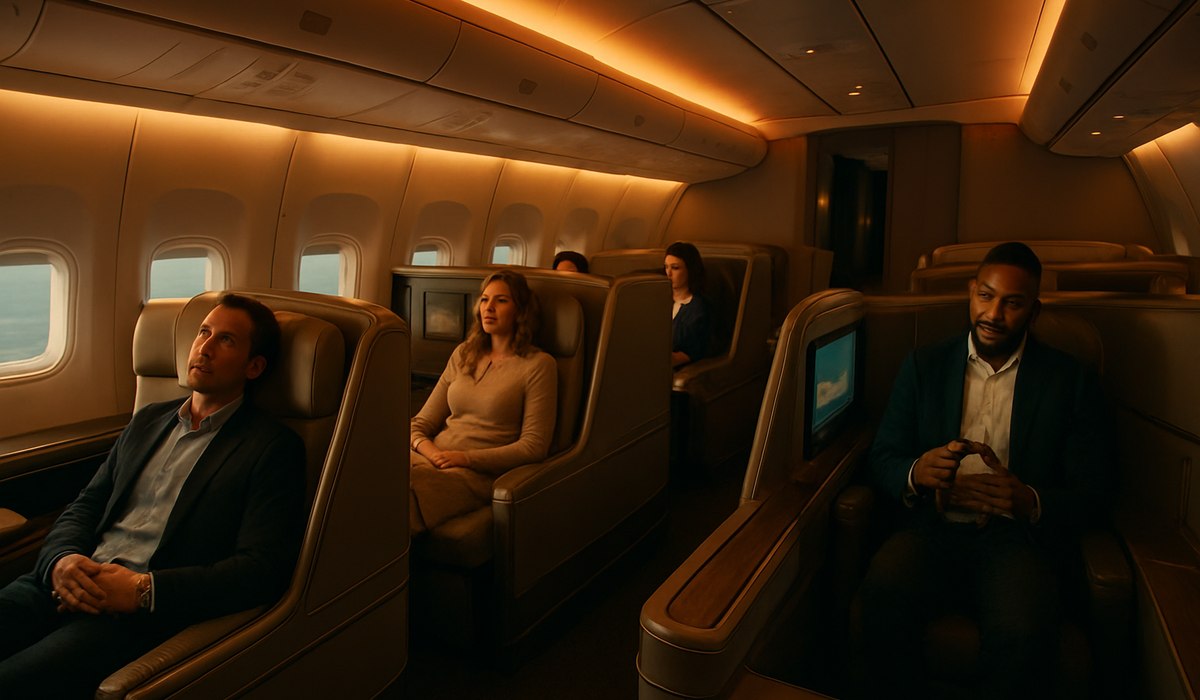
Air India has set aside a budget of $400 million to refurbish its widebody fleet and improve its onboard offerings. It introduced premium economy seats on some routes, and some of its newly acquired Boeing 777s feature improved cabins and in-flight entertainment systems. Its first Airbus A350 aircraft with new interiors has entered commercial service, and the carrier will continue refurbishing its planes gradually in the coming months.

Photo: Eurospot
It also rolled out new menus and specially trained Service Assurance Officers at 16 major Indian airports for an enhanced guest experience.
In the last two years, key developments have taken place within Air India’s organizational structure. It moved to a new head office campus in Gurugram and also shifted its offices across several locations in India.
A significant change, of course, was Campbell Wilson becoming the carrier’s new CEO, who has been steadily steering the airline in the right direction. Air India also welcomed 9,000 new employees, including 1,000 cockpit and 5,000 cabin crew, to support its massive growth plans.

Photo: Rahul Sapra | Shutterstock
The airline changed its livery and crew uniform as part of its massive rebranding exercise, and its IT infrastructure also saw a significant change when it moved entirely to cloud, becoming one of the first global airlines to do so.

Air India has partnered with a local couture designer for its new flight attendant and pilot uniforms.
If one breaks down Air India’s progress in numbers in the last two years, it looks like the following:
Number of passengers carried: 40 million (33% YoY growth)
Average load factor: 85% (5% YoY growth)
Cargo carried: 392,000 tons (21% YoY growth)
Revenue growth: 249% over two years
Employee strength: 18,400
Number of operational aircraft: 117 (including the reintroduction of 90% of the grounded fleet)
Number of destinations: 84 (45 domestic, 39 international)

Photo: Eliyahu Yosef Parypa | Shutterstock
Of course, there’s still a lot to be desired, and Air India’s new owners are aware of the massive challenge. But the new management has given itself a total of five years to roll out all the major changes and turn Air India into a credible airline.
The airline will add five more A350s this year and four more leased Boeing 777s. It will also inaugurate South Asia’s largest training academy in collaboration with Airbus and upgrade 40 of its Boeing 787 and 777 fleet with new interiors. Cambell Wilson has commented,
“Though we still have a long way to upgrade the legacy fleet, improve our consistency, close remaining gaps and strengthen fragile processes, the future is now more visible, more tangible, and, I hope, more inspiring.”

Boutique Travel VC raises investment cap from $1.5M to $10M to lead rounds and support portfolio companies through growth Travel...
Read moreDetails




