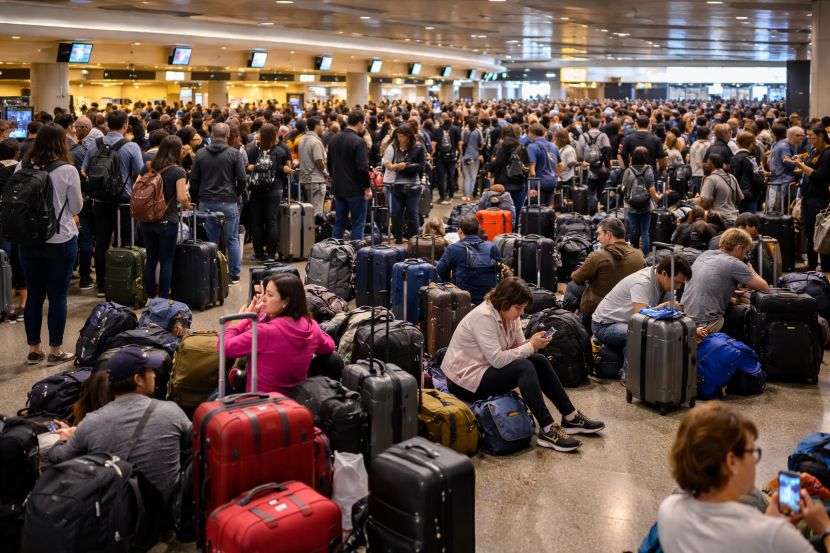
The article reports on operational disruptions at Harry Reid International Airport in Las Vegas, where 82 flight delays and 11 cancellations have occurred. These disruptions have affected airlines including Delta, American Airlines, and Southwest, impacting travelers from major US cities such as Los Angeles, Chicago, and New York. The situation has created significant operational challenges for the airport and inconvenienced a large number of travelers, highlighting ongoing issues in airport operations and the broader travel industry.
Key Points:
Harry Reid International Airport experienced 82 flight delays and 11 cancellations.
Travelers from Los Angeles, Chicago, New York, and other major US cities were affected.
The disruptions have created operational issues and inconvenienced the traveling community.
Actionable Takeaways:
Enhanced Communication Strategies: Airlines and airports should improve communication with travelers during operational disruptions. Clear and timely updates can help manage passenger expectations and reduce frustration. This is particularly relevant in the current travel climate where transparency is increasingly valued by consumers.
Investment in Technology for Real-Time Tracking: The article underscores the need for advanced technology solutions to manage and communicate delays and cancellations effectively. Investing in real-time tracking systems and mobile apps can enhance passenger experience by providing accurate, up-to-date information, thereby improving operational efficiency and customer satisfaction.
Contextual Insights:
The disruptions at Harry Reid International Airport reflect broader challenges within the travel industry, particularly in managing large-scale operational issues that can affect thousands of travelers simultaneously. This situation is indicative of the need for the industry to adopt more robust and agile operational strategies. Recent trends indicate a growing emphasis on technology-driven solutions to enhance operational efficiency and passenger experience. Innovations in travel tech, such as AI-driven predictive analytics for flight scheduling and automated communication systems, are becoming increasingly important. These technologies not only help in mitigating the impact of disruptions but also in preventing them by optimizing flight operations and resource allocation. Furthermore, the incident highlights the importance of collaboration between airlines, airports, and regulatory bodies to ensure a coordinated response to operational challenges, thereby setting a precedent for future crisis management in the travel sector.
Comprehensive Summarization: The article reports on significant travel disruptions at Keflavik International Airport in Iceland, where 27 flights were delayed...