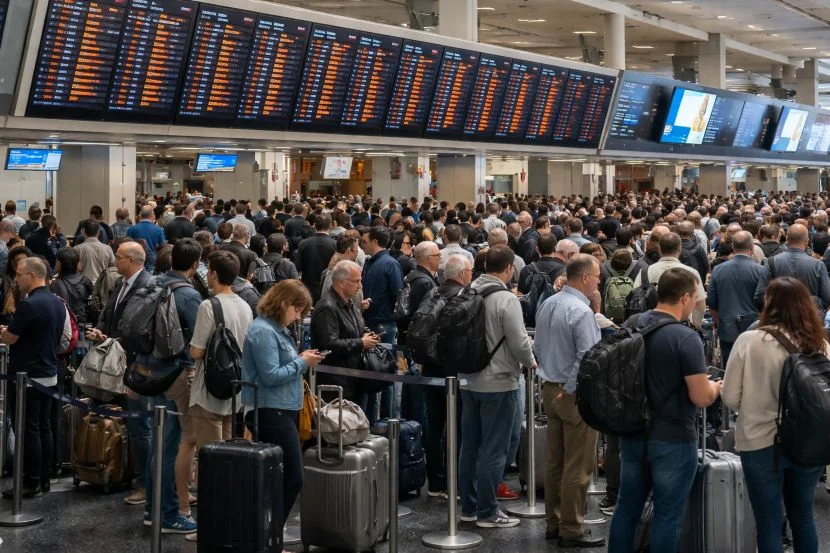
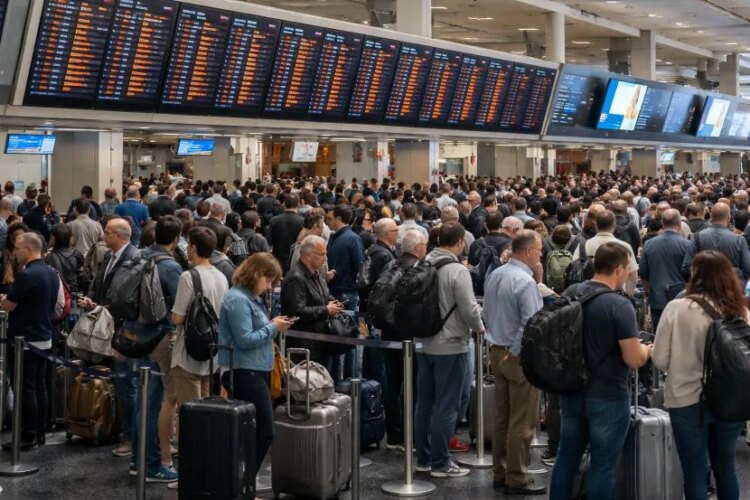
The article reports on significant travel disruptions at Chicago O’Hare International Airport (ORD) starting March 16, 2026, due to a high number of flight cancellations and delays. A total of 750 flights were affected, impacting major U.S. cities including New York, Los Angeles, and London. The disruptions involved airlines such as United, American Airlines, and SkyWest. The article highlights the operational challenges faced by the airport, emphasizing the impact on travelers and the broader travel industry.
Key Points:
Flight Disruptions: ORD experienced 504 cancellations and 750 delays on March 16, 2026, affecting major U.S. cities.
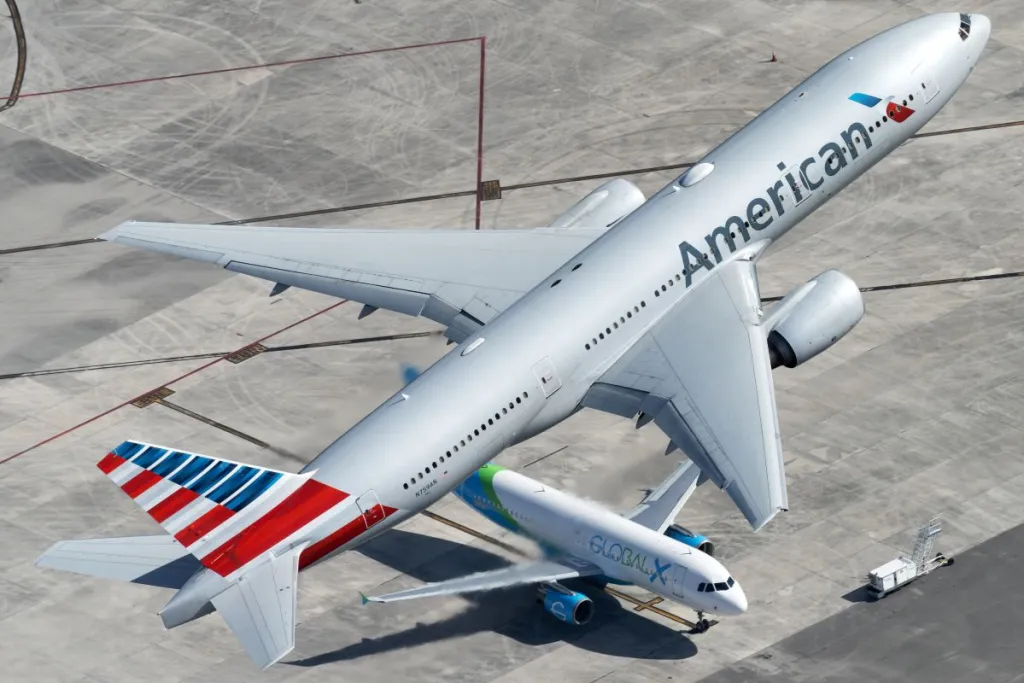
Affected Airlines: The disruptions involved United, American Airlines, and SkyWest, among others.
Geographic Impact: The delays and cancellations impacted travelers in New York, Los Angeles, London, and other major U.S. cities.
Operational Challenges: The article underscores the operational challenges faced by Chicago O’Hare International Airport due to severe flight disruptions.
Actionable Takeaways:
Enhanced Airport Operations: The disruptions highlight the need for airlines and airports to invest in more robust operational systems to minimize flight cancellations and delays. This could involve advanced predictive analytics and real-time communication with travelers to manage expectations and reduce the impact on travel plans.
Focus on Passenger Communication: Effective communication strategies are crucial during disruptions. Airlines should prioritize clear, timely updates to passengers regarding flight status changes, alternative travel options, and support services to mitigate the inconvenience caused by delays and cancellations.
Investment in Technology: The article underscores the importance of leveraging technology in travel operations. Investing in advanced airport management systems, real-time tracking of flight statuses, and integrated passenger services can help airlines and airports better manage disruptions and improve overall customer satisfaction.
Contextual Insights:
The disruptions at Chicago O’Hare International Airport are indicative of broader challenges faced by the global travel industry, particularly in managing operational complexities and ensuring seamless passenger experiences. Recent trends indicate a growing emphasis on technological integration within the travel sector, with airlines and airports increasingly adopting AI and data analytics to enhance operational efficiency and passenger service. This incident serves as a reminder of the critical role technology plays in mitigating the impact of unforeseen operational challenges. Furthermore, the article aligns with current industry trends focusing on resilience and adaptability in travel logistics, suggesting that proactive measures in technology and communication will be key to navigating future disruptions effectively.