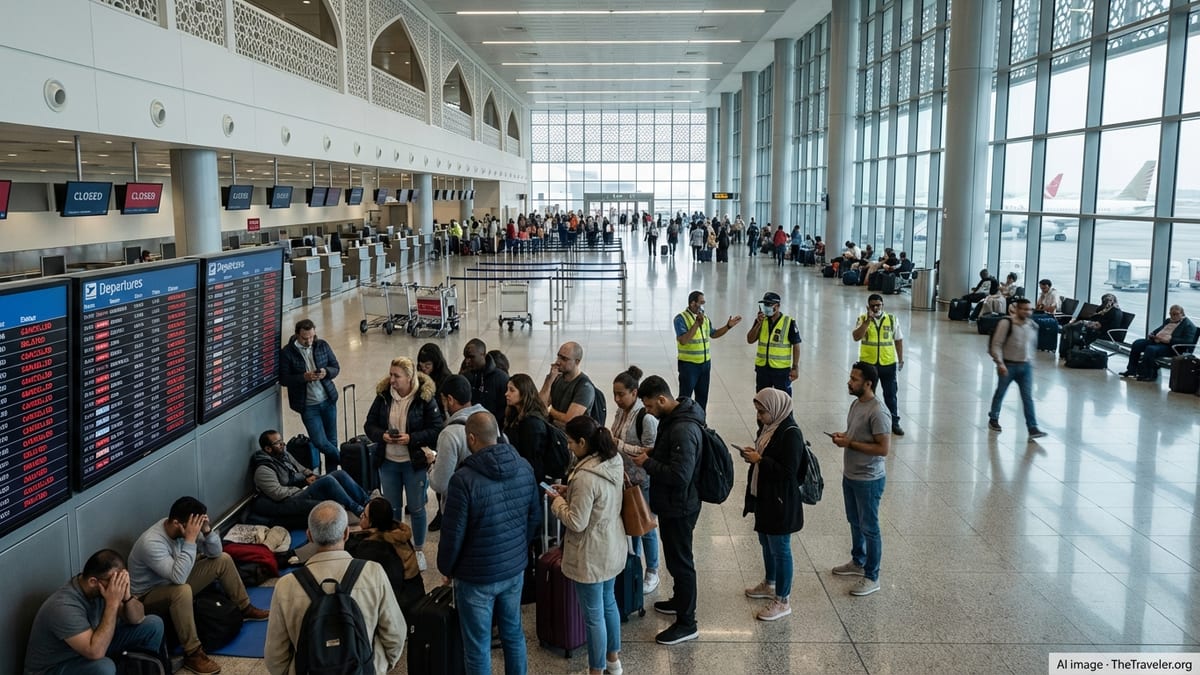
Westchester County Airport (HPN) is experiencing significant disruptions with 15 flights delayed and 14 canceled on February 2, 2026. This disruption affects major US cities including New York, San Francisco, Chicago, and Los Angeles, impacting United, American Airlines, and Delta flights. HPN serves as a crucial gateway for New York’s metro commuters, highlighting the airport’s importance in the region’s travel infrastructure. The article underscores the challenges faced by commuters and the broader implications for travel logistics in the area.
Key Points:
Westchester County Airport (HPN) is facing operational challenges with 15 flight delays and 14 cancellations on February 2, 2026.
The disruptions affect major airlines including United, American Airlines, and Delta, impacting travel to and from New York, San Francisco, Chicago, and Los Angeles.
HPN is a key gateway for New York’s metro commuters, emphasizing its critical role in regional travel logistics.
The article highlights the impact of airport disruptions on commuters and the broader travel industry.
Actionable Takeaways:
Enhanced Communication Strategies: Airlines and airports should improve communication with travelers during disruptions. Clear, timely updates via mobile apps, email, and social media can help manage passenger expectations and reduce anxiety. This is crucial for maintaining customer satisfaction and loyalty, especially for frequent travelers and commuters relying on HPN.
Investment in Resilient Infrastructure: The article underscores the need for airports to invest in resilient infrastructure and contingency planning. Given the high volume of commuter traffic through HPN, implementing flexible scheduling, backup crew arrangements, and enhanced ground transportation options can mitigate the impact of future disruptions. This proactive approach can enhance operational efficiency and customer experience.
Leveraging Technology for Real-Time Updates: The integration of advanced technology solutions, such as AI-driven predictive analytics and real-time tracking systems, can help airlines and airports anticipate and respond to disruptions more effectively. By leveraging these technologies, stakeholders can provide passengers with accurate, up-to-date information, thereby improving transparency and trust.
Contextual Insights:
The disruptions at Westchester County Airport reflect broader challenges faced by the travel industry, particularly in managing the complexities of commuter travel. Recent trends indicate a growing emphasis on resilience and adaptability in airport operations, driven by increasing passenger volumes and the need for seamless connectivity. Thought leaders in the travel sector emphasize the importance of leveraging technology to enhance operational efficiency and improve passenger experience during disruptions. The case of HPN serves as a case study for the industry, highlighting the critical need for robust communication strategies, resilient infrastructure, and innovative technological solutions to navigate the challenges of modern air travel. As the travel industry continues to evolve, these insights will be instrumental in shaping future strategies aimed at enhancing reliability and customer satisfaction.
Comprehensive Summarization: The article highlights the growing tourism slowdown affecting several countries, including the United States, Greece, Turkey, Sri Lanka,...