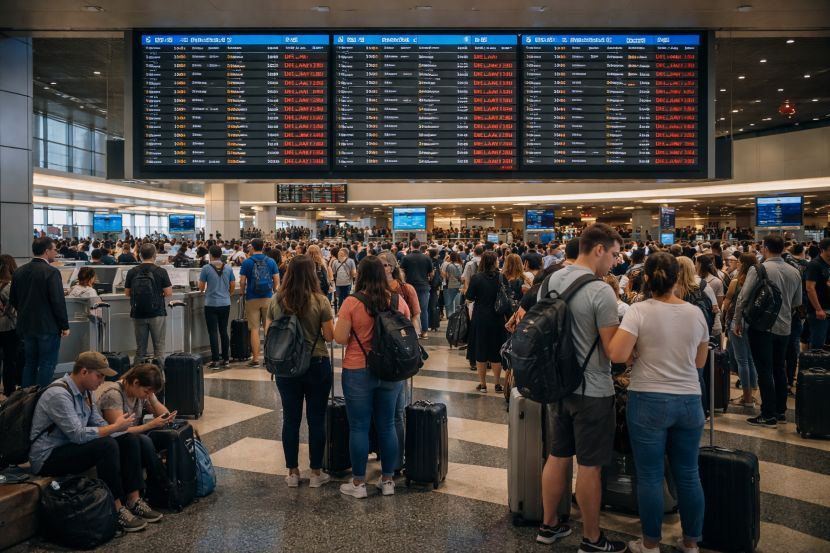
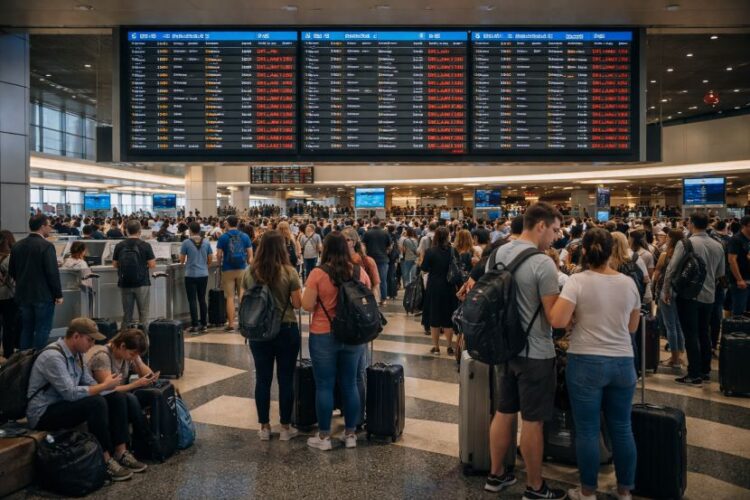
The article reports significant disruptions at Los Angeles International Airport (LAX) on February 28, 2026, with 126 delayed flights and 1 cancellation affecting both domestic and international travelers. This disruption impacts major US cities like New York and Chicago, as well as other destinations. The delays and cancellations have isolated many travelers at the airport, highlighting ongoing challenges in the travel industry regarding flight scheduling and operational efficiency.
Key Points:
LAX experienced 126 flight delays and 1 cancellation on February 28, 2026, affecting both domestic and international travelers.
The disruptions impacted major US cities including New York and Chicago, as well as other destinations.
The article emphasizes the challenges faced by the travel industry in managing flight schedules and operational efficiency, leading to significant disruptions at LAX.
Actionable Takeaways:
Enhanced Flight Scheduling Systems: Implement advanced flight scheduling and real-time tracking systems to minimize delays and cancellations. This can improve operational efficiency and enhance the traveler experience by providing accurate and timely updates.
Improved Communication Protocols: Develop and enhance communication protocols for notifying travelers of delays and cancellations promptly. Clear and timely communication can help manage traveler expectations and reduce the impact of disruptions on their travel plans.
Investment in Airport Infrastructure: Allocate resources to improve airport infrastructure and operational capabilities, particularly at high-traffic hubs like LAX. Upgrades in technology, staffing, and logistics can help mitigate future disruptions and enhance overall airport performance.
Contextual Insights:
The disruptions at LAX underscore the ongoing challenges faced by the travel industry in managing large volumes of flights and ensuring seamless operations. Recent trends indicate a growing reliance on technology to enhance flight scheduling and passenger communication. Innovations in travel tech, such as AI-driven predictive analytics and automated communication systems, are becoming increasingly vital for airlines and airports to adapt to fluctuating demand and operational complexities. Furthermore, the article highlights the importance of robust infrastructure and operational readiness, reflecting the need for continuous investment in airport facilities and staff training. These insights are crucial for travel industry stakeholders aiming to enhance resilience and customer satisfaction in the face of unforeseen disruptions.