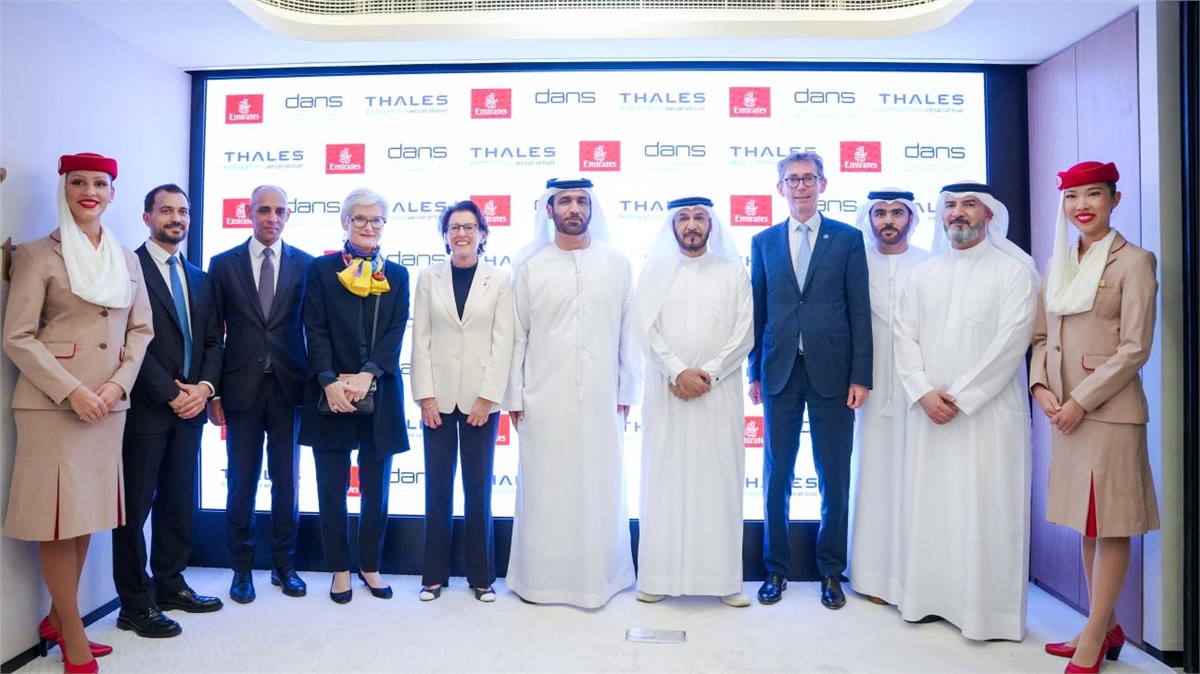
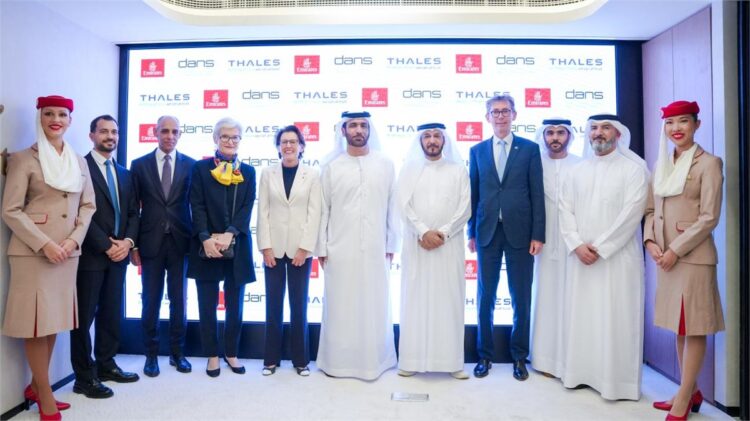
Article Summary: Dubai Air Navigation Services (DANS), Emirates Airline, and Thales have signed a Collaborative Research Agreement (CRA) to pioneer research aimed at reducing holding patterns for flights arriving at Dubai International Airport. This initiative is part of a broader effort to enhance UAE airspace management, aligning with the UAE’s Net Zero by 2050 target. The collaboration underscores the commitment to safer and more efficient air travel, reflecting the latest advancements in travel technology and airspace management.
Key Points:
DANS, Emirates Airline, and Thales have formed a Collaborative Research Agreement (CRA) to focus on reducing holding patterns for incoming flights at Dubai International Airport.
The research aims to improve efficiency in UAE airspace management, contributing to the UAE’s goal of achieving Net Zero emissions by 2050.
Holding patterns are a standard procedure for sequencing arriving flights, providing a safe and orderly system to manage air traffic flow.
The initiative represents a significant step forward in travel technology, leveraging innovative solutions to address air traffic management challenges.
Actionable Takeaways:
Investment in Air Traffic Management Technologies: Airlines and aviation service providers should consider investing in advanced air traffic management technologies, such as those developed by Thales, to enhance operational efficiency and contribute to sustainability goals. This aligns with broader industry trends towards digital transformation and sustainability in travel.
Collaborative Research for Sustainable Air Travel: The CRA between DANS, Emirates Airline, and Thales highlights the importance of collaborative research in driving innovation within the travel industry. Companies should explore partnerships with technology providers and research institutions to develop solutions that meet regulatory and environmental targets, such as the UAE’s Net Zero by 2050 objective.
Focus on Reducing Holding Patterns: Airlines and airports should prioritize research and development efforts aimed at reducing holding patterns, as this can lead to significant improvements in air traffic flow and operational efficiency. This focus is crucial for meeting the growing demand for air travel while adhering to environmental regulations and sustainability targets.
Contextual Insights:
The collaboration between DANS, Emirates Airline, and Thales is a testament to the ongoing efforts within the travel industry to adopt cutting-edge technologies for more efficient and sustainable operations. The focus on reducing holding patterns is particularly relevant in the context of increasing air traffic and the need for more efficient airspace management. This initiative aligns with broader industry trends towards digital transformation, sustainability, and the adoption of innovative technologies to meet regulatory and environmental goals.
As the travel industry continues to evolve, the emphasis on research and development in air traffic management technologies will likely grow. Companies that invest in these areas are likely to gain a competitive edge by improving operational efficiency, reducing environmental impact, and enhancing the overall travel experience. Furthermore, the collaboration reflects a growing trend among industry stakeholders to work together on research initiatives that address common challenges, such as sustainability and air traffic management, thereby fostering a more interconnected and forward-thinking industry.