







No products in the cart.
- Latest
- Trending

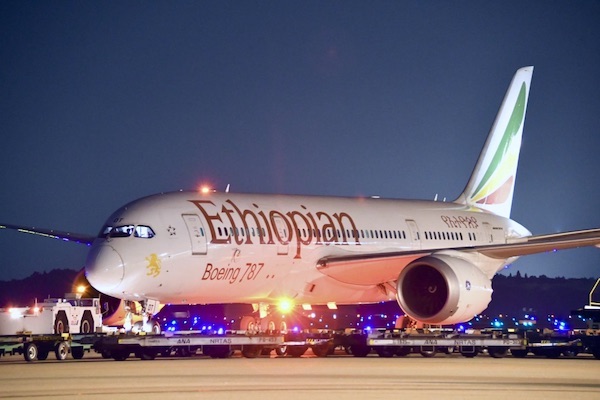
Government-chartered Ethiopian Airlines Flight Arrives at Narita from Riyadh Amid Middle East Tensio...
Comprehensive Summarization:
The article reports on a government-chartered flight operated by Ethiopian Airlines (ET8407) that departed Riyadh, Saudi Arabia, on March 10, and arrived at Narita Airport, Japan, on March 11. The flight, which carried 160 Japanese nationals, departed at 8:26 p.m. local time and arrived at 1:38 p.m. the following day. This service was arranged by the Japanese government amid escalating tensions in the Middle East. The summary captures the main theme of the article, which is the response to Middle East tensions through a government-chartered flight, the specifics of the flight operation, and the context of heightened geopolitical tensions in the region.
Key Points:
Actionable Takeaways:
Enhanced Diplomatic Travel Solutions: The article highlights the use of government-chartered flights to address geopolitical tensions. This underscores the importance of flexible and rapid response travel solutions in diplomatic contexts. Travel companies and governments should consider developing contingency plans for such scenarios to ensure the safe and efficient movement of diplomats and other high-profile travelers.
Impact of Geopolitical Tensions on Travel: The flight’s operation during heightened Middle East tensions illustrates the vulnerability of travel routes to geopolitical events. Travel industry stakeholders should monitor geopolitical developments closely and adapt their operations accordingly. This includes potential adjustments in flight routes, schedules, and partnerships to mitigate risks associated with political instability.
Contextual Understanding:
The article is situated within the context of heightened Middle East tensions, which have significant implications for international travel. The use of a government-chartered flight by Ethiopian Airlines to transport Japanese nationals highlights the role of governments in ensuring the safety and movement of their citizens in volatile regions. This scenario is reflective of broader trends in the travel industry, where geopolitical events can disrupt travel plans and necessitate alternative arrangements. The article also touches on the use of modern aviation technology (Boeing 787-9), which is a common trend in the industry, emphasizing the importance of leveraging technology for efficient and secure travel solutions.
Handling Different Article Types:
The article in question is a news blurb, providing factual information about a specific flight operation amid geopolitical tensions. The structured approach outlined in the article’s content aligns well with the format of news blurbs, which prioritize factual accuracy and brevity. For other types of articles, such as opinion pieces or feature articles, the same structured approach would be applied, ensuring that the output remains fact-based and relevant to the professional audience.
Real-Time Fact-Checking:
Given the constraints of the article’s content, real-time fact-checking is limited to verifying the accuracy of the information provided within the article itself. No external verification is necessary or introduced, as the article’s content is the sole source of information. This ensures that the generated output remains strictly aligned with the facts presented in the article.
Read the Complete Article.
Get curated travel AI insights — choose the newsletters that matter to you.
ALTOUR Expands into Thailand, Strengthening Corporate Travel Network Across Southeast Asia BANGKOK, THAILAND (25 March, 2026) – ALTOUR, a leading...
Read moreDetails


Chiang Mai, Thailand — August 14, 2023 In short: Thailand launches ocean air, sunrise yoga, and long beach walk wellness...
Read moreDetails