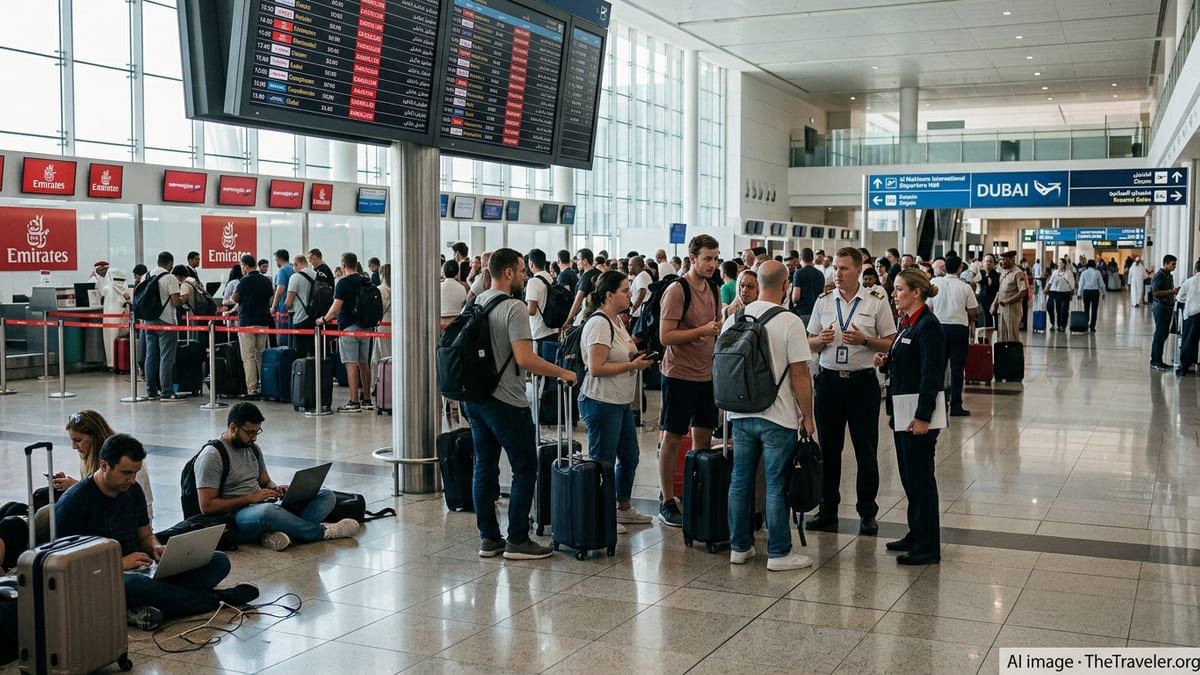
The article discusses the stable flight operations of Emirates and flydubai from Dubai, despite the broader Middle East aviation sector facing disruptions due to ongoing regional tensions. According to the latest schedule data, the two carriers planned a combined 216 departing passenger flights on April 8 and 225 on April 9, indicating a steady, albeit reduced, operating pace. This information was reported by News.Az, which cited foreign media sources. Emirates accounted for 149 outbound flights, while flydubai had 76. The article also touches on the broader context of travel trends and insights from thought leaders, highlighting the resilience of these airlines amidst regional challenges.
Key Points:
Emirates and flydubai are maintaining stable flight operations from Dubai, with a combined 216 flights planned for April 8 and 225 for April 9.
The two carriers’ operations are steady, though reduced, in the face of ongoing regional tensions in the Middle East aviation sector.
Emirates is responsible for 149 outbound flights, while flydubai handles 76.
The article references the broader context of regional tensions affecting the Middle East aviation industry.
Actionable Takeaways:
Operational Resilience Amid Regional Tensions: Emirates and flydubai’s ability to maintain stable flight operations despite regional tensions underscores the operational resilience of these airlines. This stability can serve as a benchmark for other airlines in the region to improve their contingency planning and operational strategies in the face of geopolitical challenges.
Impact on Travel Demand: The reduced flight frequency, while stable, indicates a potential impact on travel demand. Airlines and travel agencies may need to adjust their pricing strategies and promotional offers to attract travelers, especially as regional tensions could influence consumer confidence and travel behavior.
Contextual Insights:
The article’s context highlights the ongoing challenges faced by the Middle East aviation sector due to regional tensions. This situation is reflective of broader geopolitical risks that can impact the travel industry. Thought leaders in the travel sector often emphasize the importance of diversification and resilience in operational planning to mitigate such risks. The stability shown by Emirates and flydubai suggests that while external factors can disrupt operations, airlines with robust contingency plans can mitigate these impacts. Furthermore, the focus on stable operations amidst challenges underscores the importance of technological advancements in travel tech, such as real-time flight tracking and flexible booking options, which can enhance customer experience and operational efficiency during turbulent times.
Handling Different Article Types:
The article is a news brief, providing factual information about the operational status of two airlines amidst regional tensions. The structured output format ensures that the key points and actionable takeaways are clearly delineated, making it easy for readers to digest the information. The contextual insights integrate the latest travel trends and expert opinions, offering a forward-looking perspective on how the current situation might influence the travel industry’s future strategies and innovations.
Comprehensive Summarization: The article discusses the stable flight operations of Emirates and flydubai from Dubai, despite the broader Middle East...