











No products in the cart.
- Latest
- Trending

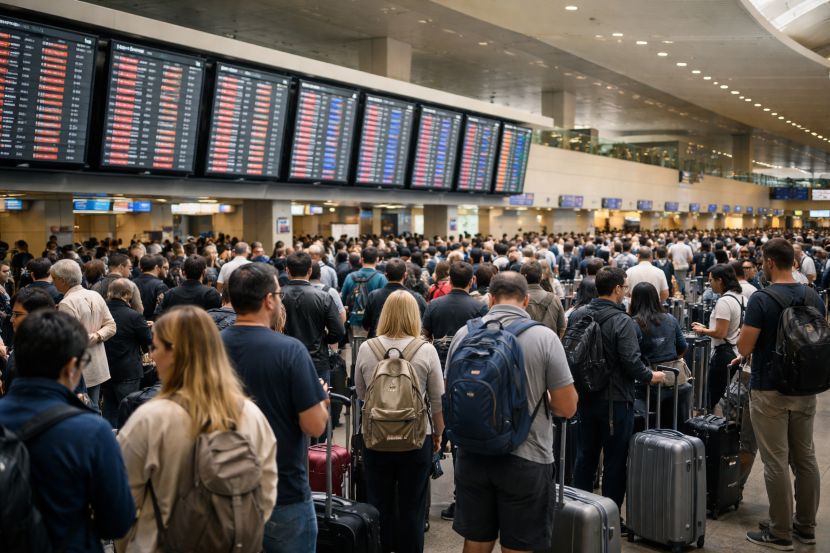
Travel Disruptions at Queen Alia International Airport as Royal Jordanian, Qatar Airways, Ryanair, a...
Comprehensive Summarization:
The article reports significant travel disruptions at Queen Alia International Airport (AMM) on March 7, 2026, due to the cancellation of 54 flights and the delay of 43 flights by Royal Jordanian, Qatar Airways, Ryanair, and FlyDubai. This disruption affects passengers in Amman, Cairo, Doha, and Dubai. The article highlights the impact on airlines, customers, and the broader travel industry, emphasizing the challenges faced by airlines in managing such disruptions and the subsequent effects on customer experience and operational efficiency.
Key Points:
Actionable Takeaways:
Enhanced Operational Resilience: Airlines should invest in advanced flight management systems and real-time communication tools to mitigate the impact of unexpected disruptions. This includes proactive communication with passengers and flexible rebooking options to maintain customer trust and loyalty.
Focus on Customer Experience: Airlines should prioritize customer experience during disruptions by offering compensation, such as refunds, upgrades, or additional services, to mitigate negative perceptions and maintain brand loyalty.
Collaborative Problem-Solving: Airlines should collaborate with airports and other stakeholders to develop contingency plans and share resources during disruptions. This can help streamline operations and reduce the overall impact on passengers and airlines.
Contextual Insights:
The disruptions at Queen Alia International Airport highlight the vulnerabilities in the travel industry’s operational infrastructure, particularly in managing large-scale flight cancellations. This incident underscores the importance of technological advancements in travel tech, such as AI-driven predictive analytics and automated customer support systems, which can enhance operational resilience and improve passenger experience. Furthermore, the incident reflects broader trends in the travel industry, including the increasing reliance on digital platforms for real-time updates and the growing importance of customer-centric strategies in maintaining competitive advantage. As the industry continues to evolve, innovations in travel tech and fintech are likely to play a crucial role in addressing operational challenges and enhancing service delivery.
Read the Complete Article.
Get curated travel AI insights — choose the newsletters that matter to you.
ALTOUR Expands into Thailand, Strengthening Corporate Travel Network Across Southeast Asia BANGKOK, THAILAND (25 March, 2026) – ALTOUR, a leading...
Read moreDetails


Comprehensive Summarization: The International Air Transport Association (IATA) has announced that Pika Aero and DGM France have each won the...
Read moreDetails