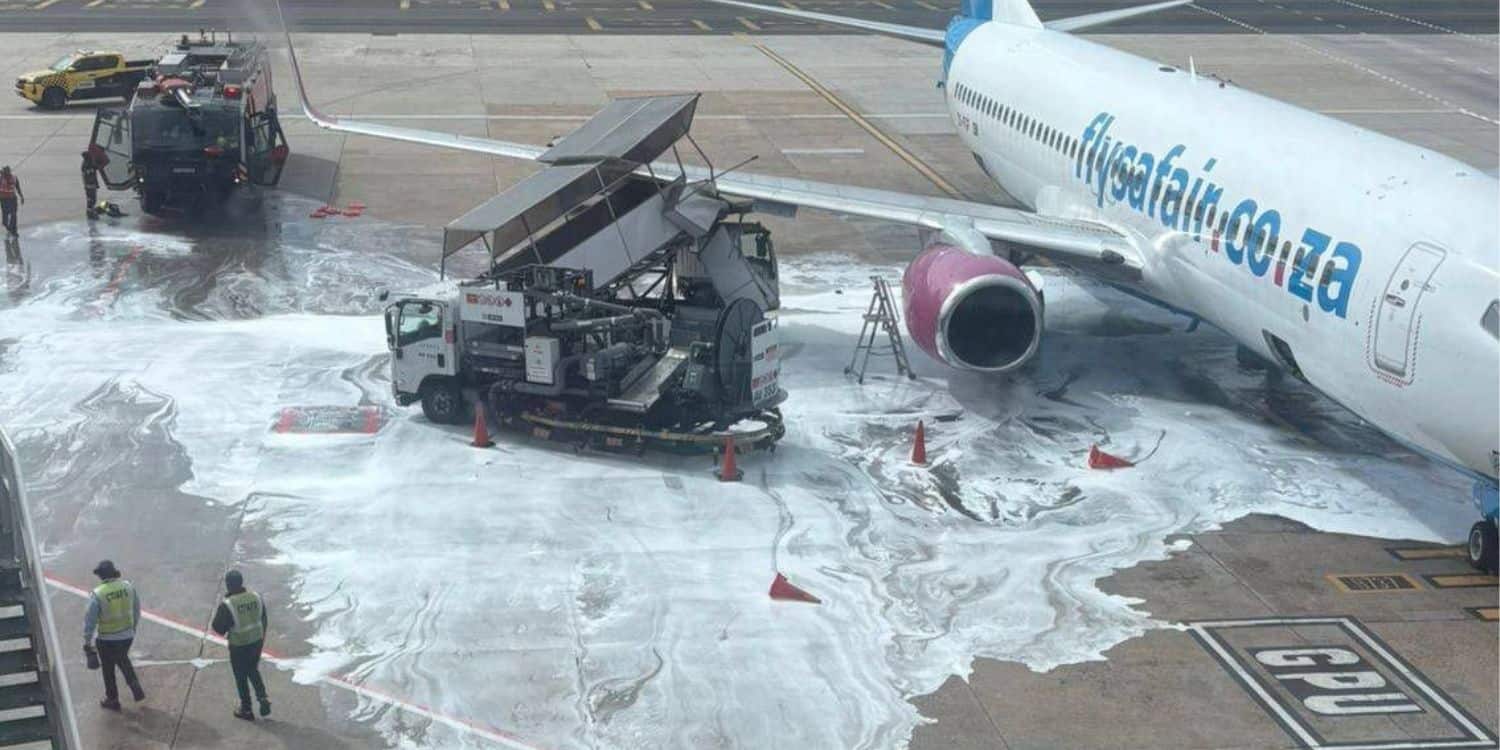
The article reports a significant incident at Cape Town International Airport involving FlySafair’s aircraft. Ground handling equipment struck the plane, leading to a fuel spill on the apron. The incident occurred around 11:06 AM on the airside of the airport. Airports Company South Africa (ACSA) confirmed the event, highlighting the potential safety and operational implications. The article also references FlySafair’s recent introduction of a fuel surcharge due to the Middle East conflict, which is impacting market conditions.
Key Points:
An aircraft from FlySafair experienced a fuel spill on the apron at Cape Town International Airport due to ground handling equipment striking the plane.
The incident took place at approximately 11:06 AM on the airside of the airport.
ACSA confirmed the event, emphasizing the importance of such occurrences for airport safety and operations.
FlySafair has introduced a fuel surcharge in response to the Middle East conflict, which is affecting market stability.
Actionable Takeaways:
Enhanced Ground Handling Protocols: Given the incident involving ground handling equipment striking an aircraft, airports and airlines should review and potentially upgrade their ground handling protocols to prevent similar occurrences. This could involve additional training for ground staff and the implementation of more robust equipment safety measures.
Market Impact of Fuel Surcharge:FlySafair’s introduction of a fuel surcharge highlights the vulnerability of the travel industry to geopolitical events. Airlines and airports should monitor geopolitical developments and consider developing contingency plans for financial impacts, such as flexible pricing strategies or partnerships to mitigate surcharge impacts on consumers.
Focus on Safety and Compliance: The incident underscores the critical need for rigorous safety checks and compliance with handling equipment standards. Airlines and airports should invest in regular safety audits and ensure that all handling equipment meets international safety standards to prevent such incidents in the future.
Contextual Insights:
The incident at Cape Town International Airport is a stark reminder of the operational challenges faced by the aviation industry, particularly in maintaining safety and efficiency amidst external pressures. The introduction of a fuel surcharge by FlySafair is a direct response to the volatile market conditions caused by geopolitical tensions in the Middle East. This reflects a broader trend within the travel industry where external factors, such as conflicts and economic instability, significantly influence operational costs and consumer pricing strategies.
In the context of current travel trends, the emphasis on safety and compliance is more crucial than ever. The aviation sector is increasingly adopting advanced technologies to enhance safety, such as AI-driven monitoring systems and automated ground handling processes. These innovations not only help in preventing incidents like the one described but also improve overall operational efficiency. Furthermore, the industry is witnessing a rise in partnerships between airlines and fintech companies to offer more flexible pricing models, including dynamic surcharges and bundled services, which can help mitigate the impact of external shocks on consumers.
In summary, while the incident at Cape Town International Airport serves as a cautionary tale for the aviation industry, it also presents an opportunity for stakeholders to innovate and adapt to the evolving landscape of travel. By focusing on enhanced safety protocols, strategic financial planning, and leveraging technological advancements, the industry can navigate current challenges and position itself for future growth.
Comprehensive Summarization: The article reports a significant incident at Cape Town International Airport involving FlySafair's aircraft. Ground handling equipment struck...