Article Summary:
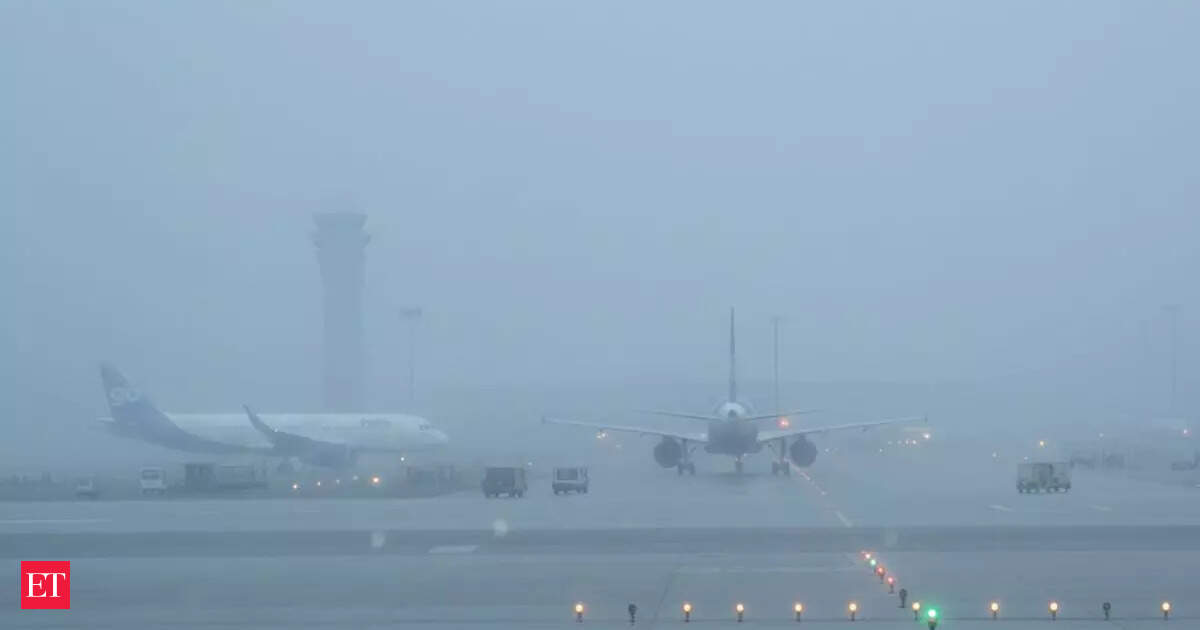
On Monday morning, at least 128 flights were cancelled and eight were diverted at Delhi’s Indira Gandhi International (IGI) Airport due to zero-visibility fog. This situation prompted authorities to issue an advisory regarding low-visibility procedures for flight operations. The airport is currently operating under Category-III conditions, which permit flights to land in low visibility. Passengers are advised to verify their flight status before arriving at the airport and to allow extra travel time.
Key Points:
- At least 128 flights were cancelled and eight were diverted at IGI Airport on Monday due to zero-visibility fog.
- Authorities issued an advisory about low-visibility procedures for flight operations.
- The airport is operating under Category-III conditions, allowing flights to land in low visibility.
- Passengers are advised to check their flight status and allow extra travel time due to the adverse weather conditions.
Actionable Takeaways:
- Enhanced Pre-Flight Planning: Passengers should check their flight status before heading to the airport to avoid unnecessary travel and potential delays. This is crucial as the airport is currently operating under low-visibility conditions, which can lead to flight cancellations and diversions.
- Adaptation of Flight Operations: Airports and airlines should consider implementing more robust low-visibility procedures and contingency plans to handle such weather-related disruptions efficiently. This could involve additional training for staff, advanced weather monitoring systems, and flexible scheduling to accommodate cancellations and diversions.
- Real-Time Communication: Airlines and airports should improve real-time communication with passengers regarding flight status updates. This proactive approach can help manage passenger expectations and reduce stress during disruptions caused by adverse weather conditions.
Contextual Insights:
The incident at IGI Airport highlights the ongoing challenges faced by the aviation industry in managing adverse weather conditions, particularly fog, which can significantly impact flight operations. This situation underscores the importance of advanced weather forecasting technologies and flexible operational strategies to mitigate the impact of such events. In the context of current travel trends, there is a growing emphasis on resilience and adaptability within the travel sector, particularly in response to unpredictable weather patterns. The use of technology, such as real-time flight tracking and communication tools, is becoming increasingly vital for maintaining passenger trust and ensuring operational continuity. Furthermore, the advisory issued by authorities reflects a broader industry trend towards enhanced safety protocols and passenger safety measures in response to evolving weather challenges.
Read the Complete Article.