Comprehensive Summarization:
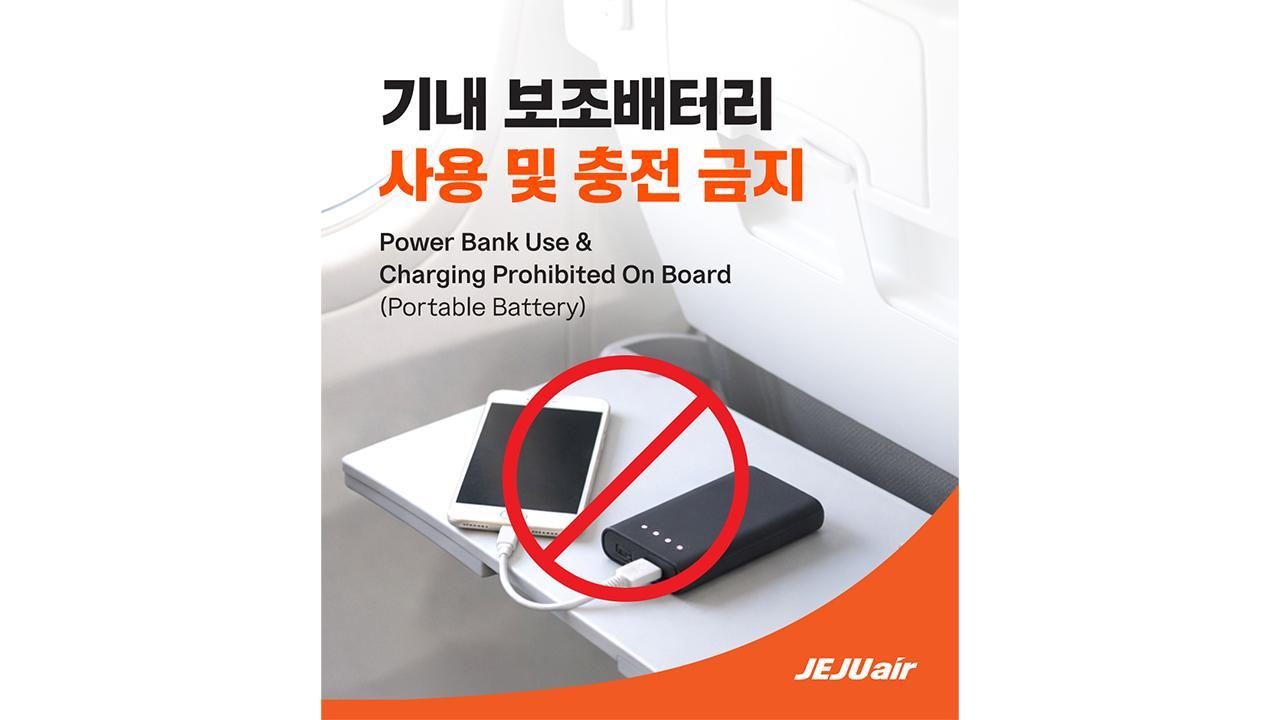
Jeju Air, a low-cost carrier, has announced a complete ban on the use of portable battery banks on all its domestic and international flights, effective from January 22. This decision comes in response to concerns over potential in-flight fire risks associated with these devices. Starting from the following Thursday, passengers will no longer be permitted to use power banks to charge electronic devices such as mobile phones and tablet computers during Jeju Air flights. The airline’s announcement underscores the growing emphasis on safety measures within the travel industry, particularly as portable electronic devices become more prevalent and potentially hazardous if not managed properly.
Key Points:
- Jeju Air will prohibit the use of portable battery banks on all its flights, starting January 22.
- The ban is due to safety concerns over in-flight fire risks posed by these devices.
- Passengers will be unable to use power banks to charge electronic devices such as mobile phones and tablets during flights operated by Jeju Air.
- The decision reflects a broader industry trend towards enhancing safety measures in response to technological advancements and potential risks.
Actionable Takeaways:
-
Enhanced Safety Protocols in Air Travel: Airlines are increasingly adopting stricter regulations on electronic devices to mitigate fire risks. This move by Jeju Air highlights the importance of prioritizing passenger safety over convenience. Travel companies should review and update their policies on electronic device usage to align with evolving safety standards.
-
Impact on Passenger Convenience: The ban on portable battery banks may inconvenience travelers who rely on these devices for charging during flights. Airlines should communicate clearly about this change well in advance to minimize disruption. Offering alternative charging solutions or informing passengers about the availability of charging points at airports could help mitigate inconvenience.
-
Opportunity for Innovation in Travel Tech: This development presents an opportunity for travel tech startups to innovate in the space of in-flight charging solutions. Developing safer, more efficient, and user-friendly charging devices could fill the gap left by the ban. Such innovations could also cater to the growing demand for seamless travel experiences, potentially opening new market segments.
Contextual Insights:
The ban on portable battery banks by Jeju Air is a response to heightened safety concerns in the aviation sector, particularly in light of recent incidents involving lithium-ion battery fires. This decision aligns with broader industry trends towards enhancing safety protocols in response to technological advancements. As electronic devices become more integral to travel, the risk of fire hazards increases, prompting airlines to take proactive measures. This trend is likely to influence other carriers to reassess their policies on electronic device usage, potentially leading to a more standardized approach across the industry.
Moreover, the ban underscores the growing importance of travel tech innovations aimed at enhancing safety and convenience. Startups focusing on in-flight charging solutions, advanced battery management systems, or alternative power sources could find a receptive market as airlines seek to balance safety with passenger needs. This shift also highlights the role of regulatory bodies in setting safety standards that drive industry-wide changes, ensuring that technological advancements do not compromise passenger safety.
Read the Complete Article.