







No products in the cart.
- Latest
- Trending

[Photo=Jeju Air]
Comprehensive Summarization:
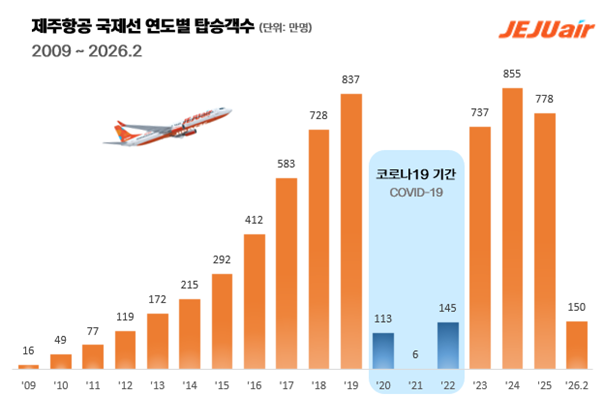
Jeju Air, a South Korean low-cost carrier, celebrated the 17th anniversary of its international service on Thursday. The airline reported a cumulative total of 62.85 million international passengers, with an average annual growth rate of 27.5%. Jeju Air initiated its international flights on March 20, 2009, with the Incheon-Osaka route marking South Korea’s first low-cost carrier to operate a regular international service. The airline experienced significant growth from 159,000 passengers in its first year to the current milestone, demonstrating a robust expansion strategy in the international travel sector.
Key Points:
Actionable Takeaways:
Contextual Insights:
The article reflects the ongoing trend of low-cost carriers expanding their international services, a strategy that has proven successful in driving growth and market share. This aligns with broader industry trends where technology and innovation play a crucial role in enhancing operational efficiency and customer satisfaction. As the travel industry continues to evolve, companies that adapt to changing consumer preferences and technological advancements are likely to thrive. The success of Jeju Air serves as a case study for other airlines and startups in the sector, emphasizing the importance of innovation and strategic planning in navigating the competitive landscape of international travel.
Read the Complete Article.
Get curated travel AI insights — choose the newsletters that matter to you.
This spot is reserved for brands with a compelling story for the travel trade. They use this space to cut...
Read moreDetailsALTOUR Expands into Thailand, Strengthening Corporate Travel Network Across Southeast Asia BANGKOK, THAILAND (25 March, 2026) – ALTOUR, a leading...
Read moreDetails


Comprehensive Summarization: Jeju Air, a South Korean low-cost carrier, celebrated the 17th anniversary of its international service on Thursday. The...
Read moreDetails