



















Travel Capitalist Ventures Expands Check Size to $10 Million to Deepen Emerging Market Conviction
Boutique Travel VC raises investment cap from $1.5M to $10M to lead rounds and support portfolio companies through growth Travel...
Read moreDetails
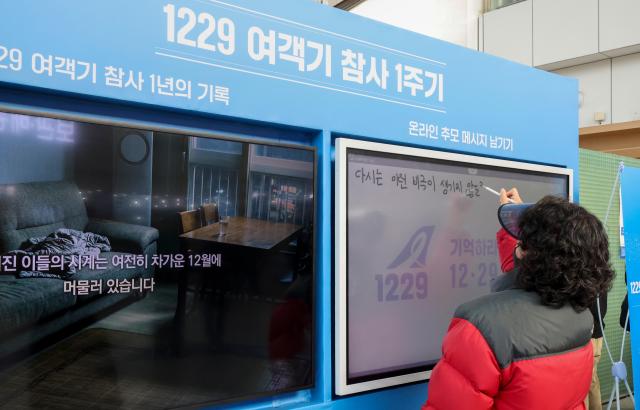
A visitor leaves a message of condolence at a digital memorial space at Seoul Station on Dec. 29, marking the first anniversary of the Jeju Air plane crash at Muan International Airport. AJP Yoo Na-hyun
Article Summary:
On December 29, South Korea commemorated the first anniversary of the Jeju Air Flight 7C2216 crash, which resulted in the deaths of 179 people. The Boeing 737-800 made an emergency landing at Muan International Airport, leading to the establishment of a digital memorial space at Seoul Station on the same day. This incident marks one of South Korea’s deadliest aviation disasters and highlights the ongoing impact of such tragedies on the travel industry.
Key Points:
Actionable Takeaways:
Contextual Insights:
The article reflects the ongoing challenges and advancements in the travel industry, particularly in the aftermath of aviation disasters. The establishment of a digital memorial space at Seoul Station is indicative of a broader trend where technology is increasingly being leveraged to support communities in times of crisis. This aligns with the growing emphasis on digital solutions in the travel sector, from enhancing passenger safety to improving customer engagement and support.
In the context of current industry trends, the focus on safety and technological innovation is paramount. The travel industry is witnessing a surge in the adoption of advanced technologies such as AI, IoT, and data analytics to improve operational efficiency, enhance passenger experiences, and ensure safety. Startups specializing in travel tech are at the forefront of these innovations, offering solutions that range from digital memorials to real-time safety communication systems.
Moreover, the incident highlights the need for continuous improvement in crisis management strategies within the travel sector. As the industry evolves, there is a growing recognition of the importance of integrating technology not just for operational efficiency but also for enhancing resilience and support during unforeseen events. This forward-looking perspective is crucial for stakeholders in the travel industry to navigate future challenges effectively.
Read the Complete Article.
Boutique Travel VC raises investment cap from $1.5M to $10M to lead rounds and support portfolio companies through growth Travel...
Read moreDetails



Comprehensive Summarization: The article from the Nepal Police's Central Investigation Bureau (CIB) reveals one of the largest insurance frauds in...
Read moreDetails
