Comprehensive Summarization:
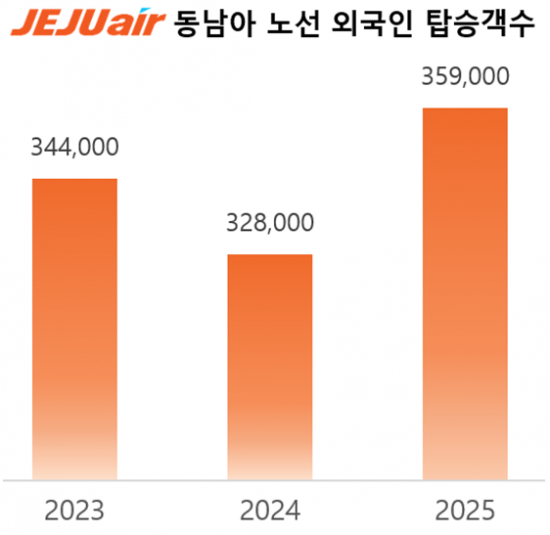
The article highlights a significant increase in foreign passenger numbers on Jeju Air’s routes between Korea and Southeast Asia, marking the highest level since the onset of COVID-19. As of January 28, approximately 359,000 foreign passengers utilized these routes, surpassing the figures from 2023 and 2024. This surge in travel indicates a robust recovery in international tourism, particularly in the wake of pandemic restrictions. The article also underscores the growing number of Filipino passengers, which continues to represent the largest share of Jeju Air’s foreign passenger base. This trend reflects the airline’s strategic expansion and the increasing demand for travel between these regions.
Key Points:
- Jeju Air reported approximately 359,000 foreign passengers on its Korea-Southeast Asia routes in 2023, the highest since the COVID-19 pandemic began.
- This figure exceeds the 344,000 passengers recorded in 2023 and the 328,000 in 2024, indicating a strong recovery in international travel.
- The article emphasizes the significant role of Filipino passengers, who continue to constitute the largest share of Jeju Air’s foreign passenger base.
- December saw a notable increase in travel, suggesting a post-holiday travel boom and a return to pre-pandemic travel patterns.
Actionable Takeaways:
-
Increased Travel Demand: The surge in foreign passengers on Jeju Air’s routes suggests a robust recovery in international travel, particularly between Korea and Southeast Asia. Airlines and travel agencies should capitalize on this trend by enhancing marketing efforts and expanding route networks to meet growing demand.
-
Focus on Filipino Market: With Filipino passengers forming the largest share of foreign travelers, airlines and travel service providers should tailor their offerings to cater to this demographic. This could include language support, culturally relevant services, and partnerships with local tourism boards to enhance the travel experience for Filipino passengers.
-
Post-Pandemic Travel Trends: The data indicates a return to pre-pandemic travel patterns, albeit at a higher volume. Travel companies should leverage this insight to optimize pricing strategies, improve customer service, and invest in technology to streamline booking processes and enhance the overall travel experience.
Contextual Insights:
The article’s context is deeply rooted in the post-pandemic recovery of international travel, a sector that has faced unprecedented challenges due to COVID-19. The significant increase in foreign passengers on Jeju Air’s routes reflects a broader trend of renewed confidence and willingness among travelers to venture beyond domestic borders. This recovery is further supported by the growing number of Filipino passengers, indicating a stable and significant market segment that airlines can target for future growth.
In the context of travel tech, the article highlights the importance of leveraging data and analytics to understand and predict travel trends. Airlines like Jeju Air are at the forefront of adopting innovative technologies to enhance customer experience and operational efficiency. For instance, real-time data analytics can help airlines anticipate demand fluctuations, optimize flight schedules, and personalize travel offerings based on passenger preferences.
Moreover, the article underscores the role of strategic partnerships and market expansion in driving travel growth. By focusing on key markets like Southeast Asia and catering to specific demographics such as Filipino travelers, airlines can not only meet but exceed customer expectations. This approach aligns with broader industry trends that emphasize personalized, tech-driven travel experiences and strategic market positioning.
In summary, the article provides valuable insights into the current state of international travel, particularly in the Korea-Southeast Asia corridor. It emphasizes the importance of understanding market dynamics, leveraging technological advancements, and tailoring services to meet the evolving needs of travelers. These actionable takeaways and contextual insights are crucial for travel industry stakeholders aiming to navigate the post-pandemic landscape successfully.
Read the Complete Article.