Comprehensive Summarization:
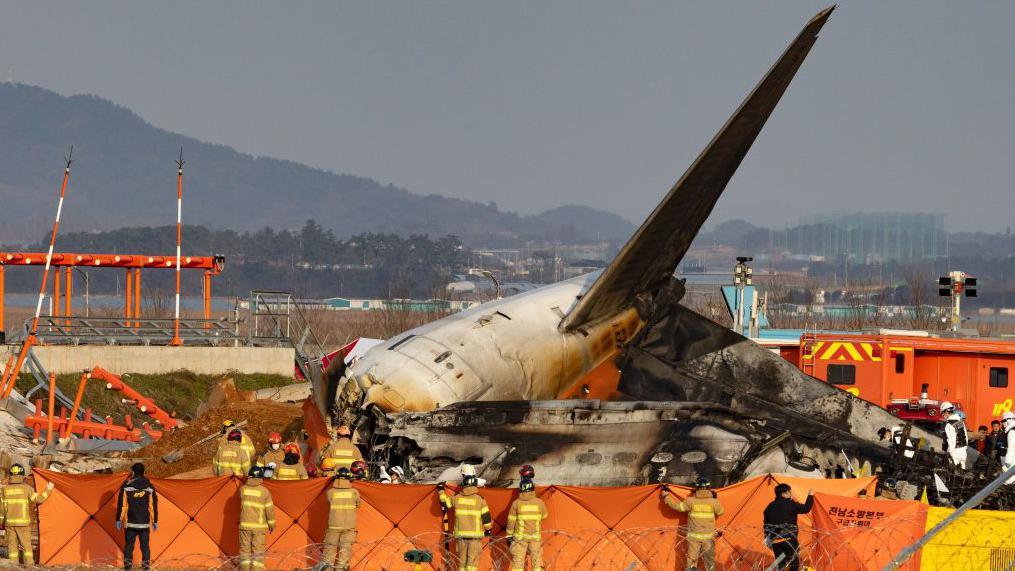
South Korean police conducted a raid on the headquarters of the transport ministry following questions about the handling of the country’s deadliest aviation disaster. The incident involved Jeju Air Flight 2216, which crashed into a concrete structure after overshooting the runway at Muan International Airport on December 29, 2024, resulting in the death of all but two of the 181 people on board. Initial investigations revealed that the Boeing 737-800 had encountered a bird strike, and the presence of a concrete mound exacerbated the number of casualties. The article underscores the gravity of the incident and the subsequent investigation into the transport ministry’s response.
Key Points:
- Jeju Air Flight 2216 crashed into a concrete structure after overshooting the runway at Muan International Airport on December 29, 2024, killing all but two of the 181 people on board.
- Initial investigations identified a bird strike as the cause of the crash, with the concrete mound at the airport exacerbating the number of casualties.
- South Korean police raided the transport ministry’s headquarters, indicating a significant investigation into the ministry’s handling of the disaster.
Actionable Takeaways:
-
Enhanced Safety Protocols for Runway Operations: The incident highlights the critical need for airlines and airports to implement and rigorously adhere to enhanced safety protocols, particularly concerning runway overrun scenarios. This includes regular maintenance checks, real-time monitoring of runway conditions, and comprehensive training for pilots to handle unexpected situations such as bird strikes. The takeaway is relevant as it directly impacts aviation safety standards and could lead to industry-wide improvements in operational safety.
-
Investigation into Transport Ministry’s Response: The raid on the transport ministry’s headquarters suggests a thorough investigation into how the ministry handled the disaster. This could lead to policy changes aimed at improving disaster response and accountability within government agencies responsible for aviation safety. The takeaway is significant as it underscores the importance of transparent and effective governance in ensuring public safety in the travel sector.
Contextual Insights:
The crash of Jeju Air Flight 2216 is a stark reminder of the unpredictable nature of aviation and the importance of rigorous safety measures. Recent trends in the travel industry have seen a heightened focus on safety innovations, such as advanced bird strike detection systems and improved runway safety technologies. The incident aligns with these trends, emphasizing the need for continuous improvement in aviation safety protocols. Furthermore, the involvement of the transport ministry in the investigation reflects a broader industry trend towards greater regulatory oversight and accountability. As the travel industry evolves, thought leaders predict an increased emphasis on data-driven safety measures and the integration of artificial intelligence to predict and mitigate potential risks, ensuring safer skies for all passengers.
Read the Complete Article.