Comprehensive Summarization:
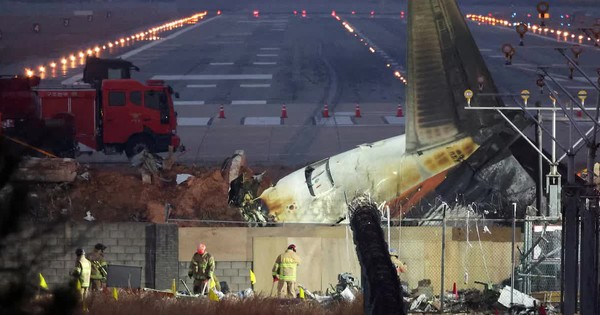
The article reports on a tragic incident involving a Boeing 737-800 operated by Jeju Air, which crashed at Muan International Airport in South Korea on December 30, 2024. The crash, which occurred after the aircraft belly-landed and overran the runway due to striking a concrete support for a localiser antenna, resulted in the deaths of almost all passengers on board. The only survivors were two flight attendants. The article highlights the investigation into the cause of the crash, which was attributed to faulty approvals at the airport. This incident underscores the critical importance of stringent safety protocols and approvals in the aviation industry, particularly concerning aircraft maintenance and airport infrastructure.
Key Points:
- A Boeing 737-800 operated by Jeju Air crashed at Muan International Airport in South Korea on December 30, 2024.
- The crash was caused by the aircraft striking a concrete support for a localiser antenna after a bird strike and belly-landing, leading to overrunning the runway.
- The incident resulted in the deaths of almost all passengers on board, with only two flight attendants surviving.
- The crash investigation revealed that the cause was faulty approvals at the airport, highlighting potential issues in aircraft maintenance and airport infrastructure safety.
- The only survivors were two flight attendants, emphasizing the critical need for enhanced safety measures and protocols in aviation operations.
Actionable Takeaways:
-
Enhanced Safety Protocols: The incident underscores the necessity for airlines and airports to implement and strictly adhere to rigorous safety protocols, particularly in aircraft maintenance and airport infrastructure. This includes regular inspections, timely repairs, and comprehensive safety checks to prevent similar incidents in the future.
-
Investment in Airport Infrastructure: There is a clear need for airports to invest in upgrading critical infrastructure, such as localiser antennas and other support structures, to ensure they can withstand unexpected events like bird strikes. This investment can prevent catastrophic failures that lead to fatal crashes.
-
Focus on Passenger Safety: Airlines should prioritize passenger safety by ensuring that all flight attendants and crew members are well-trained in emergency procedures and equipped with the necessary tools to handle crises effectively. This includes regular drills and simulations to prepare for worst-case scenarios.
Contextual Insights:
The crash at Muan International Airport highlights ongoing challenges in the aviation industry, particularly concerning safety and infrastructure. Recent trends indicate a growing emphasis on technological advancements in aviation safety, such as the use of AI for predictive maintenance and real-time monitoring of aircraft systems. These innovations can play a crucial role in preventing incidents like the one described in the article. Furthermore, the incident underscores the importance of regulatory oversight and the need for continuous improvement in safety standards to protect passengers and crew. As the travel industry evolves, integrating these insights into operational practices will be essential for maintaining high safety standards and fostering trust among travelers.
Read the Complete Article.