



















Travel Capitalist Ventures Expands Check Size to $10 Million to Deepen Emerging Market Conviction
Boutique Travel VC raises investment cap from $1.5M to $10M to lead rounds and support portfolio companies through growth Travel...
Read moreDetails
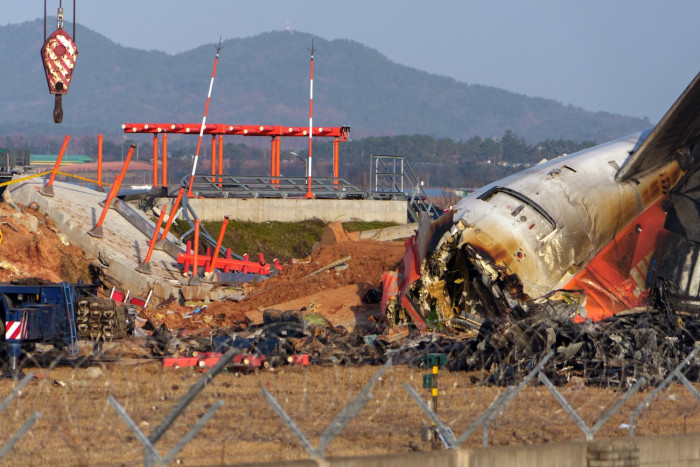
The wreckage of Jeju Air Flight 7C2216 and the wall at the end of the runway that the plane hit, are seen in Muan, South Korea, on Dec 30, 2024. A computer simulation ordered by the government showed that everyone on board would have survived if the concrete berm had been made of materials that easily broke apart. (Photo: Chang W Lee/The New York Times)
Article Summary:
The article discusses the aftermath of Jeju Air Flight 7C2216’s crash in Muan, South Korea, on December 30, 2024. The plane collided with a concrete berm at the end of the runway, resulting in significant damage. A government-ordered computer simulation indicated that all passengers would have survived if the berm were made of materials that could easily break apart. The incident highlights the importance of runway safety and material resilience in aviation infrastructure.
Key Points:
Actionable Takeaways:
Contextual Insights:
The crash of Jeju Air Flight 7C2216 highlights a critical area of focus within the travel industry: runway safety. Recent trends indicate a growing emphasis on technological advancements to improve aviation safety. Innovations such as more resilient runway materials and advanced simulation tools are becoming increasingly important as the industry seeks to mitigate risks associated with runway incidents. Thought leaders in the travel sector are advocating for the integration of these technologies to enhance safety protocols and protect passengers. The incident underscores the necessity for continuous improvement in aviation infrastructure to meet the evolving demands of a safety-conscious industry.
Read the Complete Article.
Boutique Travel VC raises investment cap from $1.5M to $10M to lead rounds and support portfolio companies through growth Travel...
Read moreDetails



Comprehensive Summarization: Keturah Resort, currently under development in Dubai, is poised to enhance the UAE’s reputation as a wellness destination....
Read moreDetails
