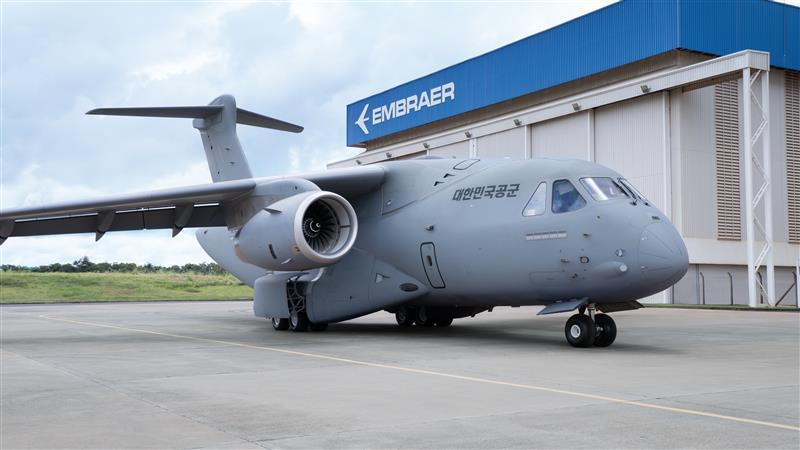
Embraer has successfully completed the final assembly stage of the first C-390 tactical transport aircraft for the Republic of Korea Air Force (ROKAF). The aircraft is now set to undergo production flights, followed by the integration of systems specific to the ROKAF. This marks the first sale of the C-390 in the Asia-Pacific region, as the twin-engined transport was ordered by Seoul under its Large Transport Aircraft (LTA-II) requirement in late 2023. The progress of the C-390 in the Asia-Pacific region signifies a significant development in the global transport aircraft market, showcasing Embraer’s capability to meet international defense needs.
Key Points:
Embraer has completed the final assembly stage of the first C-390 tactical transport aircraft for the ROKAF.
The aircraft is scheduled to embark on production flights, with subsequent integration of systems tailored for the ROKAF.
In late 2023, Seoul ordered three C-390s under its LTA-II requirement, marking the first sale of the C-390 in the Asia-Pacific region.
The C-390’s deployment in the Asia-Pacific region highlights Embraer’s growing influence in the global transport aircraft market.
Actionable Takeaways:
Strategic Defense Procurement: The acquisition of the C-390 by the ROKAF underscores the strategic importance of twin-engined transport aircraft in modern defense operations. This could prompt other Asian nations to consider similar procurement strategies, potentially driving demand for similar aircraft models in the region.
Embraer’s Market Expansion: The successful sale of the C-390 in the Asia-Pacific region demonstrates Embraer’s expanding footprint in the global defense market. This could encourage other aircraft manufacturers to explore similar opportunities in the region, fostering increased competition and innovation in the defense aerospace sector.
Contextual Insights:
The deployment of the C-390 in the Asia-Pacific region by the Republic of Korea Air Force is a significant development within the global defense aerospace industry. It reflects the increasing demand for versatile and reliable transport aircraft in defense operations, particularly in regions with complex geopolitical landscapes. This trend is likely to influence the travel and logistics sectors, as countries invest in advanced transport solutions to enhance their military capabilities. Furthermore, the success of the C-390 in the Asia-Pacific market could encourage other defense-oriented startups and tech companies to innovate in areas such as unmanned aerial vehicles (UAVs) and advanced avionics, contributing to the broader travel tech ecosystem. As the travel industry continues to evolve, staying abreast of such technological advancements and strategic procurement decisions will be crucial for professionals seeking to navigate the future of global travel and logistics.
Comprehensive Summarization: The article reports on significant travel disruptions at Keflavik International Airport in Iceland, where 27 flights were delayed...