









No products in the cart.
- Latest
- Trending


A South Korean Air Force KAI FA-50 carried out the first launch of the new K-ALCM cruise missile, wh...
Seoul, South Korea – In a significant advancement for South Korean aerial defense capabilities, the Republic of Korea Air Force (ROKAF) has successfully conducted the inaugural launch of the new K-ALCM (Korean Air-Launched Cruise Missile) from a Korea Aerospace Industries (KAI) FA-50 light combat aircraft. This milestone demonstrates the potent synergy between advanced indigenous missile technology and the nation’s growing fighter jet production. The K-ALCM is slated to become a cornerstone weapon system for South Korea’s next-generation KF-21 Boramae fighter, promising to dramatically enhance its offensive reach and strategic impact.
The successful test flight, details of which remain somewhat guarded, signifies a critical step towards fielding a domestically developed, long-range precision strike capability. The K-ALCM, designed to engage a wide array of ground and naval targets with high accuracy, represents a substantial leap in South Korea’s ability to project power and deter potential adversaries. This development is particularly noteworthy given the ongoing geopolitical landscape in Northeast Asia, where robust air defense and strike capabilities are paramount.
The integration of the K-ALCM onto the FA-50, a highly versatile and increasingly popular light fighter, highlights the aircraft’s adaptability and its role in bridging the gap between current and future air assets. While the FA-50 is a capable platform, its true strategic potential will be amplified with the addition of this advanced cruise missile. More importantly, the K-ALCM is being developed with the KF-21 Boramae fighter in mind, a platform intended to form the backbone of the ROKAF’s future air combat strength. The ability of the KF-21 to carry and deploy these formidable missiles will grant it unparalleled offensive flexibility and survivability in contested airspace.
This indigenous missile program not only bolsters South Korea’s self-reliance in defense manufacturing but also positions the country as a significant player in the global defense export market. The successful test of the K-ALCM is a testament to the advanced research and development undertaken by South Korean defense firms and government agencies. The development and deployment of such sophisticated weaponry are crucial for maintaining a credible deterrence posture and responding effectively to evolving threats. The K-ALCM’s capabilities are expected to significantly alter the strategic calculus in the region, offering a potent asymmetric advantage.
The successful integration and test firing of the K-ALCM are poised to elevate the operational effectiveness of both the FA-50 and, crucially, the upcoming KF-21 fighter. This strategic investment in domestic missile technology underscores South Korea’s commitment to modernizing its armed forces and securing its national interests through technological innovation and strategic self-sufficiency. The K-ALCM’s successful maiden launch marks a pivotal moment, signaling a new era of advanced aerial warfare for the Republic of Korea.
Key Points
Read the Complete Article.
Get curated travel AI insights — choose the newsletters that matter to you.
ALTOUR Expands into Thailand, Strengthening Corporate Travel Network Across Southeast Asia BANGKOK, THAILAND (25 March, 2026) – ALTOUR, a leading...
Read moreDetails


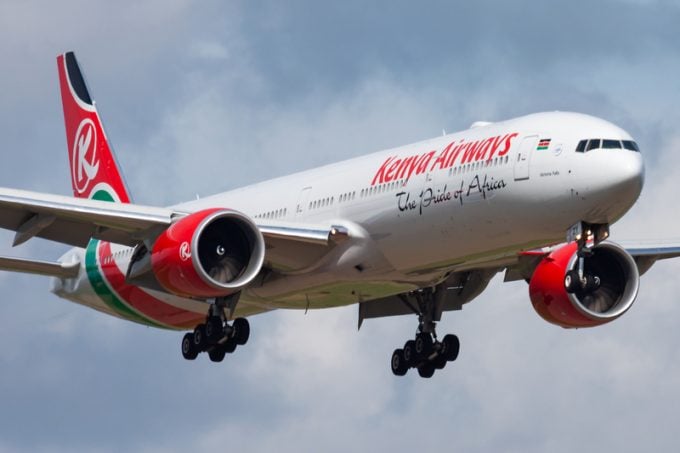
Comprehensive Summarization: Kenya Airways (KQ) reassured its customers on March 30 that the airline is stable despite posting a multi-billion-shilling...
Read moreDetails