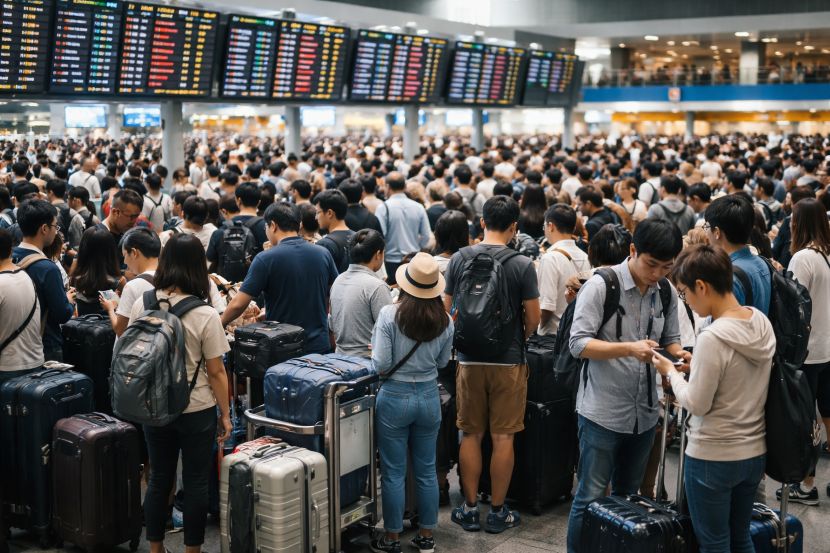
On March 6, 2026, Japan and South Korea experienced significant air travel disruptions due to hundreds of flight delays and cancellations involving Japan Airlines, ANA, Korean Air, and Jeju Air. The airports most affected were Narita, New Chitose, Fukuoka, Kushiro, and Incheon in South Korea. This disruption caused major inconveniences for travelers in Tokyo, Sapporo, Fukuoka, Kushiro, and Seoul, highlighting ongoing challenges in the aviation sector amidst evolving travel demands and operational complexities.
Key Points:
Hundreds of passengers were left stranded due to 538 flight delays and 55 cancellations across Japan and South Korea.
The airports experiencing the most significant disruptions were Narita, New Chitose, Fukuoka, Kushiro, and Incheon.
The disruptions impacted major hubs in Tokyo, Sapporo, Fukuoka, Kushiro, and Seoul, affecting both domestic and international travel.
The article emphasizes the challenges faced by airlines in managing operational efficiency during peak travel periods.
Actionable Takeaways:
Enhanced Operational Resilience: Airlines must invest in advanced operational technologies to improve real-time flight tracking and predictive maintenance, reducing the likelihood of future disruptions. This is crucial for maintaining passenger trust and operational efficiency in the face of increasing travel demands.
Strategic Partnerships and Collaborations: Airlines should explore partnerships with other carriers and airports to share resources and mitigate the impact of disruptions. Collaborative efforts can lead to more robust contingency plans and improved service recovery times.
Focus on Customer Experience: Given the significant impact on passenger experience, airlines should prioritize enhancing customer service and communication during disruptions. Providing real-time updates and support can help mitigate negative perceptions and maintain customer loyalty.
Contextual Insights:
The disruptions in Japan and South Korea underscore the vulnerabilities within the global aviation network, particularly during peak travel seasons. The article reflects broader industry trends where technological advancements and strategic partnerships are becoming increasingly vital for maintaining operational integrity. As the travel industry continues to evolve, the integration of innovative solutions such as AI-driven flight management systems and enhanced collaboration frameworks will be essential for addressing future challenges. Thought leaders emphasize the importance of agile operational strategies and customer-centric approaches to navigate the complexities of modern air travel.