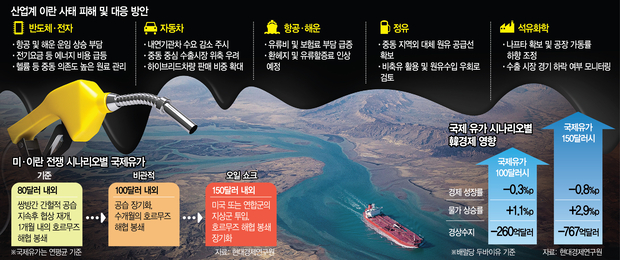
The article reports on the surge in fuel costs for major South Korean conglomerates, including Korean Air, following a breach of $110 per barrel in international oil prices due to U.S. and Israeli airstrikes on Iran. This escalation has prompted emergency meetings and the activation of contingency plans across various sectors, driven by surging production and logistics costs, concerns over export slowdowns, and potential interest rate hikes stemming from inflationary pressures. The context highlights the vulnerability of the travel industry to global oil price fluctuations and the broader economic implications for corporate operations and travel logistics.
Key Points:
International oil prices have surged to over $110 per barrel following U.S. and Israeli airstrikes on Iran, impacting production and logistics costs for major South Korean conglomerates.
Korean Air and other companies have convened emergency meetings and activated contingency plans to mitigate the financial impact of the fuel cost surge.
The crisis is compounded by concerns over export slowdowns and potential interest rate hikes driven by inflationary pressures, affecting the broader travel and logistics sectors.
The article underscores the interconnectedness of global oil markets with corporate financial stability and travel industry operations.
Actionable Takeaways:
Diversify Fuel Suppliers: Companies should explore diversifying their fuel supplier base to mitigate risks associated with volatile oil prices. This strategy can help reduce dependency on a single source and stabilize fuel costs.
Implement Cost Management Strategies: Companies should review and implement cost management strategies, such as optimizing logistics routes, improving fuel efficiency, and negotiating better terms with logistics providers. These measures can help offset increased operational costs.
Monitor Global Oil Markets: Continuous monitoring of global oil markets and geopolitical developments is crucial. Staying informed about potential price fluctuations and market trends can enable companies to make proactive adjustments to their financial planning and risk management strategies.
Contextual Insights:
The surge in fuel costs and the subsequent impact on major South Korean conglomerates reflect the broader vulnerability of the travel industry to global economic and geopolitical shifts. The article highlights the interconnected nature of oil markets and corporate financial stability, emphasizing the need for companies to adopt agile and resilient strategies in response to such shocks. As the travel industry continues to navigate an increasingly volatile global landscape, thought leaders suggest that embracing technological innovations in travel tech, fintech, and supply chain management will be essential for maintaining operational efficiency and financial resilience. The focus on diversification, cost management, and market monitoring aligns with current industry trends, underscoring the importance of proactive risk management in an era of uncertainty.
Comprehensive Summarization: Vietjet is currently offering special summer promotions to entice Indian travelers, including up to 100% off Eco tickets...