






















Travel Capitalist Ventures Expands Check Size to $10 Million to Deepen Emerging Market Conviction
Boutique Travel VC raises investment cap from $1.5M to $10M to lead rounds and support portfolio companies through growth Travel...
Read moreDetails

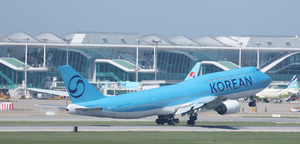
A Korean Air Boeing 747-8i charter flight carrying South Korean workers detained at the Hyundai Motor Group–LG Energy Solution joint battery plant construction site in Georgia, US, takes off from Terminal 2 of Incheon International Airport on Sept. 10. (Herald DB)
South Korea’s tourism industry is experiencing minimal short-term impact from the April 3 earthquake in Taiwan, despite some initial cancellations. While certain hotels in destinations like Jeju and Seoul reported a 30 to 50 percent cancellation rate for Taiwanese bookings scheduled for this month, the overall effect on the nation’s tourism recovery is not expected to be significant. This assessment comes from industry officials and experts, noting that Taiwan accounts for a relatively small portion of South Korea’s total inbound tourism.
### Broader Challenges in Tourism Recovery
Despite the limited impact from the Taiwan earthquake, South Korea’s tourism sector faces ongoing challenges in its post-COVID-19 recovery. The inbound tourism recovery has been slower compared to outbound travel. Last year, outbound travel from South Korea reached 80 percent of its pre-pandemic levels, while inbound international visitors were only at 27 to 30 percent of the numbers recorded in 2019. This disparity highlights a persistent gap in attracting international tourists back to the country. Key factors contributing to the slower recovery include staffing shortages across the industry, particularly in hotels and airlines, and a noticeable decrease in per-person spending by tourists. The Korean Culture and Tourism Institute points out that the absence of high-spending tourists, who often visited for medical tourism or large group tours, is affecting revenue streams for duty-free shops and other businesses.
### Government Initiatives and Future Outlook
In response to these challenges, the South Korean government, led by the Ministry of Culture, Sports and Tourism, is implementing various measures to accelerate tourism recovery. The ministry has set ambitious targets to boost international visitor numbers. Efforts include increasing direct flight routes, relaxing visa requirements, and launching large-scale marketing campaigns. Specific campaigns are designed to attract tourists from diverse regions, including Southeast Asia and the Middle East, while also focusing on attracting younger visitors. These initiatives aim to diversify the tourist base and compensate for the slower return of traditional high-spending groups. Despite the current hurdles, the industry maintains an optimistic outlook, anticipating a gradual but steady increase in international arrivals as global travel patterns stabilize and government strategies take effect.
—
### Key Points
* April 3: Date of the earthquake in Taiwan.
* 30-50 percent: Range of cancellations for some hotels in Jeju and Seoul for this month due to the earthquake.
* 27-30 percent: Percentage of inbound international visitors to South Korea last year compared to pre-pandemic levels (2019).
* 80 percent: Percentage of South Korean outbound travelers last year compared to pre-pandemic levels (2019).
* 11 million: Number of international visitors to South Korea last year (2023).
* 17.5 million: Target number of international visitors for South Korea this year.
* 2027: Year by which the South Korean government aims to attract 30 million international visitors.
* 2019: Year used for pre-pandemic comparison.
* 2023: Year for which some tourism data was provided.
Read the Complete Article.
Boutique Travel VC raises investment cap from $1.5M to $10M to lead rounds and support portfolio companies through growth Travel...
Read moreDetails




