








No products in the cart.
- Latest
- Trending

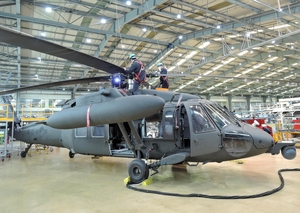
Technicians perform maintenance on a UH-60 helicopter at Korean Air's Busan Tech Center. (Korean Air)
Comprehensive Summarization:
Korean Air has announced plans to build a new manufacturing facility at its existing Busan aerospace complex, positioning Busan as a strategic hub for enhancing its aerospace and drone production capabilities. The investment, amounting to W200 billion, underscores the company’s commitment to expanding its aerospace operations in the region. This move is part of a broader strategy to bolster South Korea’s position in the global aviation and drone sectors, leveraging Busan’s existing infrastructure and expertise in aerospace manufacturing.
Key Points:
Actionable Takeaways:
Strategic Expansion in Aerospace Manufacturing: Korean Air’s investment in Busan signals a strategic expansion in aerospace manufacturing, potentially leading to job creation and technological advancements in the region. This move could position Busan as a key player in the global aerospace industry, attracting further investments and collaborations.
Leveraging Regional Infrastructure: By building its facility in Busan, Korean Air is capitalizing on the region’s existing infrastructure and expertise in aerospace manufacturing. This could serve as a model for other companies looking to establish a presence in emerging aerospace hubs, emphasizing the importance of location-based strategic planning in the industry.
Driving Innovation in Drone Technology: The focus on drone production within the new facility suggests a push towards innovation in unmanned aerial vehicle (UAV) technology. This could lead to advancements in drone applications across various sectors, including logistics, surveillance, and environmental monitoring, thereby driving growth in the drone industry.
Contextual Insights:
The announcement of Korean Air’s new manufacturing facility in Busan reflects broader trends in the global aviation industry, where companies are increasingly looking to establish strategic bases in regions with robust infrastructure and skilled labor pools. Busan’s selection as a hub for aerospace and drone production aligns with the growing emphasis on regional hubs that can serve as centers for innovation and manufacturing. This move is also indicative of the increasing importance of strategic location in the travel and aerospace sectors, where proximity to key markets and resources can provide a competitive edge.
Moreover, the investment underscores the growing significance of UAV technology in the travel industry. As drones become more integrated into various aspects of travel, from logistics to tourism, companies like Korean Air are positioning themselves at the forefront of this technological shift. This strategic move not only enhances Korean Air’s operational capabilities but also positions the company as a leader in the evolving landscape of travel tech and aviation innovation.
In summary, Korean Air’s ambitious investment in Busan represents a significant step forward in the company’s strategic expansion, leveraging the region’s strengths to drive innovation in aerospace and drone production. This development is likely to have far-reaching implications for the travel industry, fostering growth in related sectors and setting a precedent for future investments in strategic aerospace hubs.
Read the Complete Article.
Get curated travel AI insights — choose the newsletters that matter to you.
ALTOUR Expands into Thailand, Strengthening Corporate Travel Network Across Southeast Asia BANGKOK, THAILAND (25 March, 2026) – ALTOUR, a leading...
Read moreDetails


Comprehensive Summarization: Korean Air has announced plans to build a new manufacturing facility at its existing Busan aerospace complex, positioning...
Read moreDetails