







No products in the cart.
- Latest
- Trending

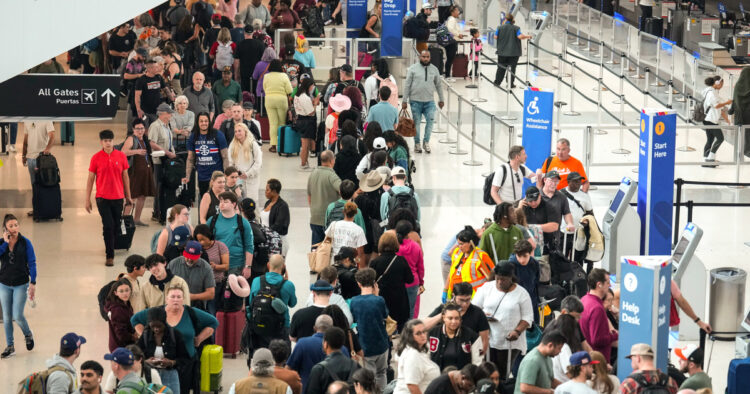
Passengers wait in long lines to get through TSA security screening at William P. Hobby Airport in Houston on Sunday.Brett Coomer / Houston Chronicle via AP
Comprehensive Summarization:
The article highlights a challenging spring for major airlines and millions of travelers in the United States, characterized by a convergence of issues that are simultaneously increasing costs and reducing convenience. Key factors contributing to these challenges include staffing shortages at domestic airport security checkpoints, exacerbated by the Department of Homeland Security’s partial shutdown, and rising jet fuel costs due to the Iran war. These factors collectively make air travel more expensive and less convenient for passengers. The article underscores the multifaceted nature of these challenges, emphasizing their impact on the travel industry and the broader economy.
Key Points:
Staffing Shortages at Airport Security Checkpoints: The partial shutdown of the Department of Homeland Security has led to critical staffing shortages at domestic airport security checkpoints, impacting the efficiency and safety of air travel.
Rising Jet Fuel Costs: The ongoing conflict in Iran has driven up jet fuel costs, adding to the financial pressures faced by airlines and increasing the overall cost of air travel for consumers.
Combined Impact on Travel Costs: The combination of staffing shortages and increased fuel costs is making air travel both costlier and less convenient for millions of travelers across the United States.
Actionable Takeaways:
Cost Management Strategies for Airlines: Airlines should explore cost management strategies, such as optimizing flight schedules, improving operational efficiencies, and negotiating better fuel contracts, to mitigate the impact of rising jet fuel costs.
Enhanced Security Measures: Given the staffing shortages at airport security checkpoints, airlines and airport authorities should collaborate to enhance security measures, possibly by leveraging technology solutions or temporary staffing solutions, to ensure safety without compromising passenger experience.
Consumer Communication: Airlines should proactively communicate with travelers about the challenges they face, offering flexibility in booking options, such as fare adjustments or compensation for inconveniences, to maintain customer trust and loyalty.
Contextual Understanding:
The article reflects the current state of the travel industry, where external geopolitical events and regulatory changes are significantly impacting operational costs and passenger experience. The convergence of staffing shortages and fuel price increases is a stark reminder of the interconnected challenges faced by airlines. These issues are not isolated but are part of a broader trend of increased volatility in the travel sector, driven by global events and economic pressures. Understanding these dynamics is crucial for stakeholders in the travel industry to adapt their strategies and maintain resilience in the face of ongoing challenges.
Handling Different Article Types:
The article is a news brief, providing factual information on the current challenges faced by the airline industry. It does not present an opinion piece or a feature article but rather reports on the latest developments and their implications. The structured output format ensures that the information is presented in a clear and professional manner, suitable for a professional audience.
Read the Complete Article.
Get curated travel AI insights — choose the newsletters that matter to you.
ALTOUR Expands into Thailand, Strengthening Corporate Travel Network Across Southeast Asia BANGKOK, THAILAND (25 March, 2026) – ALTOUR, a leading...
Read moreDetails


Comprehensive Summarization: The article highlights a challenging spring for major airlines and millions of travelers in the United States, characterized...
Read moreDetails