







No products in the cart.
- Latest
- Trending


Newark airport disruption grounds United Airlines’ Q3 forecast
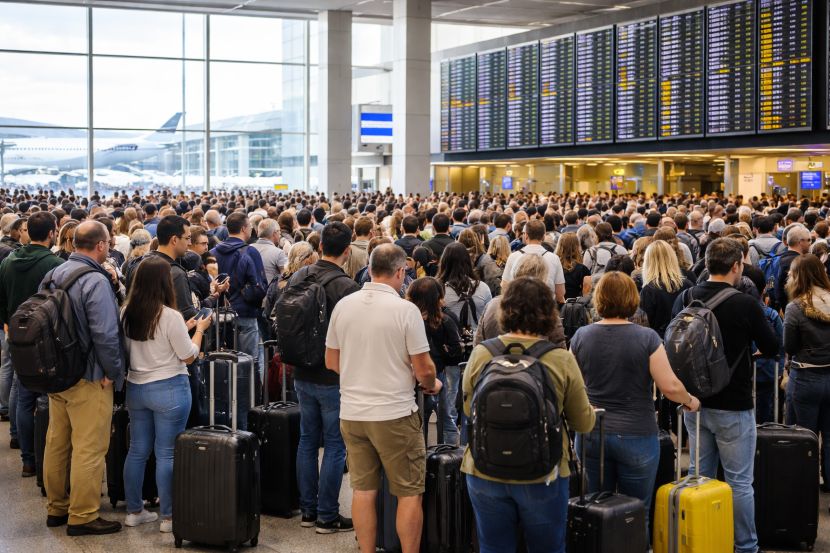
Newark Liberty International Airport (EWR) found itself at the epicenter of significant operational disruptions recently, sending ripples through the travel industry and directly impacting United Airlines’ third-quarter (Q3) forecast. The airport, a major hub for United, experienced severe delays and cancellations, primarily attributed to air traffic control (ATC) staffing shortages. This widespread disruption not only stranded thousands of travelers but also presented a substantial challenge for United Airlines, forcing them to recalibrate their Q3 financial projections.
The core of the issue stems from a critical shortage of air traffic controllers at EWR, a situation exacerbated by ongoing staffing challenges within the Federal Aviation Administration (FAA). This deficiency directly limits the airport’s capacity, forcing airlines to reduce their flight schedules and accept fewer operations. For United Airlines, which operates a significant number of flights out of Newark, this translates into fewer available seats and a reduced ability to generate revenue from its planned operations.
United’s CEO, Scott Kirby, publicly addressed the situation, highlighting the direct correlation between the Newark disruptions and the revised Q3 outlook. The airline proactively adjusted its capacity plans, anticipating a reduction in available seat miles (ASMs) for the quarter. This proactive measure, while necessary to manage the situation, inevitably impacts the airline’s financial performance. The disruption underscores the interconnectedness of the aviation ecosystem, where challenges at a single major airport can have far-reaching consequences for national and international carriers.
The impact of the Newark situation is not isolated to just delays and cancellations. It also affects the ancillary revenue streams for airlines, such as onboard sales and baggage fees, due to fewer passengers being able to complete their journeys as planned. Furthermore, the reputational damage from such widespread disruption can impact customer loyalty and future bookings, a factor that airlines must diligently manage.
While the article focuses on the immediate Q3 impact, it also implicitly highlights the broader systemic issues within ATC staffing that the FAA is grappling with. These ongoing challenges pose a continuous threat to the stability and efficiency of air travel across the United States. Airlines like United are keen to see swift and effective solutions implemented to address these fundamental operational bottlenecks. The ability of the FAA to resolve these staffing issues will be critical for United and the entire travel industry to achieve predictable and profitable operations. The situation at Newark serves as a stark reminder of the fragility of air travel infrastructure and the critical role of efficient ATC management in ensuring smooth operations.
Key Points
Read the Complete Article.
Get curated travel AI insights — choose the newsletters that matter to you.
ALTOUR Expands into Thailand, Strengthening Corporate Travel Network Across Southeast Asia BANGKOK, THAILAND (25 March, 2026) – ALTOUR, a leading...
Read moreDetails


Comprehensive Summarization: HotelREZ Hotels and Resorts has appointed Hadley O’Dwyer as its Vice President of Customer Success and Engagement, marking...
Read moreDetails