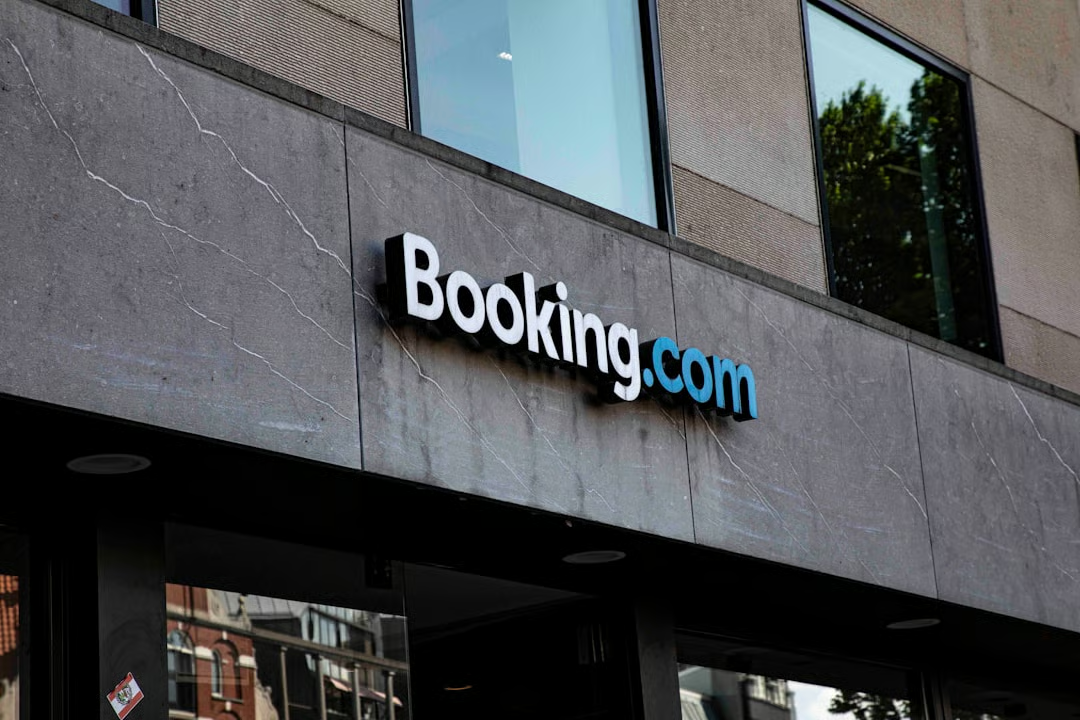
The article from eSecurity Planet details a sophisticated phishing campaign targeting hotel partners of Booking.com. The operation begins with deceptive “complaint” emails sent to hotel staff, aiming to steal credentials. This initial breach allows the attackers to defraud unsuspecting travelers through fraudulent payment requests, often communicated via WhatsApp. The primary motivation behind this multi-stage operation is financial fraud, targeting both hotel businesses and customers. Bridewell researchers highlight that this campaign is not just a routine phishing attempt but a structured, multi-stage fraud operation designed to compromise trusted partner accounts and exploit customer relationships. By gaining access to legitimate Booking.com partner portals, the attackers can carry out their fraudulent activities with a higher degree of credibility.
Key Points:
A new phishing campaign is exploiting trust in Booking.com to steal credentials from hotel partners.
The campaign involves a multi-stage operation starting with deceptive emails to hotel staff and ending with fraudulent payment requests sent to guests via WhatsApp.
The primary motivation behind the campaign is financial fraud, targeting hotel businesses and customers sequentially.
The operation begins with gaining access to legitimate Booking.com partner portals, allowing attackers to compromise trusted accounts.
The campaign represents a significant threat to hotel businesses and customers, exploiting both partner accounts and customer relationships.
Actionable Takeaways:
Enhanced Email Security Protocols for Hotel Staff: Implementing advanced email security measures, such as multi-factor authentication (MFA) and email filtering systems, can help prevent the initial compromise of hotel staff accounts. This is crucial as the campaign begins with deceptive emails designed to steal credentials.
Employee Training on Phishing Awareness: Regular training sessions for hotel staff on recognizing phishing attempts can significantly reduce the risk of falling victim to such scams. Educating employees about the tactics used in this campaign, such as urgent requests for credentials or payment requests via non-standard channels like WhatsApp, can empower them to identify and report suspicious emails promptly.
Multi-Layered Authentication for Payment Transactions: Travel operators should adopt multi-layered authentication processes for all payment transactions, especially those initiated via WhatsApp or other non-standard channels. This could include requiring additional verification steps, such as SMS codes or biometric authentication, to ensure that payments are authorized by legitimate users.
Contextual Understanding:
The article reflects the evolving nature of phishing attacks, which are increasingly sophisticated and targeted at trusted entities like Booking.com. This trend is part of a broader shift in cybercrime where attackers leverage legitimate platforms to gain credibility and trust, making their fraudulent activities harder to detect. The integration of WhatsApp for payment requests highlights the growing use of messaging apps for financial transactions, a trend that underscores the need for robust authentication mechanisms across all communication channels. The article also touches on the broader implications for the travel industry, where trust in booking platforms is paramount. As such, the campaign serves as a stark reminder of the importance of cybersecurity in maintaining customer trust and operational integrity in the travel sector.
Handling Different Article Types:
The article in question is a news brief, providing factual information about a recent phishing campaign targeting the travel industry. The structured output format below adheres to the facts and context provided:
markdown
Comprehensive Summarization:
A sophisticated phishing campaign is exploiting trust in Booking.com to steal credentials from hotel partners, leading to fraudulent payment requests sent to travelers via WhatsApp. The campaign’s primary goal is financial fraud, targeting hotel businesses and customers sequentially. Bridewell researchers describe it as a multi-stage operation designed to compromise trusted partner accounts and exploit customer relationships.
Key Points:
A phishing campaign is targeting Booking.com partners to steal credentials.
The operation involves multiple stages, starting with deceptive emails and ending with fraudulent payments via WhatsApp.
The main motivation is financial fraud, targeting both hotel businesses and customers.
Attackers gain access to legitimate Booking.com partner portals to carry out their fraudulent activities.
The campaign represents a significant threat to hotel businesses and customers, exploiting both partner accounts and customer relationships.
Actionable Takeaways:
Implement enhanced email security protocols for hotel staff, including MFA and advanced email filtering.
Conduct regular training sessions for hotel staff on phishing awareness to recognize and report suspicious emails.
Adopt multi-layered authentication processes for payment transactions, especially those initiated via non-standard channels like WhatsApp.
Contextual Insights:
The campaign highlights the evolving tactics of cybercriminals who leverage trusted platforms to gain credibility and carry out sophisticated phishing attacks. It underscores the importance of robust cybersecurity measures in the travel industry, where trust in booking platforms is essential. The shift towards using messaging apps like WhatsApp for financial transactions further emphasizes the need for comprehensive authentication measures across all communication channels to protect against such threats.