




No products in the cart.
- Latest
- Trending


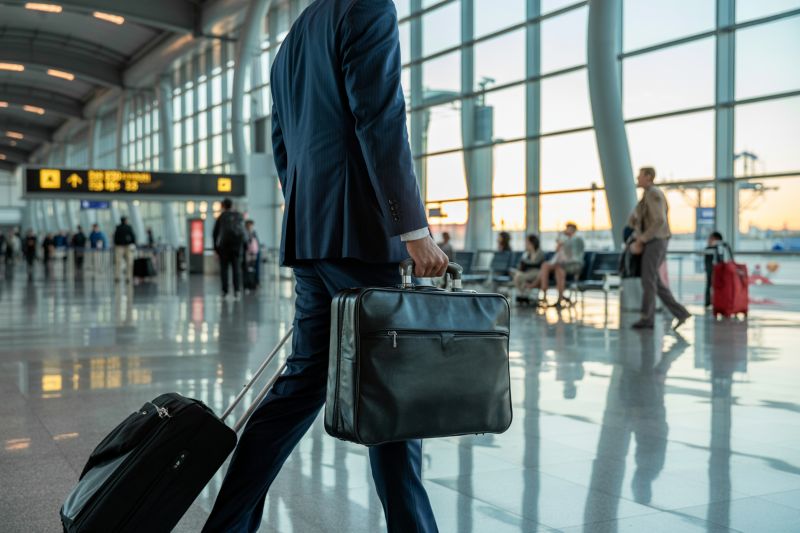
China and Germany Rank High in Global Business Travel Spending Behind the United States, Everything ...
Comprehensive Summarization:
The article highlights the United States’ leading position in global business travel spending, with an annual expenditure of $395.4 billion, as reported by Booking.com for Business using data from the Department of Commerce, International Trade Administration. This statistic underscores the economic significance of business travel within the global economy. The research further identifies China and Germany as the next major spenders in this sector, together accounting for a significant portion of worldwide business travel expenditure. The article emphasizes the economic importance of corporate travel and the global nature of business activity, indicating its pivotal role in driving economic growth and international commerce.
Key Points:
Actionable Takeaways:
Investment in Business Travel Infrastructure: Given the substantial spending on business travel, particularly in the United States, there is an opportunity for companies to invest in enhancing business travel infrastructure, including technology solutions for smoother travel experiences and logistics. This could include advancements in travel booking platforms, virtual meeting technologies, and efficient travel management systems, thereby catering to the growing demand and economic importance of business travel.
Focus on International Markets: The article’s emphasis on the United States, China, and Germany as key players in business travel spending suggests a strategic focus for businesses and travel companies on these markets. Companies could benefit from tailoring their services and offerings to cater to the specific needs and preferences of these regions, potentially leading to increased market share and revenue growth.
Contextual Insights:
The article reflects the current state of the global economy, where business travel remains a critical component of international commerce. The United States’ leading position in business travel spending highlights the country’s robust economic environment and its role as a hub for global business activities. The data-driven approach used by Booking.com for Business to analyze spending patterns provides valuable insights for businesses and policymakers alike, enabling them to make informed decisions regarding investments in travel-related technologies and services. Furthermore, the identification of China and Germany as significant spenders indicates a trend towards globalization and international trade, suggesting that businesses should consider expanding their operations and market presence in these regions to capitalize on the growing demand for business travel.
Handling Different Article Types:
The article is a news brief, providing factual information on business travel spending and its economic implications. The structured approach used in this summary is suitable for such articles, ensuring clarity and relevance for a professional audience. For opinion pieces or feature articles, the summarization and analysis would need to adapt to incorporate the author’s perspective and in-depth exploration of topics, while still adhering to the facts and context provided within the article.
Read the Complete Article.
Get curated travel AI insights — choose the newsletters that matter to you.
This spot is reserved for brands with a compelling story for the travel trade. They use this space to cut...
Read moreDetailsALTOUR Expands into Thailand, Strengthening Corporate Travel Network Across Southeast Asia BANGKOK, THAILAND (25 March, 2026) – ALTOUR, a leading...
Read moreDetails


Comprehensive Summarization: Ryanair has joined a group of major airlines including Wizz Air, EasyJet, Lufthansa, Turkish Airlines, airBaltic, and Qatar...
Read moreDetails