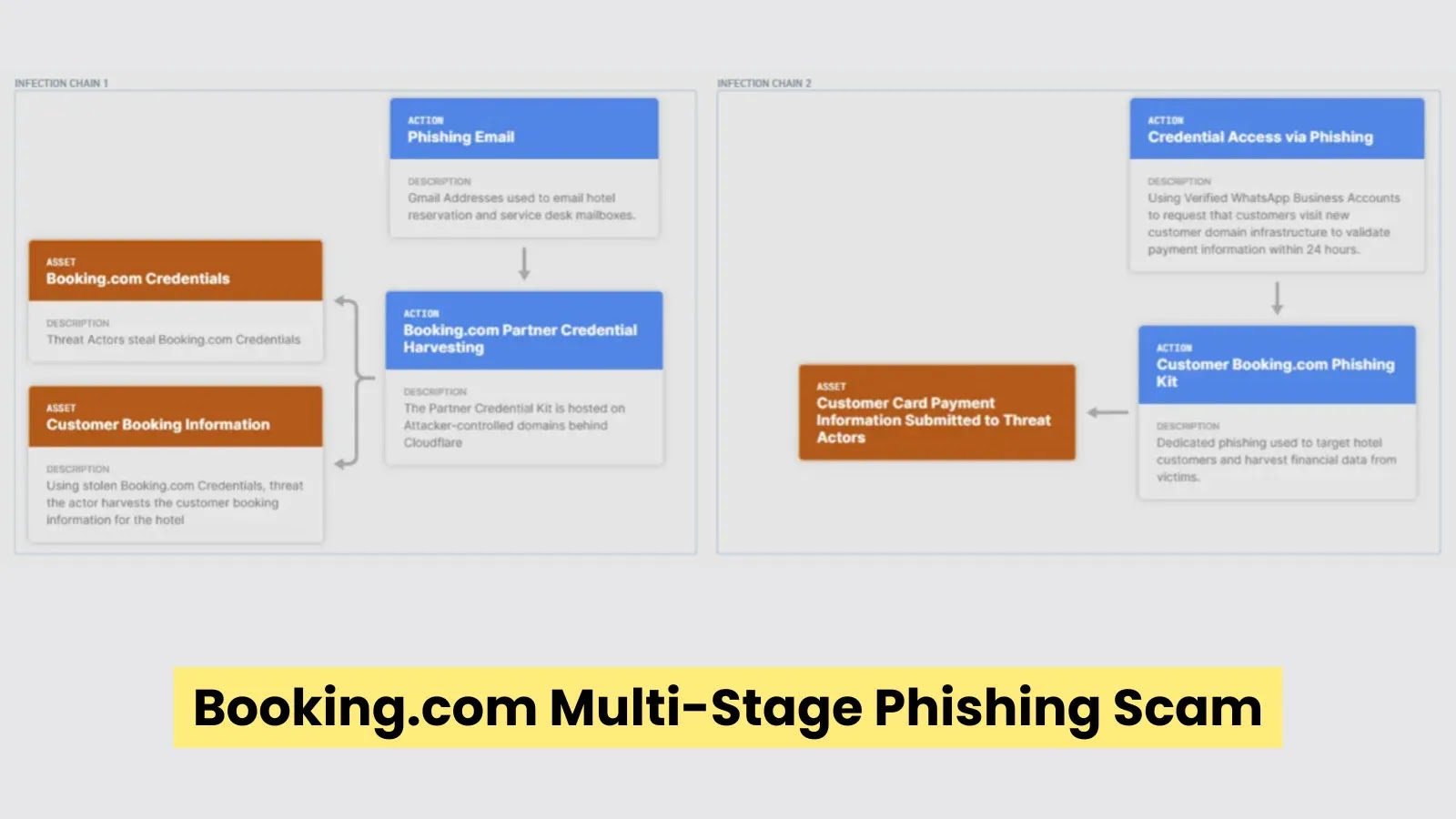
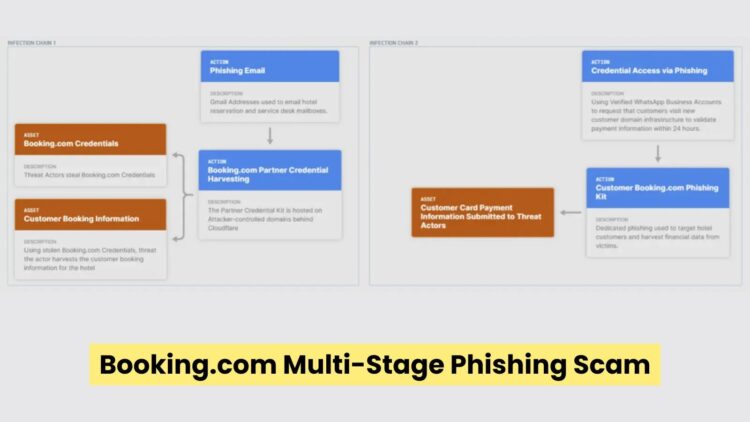
The article details a sophisticated two-step phishing campaign targeting hotel staff and travelers. Security researchers have identified this as an ATT&CK-style operation, where the initial compromise focuses on hotel partners, followed by the exploitation of stolen booking data to scam customers. The campaign, active since at least January, exhibits automation, deception, and strong defense-evasion tactics. The phishing emails impersonate Booking.com, targeting hotel reservation mailboxes with urgent claims about guest complaints or booking issues. The attackers generate numerous Gmail accounts with similar patterns, suggesting automated registrations. The emails aim to pressure hotel staff into responding, thereby compromising their systems.
Key Points:
The phishing campaign targets hotel partners and customers through carefully designed emails, impersonating Booking.com.
The operation follows an ATT&CK-style flow, with the first stage compromising hotel partners and the second stage exploiting stolen booking data.
The campaign has been active since January, showing signs of automation, deception, and strong defense-evasion tactics.
Emails claim to be about guest complaints or urgent booking issues to pressure hotel staff into responding.
Attackers generate large numbers of Gmail accounts with similar patterns, indicating automated registrations.
Actionable Takeaways:
Enhanced Email Security Protocols: Implement advanced email filtering and authentication mechanisms, such as DMARC, SPF, and DKIM, to prevent phishing emails from reaching hotel staff. This will help mitigate the initial compromise stage of the campaign.
Employee Training and Awareness: Conduct regular training sessions for hotel staff to recognize phishing attempts, emphasizing the importance of verifying the authenticity of emails, especially those claiming to be from Booking.com or other major travel platforms. Awareness training can significantly reduce the risk of falling victim to such scams.
Multi-Factor Authentication (MFA): Enforce the use of MFA for all hotel staff accessing booking systems and sensitive data. MFA adds an extra layer of security, making it more difficult for attackers to exploit stolen booking data, even if they manage to compromise a user’s credentials.
Contextual Understanding:
The article highlights a concerning trend in cybercrime targeting the hospitality industry, leveraging the trust associated with well-known platforms like Booking.com. This type of attack is particularly effective due to the high volume of transactions and sensitive data involved in the travel sector. The use of automated registrations for Gmail accounts suggests a sophisticated approach, indicating that cybercriminals are increasingly employing advanced techniques to bypass traditional security measures. The emphasis on defense-evasion tactics underscores the need for continuous monitoring and adaptive security measures in the travel industry. As the travel industry continues to evolve with digital transformation, staying ahead of such cyber threats is crucial for maintaining customer trust and operational integrity.
Handling Different Article Types:
The article is a news brief, providing factual information about a specific cybercrime campaign targeting the travel industry. The structured output format ensures that the key points and actionable takeaways are clearly presented, making it easy for professionals in the travel sector to quickly grasp the implications and take necessary actions.