







No products in the cart.
- Latest
- Trending


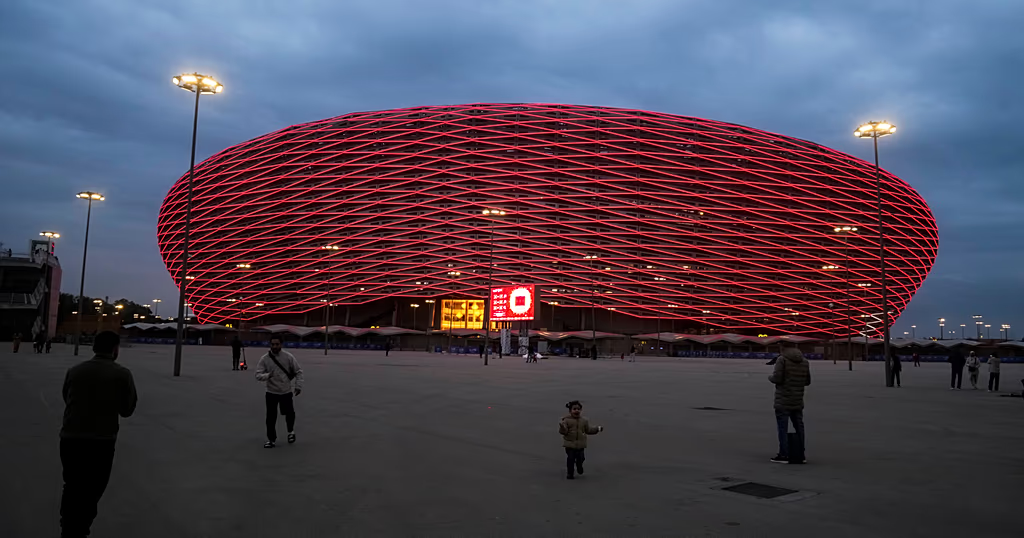
AFCON 2025 kicks off: Morocco ready to host the continent
Article Summary:
The Africa Cup of Nations (AFCON) 2025 has commenced in Morocco, marking a significant event for the continent’s biggest football tournament. With 24 teams, six host cities, and nine stadiums, Morocco is preparing for this high-visibility event, which is seen as a dress rehearsal for the 2030 World Cup. The Moroccan kingdom has undertaken extensive infrastructure programs, positioning the country as a leader in African sporting history. The defending champion, Ivory Coast, achieved a remarkable title run, while Nigeria aims to surpass this by winning the current tournament.
Key Points:
Actionable Takeaways:
Contextual Insights:
The commencement of AFCON 2025 in Morocco reflects broader trends in the travel industry, particularly the increasing importance of major sporting events as catalysts for tourism and economic growth. Morocco’s investment in infrastructure not only prepares the country for the tournament but also positions it as a potential hub for future international sports events. This aligns with the growing trend of using sports events to drive tourism and showcase a nation’s capabilities on the global stage. Furthermore, the focus on technology and infrastructure in sports events mirrors the broader industry shift towards digitalization and innovation, offering opportunities for travel startups and fintech solutions to enhance the travel experience for sports fans. As the travel industry continues to evolve, staying abreast of these trends and integrating relevant technologies will be crucial for businesses aiming to capitalize on the growing demand for travel associated with major sporting events.
Read the Complete Article.
Get curated travel AI insights — choose the newsletters that matter to you.
ALTOUR Expands into Thailand, Strengthening Corporate Travel Network Across Southeast Asia BANGKOK, THAILAND (25 March, 2026) – ALTOUR, a leading...
Read moreDetails


Comprehensive Summarization: Hanjin Kal Corp, listed on the Korea Exchange under ISIN KR7025540006, is a prominent player in South Korea's...
Read moreDetails