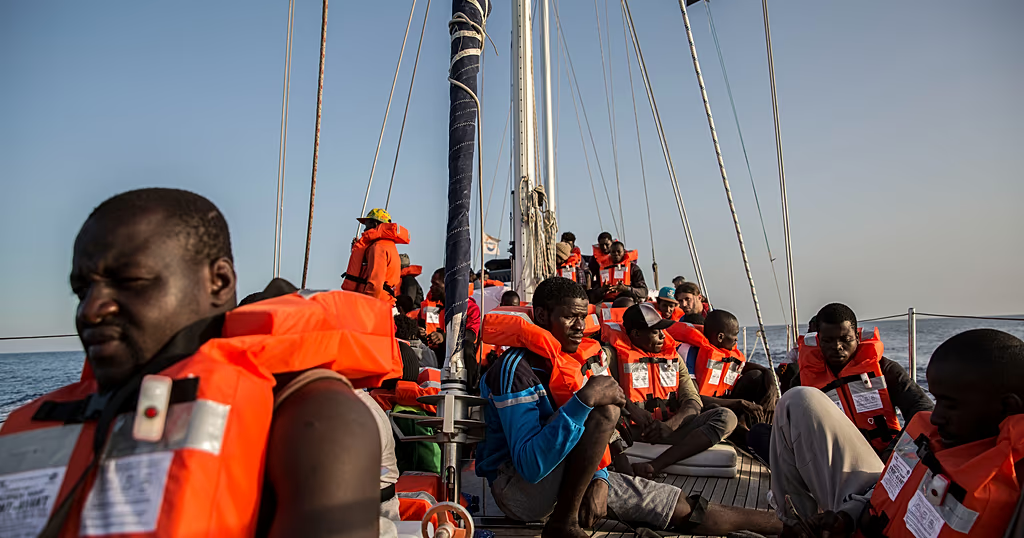
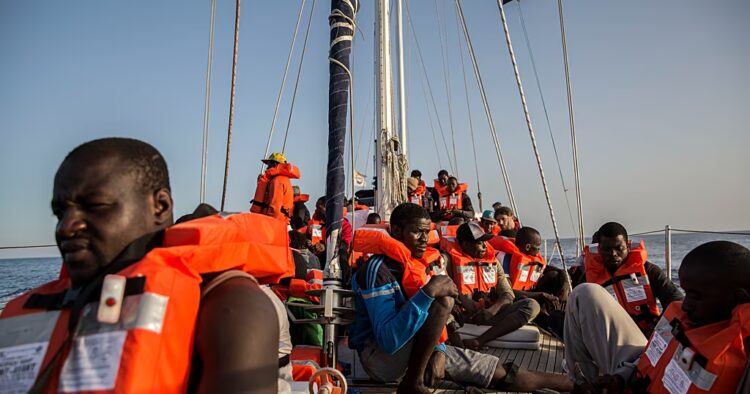
The article reports on a significant rescue operation conducted by Italian NGO Organisation Emergency in the central Mediterranean on Friday evening. Over 50 individuals were rescued from an overcrowded boat, including nine children. This was the second rescue operation of the day for the NGO, which had previously assisted 41 migrants at sea. The rescued individuals hailed from various countries including Nigeria, Guinea-Bissau, Biafra, Senegal, South Sudan, Guinea, The Gambia, and Sudan. Both rescue operations were carried out within the Libyan Search and Rescue zone, where the boats were sighted. The migrants are en route to Civitavecchia in Italy.
Key Points:
Organisation Emergency rescued more than 50 individuals from an overcrowded boat in the central Mediterranean on Friday evening.
The rescue operation was the second of the day for the NGO, with a previous operation involving the rescue of 41 migrants.
The rescued individuals were from various countries including Nigeria, Guinea-Bissau, Biafra, Senegal, South Sudan, Guinea, The Gambia, and Sudan.
The rescue team was mobilized after the boats were sighted in international waters within the Libyan Search and Rescue zone.
The rescued migrants are heading to Civitavecchia in Italy.
Actionable Takeaways:
Enhanced Maritime Rescue Coordination: The article highlights the importance of coordinated rescue operations in international waters. For travel and logistics companies operating in the Mediterranean, establishing robust coordination mechanisms with NGOs like Organisation Emergency can improve response times and safety for migrants. This could involve sharing real-time data on boat sightings and establishing protocols for rapid response.
Focus on Humanitarian Logistics: The rescue of migrants from diverse backgrounds underscores the need for efficient humanitarian logistics. Travel and logistics companies can benefit from investing in technologies that streamline the transport and accommodation of rescued individuals. This includes developing partnerships with NGOs to optimize the use of available resources and ensure timely delivery of aid.
Contextual Insights:
The rescue operation reflects the ongoing challenges faced by migrants attempting to cross the Mediterranean. The increasing number of rescue missions underscores the need for enhanced maritime safety and humanitarian support in the region. From a travel industry perspective, this situation highlights the importance of integrating humanitarian logistics into travel planning, especially for routes that involve high-risk maritime travel. Thought leaders in the travel sector are increasingly advocating for the incorporation of humanitarian considerations into travel itineraries, particularly for routes that cross volatile maritime zones. This trend is likely to gain momentum as the industry seeks to address the ethical and safety implications of travel in regions affected by humanitarian crises.