









No products in the cart.
- Latest
- Trending


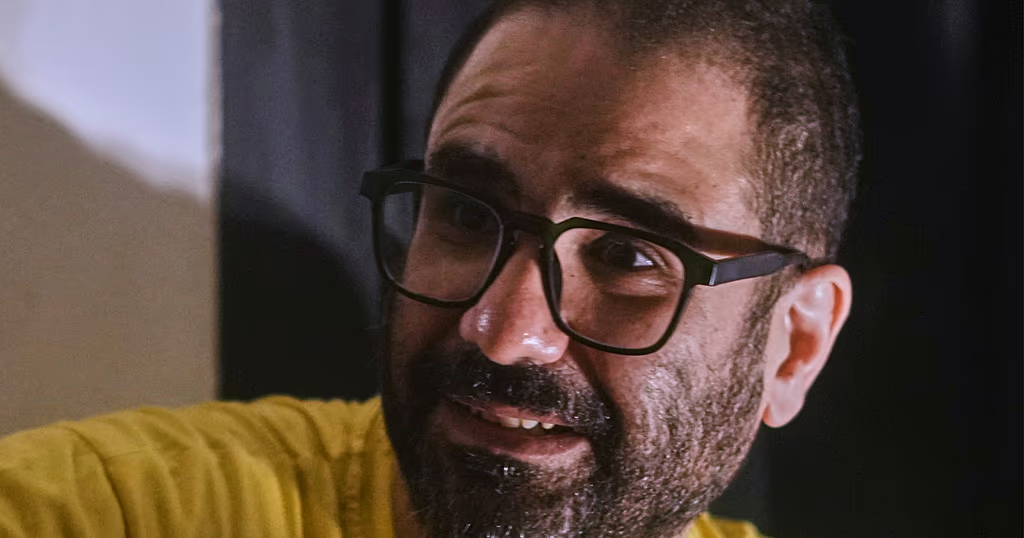
Egyptian dissident Alaa Abd el-Fattah arrives in London after travel ban lifted
Article Summary:
British-Egyptian dissident Alaa Abd el-Fattah, who spent nearly a decade in prison largely for speaking out against the Egyptian government’s treatment of dissidents, has arrived in London after Egyptian authorities lifted a travel ban. Abd el-Fattah had been negotiating permission to travel freely, amid fears that leaving Egypt could pose risks. His release from prison in September marked the end of a long struggle for his freedom, following a five-year sentence that authorities extended by two years, refusing to count his pre-trial detention as time served.
Key Points:
Actionable Takeaways:
Contextual Insights:
The article reflects current trends in the travel industry towards greater emphasis on human rights and ethical considerations in travel planning. With thought leaders advocating for responsible travel, there is a growing demand for transparency and accountability in travel operations. The case of Alaa Abd el-Fattah aligns with these trends, as it highlights the role of travel in advocating for human rights and the importance of supporting individuals who fight for freedom of expression and movement. As the travel industry continues to evolve, integrating such values into business practices will likely become a key differentiator for companies aiming to attract socially conscious travelers.
Read the Complete Article.
Get curated travel AI insights — choose the newsletters that matter to you.
This spot is reserved for brands with a compelling story for the travel trade. They use this space to cut...
Read moreDetailsALTOUR Expands into Thailand, Strengthening Corporate Travel Network Across Southeast Asia BANGKOK, THAILAND (25 March, 2026) – ALTOUR, a leading...
Read moreDetails


Comprehensive Summarization: Koh Chraeng, an island located in the Kratie Province of Cambodia along the Mekong River, is rapidly gaining...
Read moreDetails