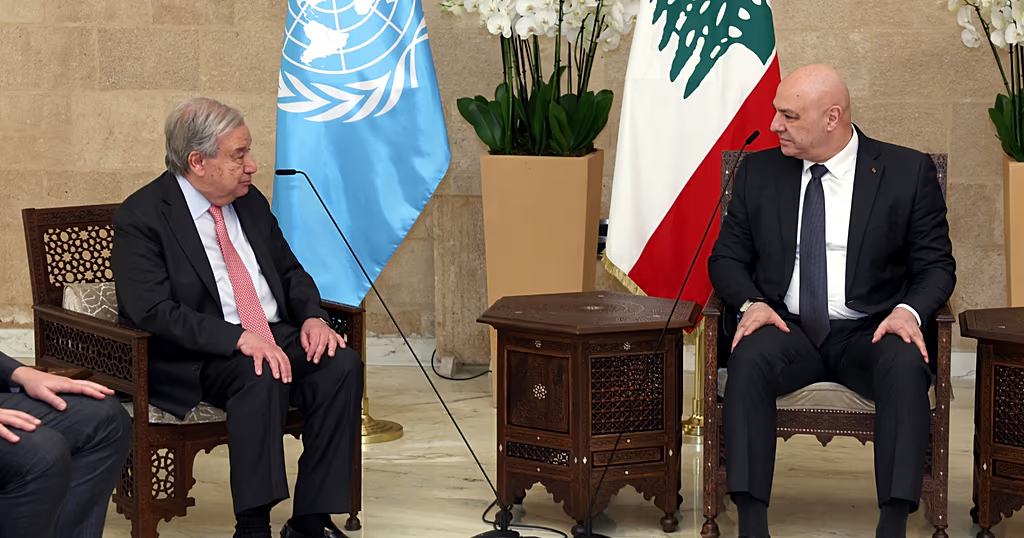
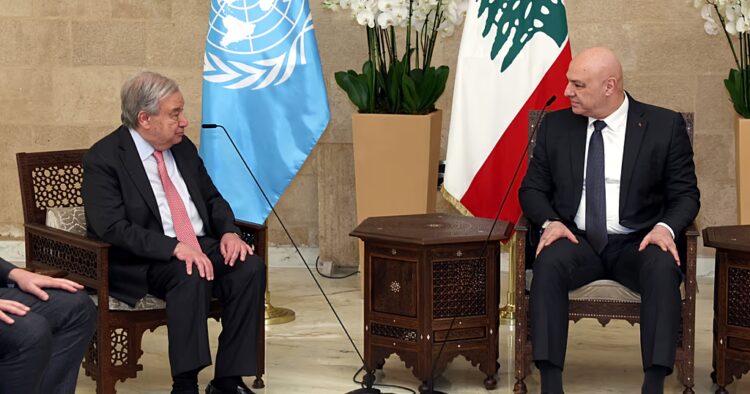
The article reports on a statement made by United Nations Secretary-General António Guterres, who called for an immediate ceasefire between Israel and Hezbollah. Guterres emphasized the immense suffering caused by the conflict for the Lebanese people, urging both parties to cease the fighting and pave the way for a solution. The situation in Lebanon is described as “dramatic,” highlighting the conflict’s impact on the local population. The article also touches on the broader context of Lebanon being dragged into a war it did not want, underscoring the humanitarian crisis and the urgent need for a ceasefire.
Key Points:
United Nations Secretary-General António Guterres called for an immediate ceasefire between Israel and Hezbollah.
Guterres highlighted the immense suffering caused by the conflict for the Lebanese people.
The Secretary-General emphasized the need for an end to the fighting to pave the way for a solution.
Lebanon is described as being dragged into a conflict it did not want, resulting in a dramatic humanitarian situation.
Actionable Takeaways:
Immediate Ceasefire Urgency: The call for an immediate ceasefire underscores the critical need for conflict resolution in the region. This action is essential to alleviate the suffering of the Lebanese population and prevent further escalation of violence. Immediate diplomatic efforts should be prioritized to facilitate a ceasefire, as it directly impacts the humanitarian crisis and regional stability.
Humanitarian Focus: The article emphasizes the humanitarian crisis caused by the conflict. Stakeholders, including governments, NGOs, and international organizations, should intensify their efforts to provide immediate relief and support to the affected Lebanese population. This includes access to shelter, medical care, and essential services, which are critical for mitigating the immediate impacts of the conflict.
Contextual Insights:
The conflict between Israel and Hezbollah has significant implications for the travel industry in the region. The ongoing violence and humanitarian crisis can deter tourists and disrupt travel plans, leading to potential economic losses for travel-related businesses. Travel agencies and hospitality providers in Lebanon should closely monitor the situation and prepare contingency plans to support their clients and staff. Additionally, the travel industry can leverage this situation to advocate for peace and stability, potentially positioning itself as a stakeholder in conflict resolution efforts. This aligns with broader travel tech trends focusing on crisis management and risk assessment, ensuring that travel companies are better equipped to handle unforeseen disruptions in the future.