










No products in the cart.
- Latest
- Trending


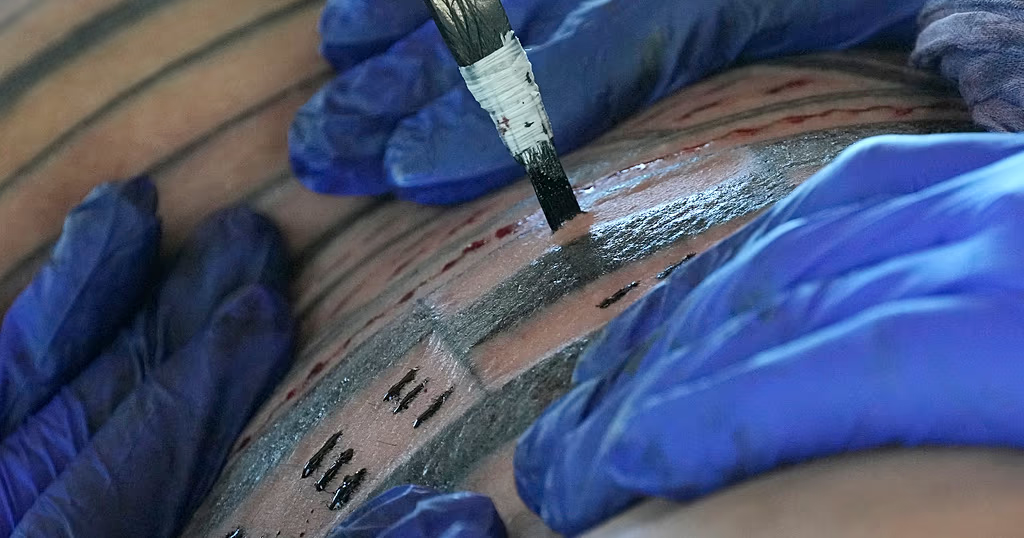
Researchers find evidence of youngest-ever children tattooed
Article Summary:
Researchers from Arizona State University and the University of Missouri have discovered evidence suggesting the youngest-ever tattooed child, estimated to be between 7 and 10 months old. The study, published in PNAS, utilized infrared scans to examine tattooed bodies from various cultural groups in what is now Sudan. The findings provide new insights into ancient tattoo traditions in Nubia.
Key Points:
Actionable Takeaways:
Contextual Insights:
The discovery of the youngest tattooed child in ancient Nubia is a testament to the ongoing evolution of archaeological techniques and the continuous uncovering of new information about our past. This finding aligns with current trends in the travel industry towards experiential learning and cultural immersion. As travelers become more interested in understanding the historical and cultural contexts of the places they visit, insights like these can enhance travel offerings by providing deeper narratives and educational experiences. Furthermore, the integration of advanced technologies like infrared scanning in archaeological research reflects a broader trend in the industry towards leveraging technology to enhance travel experiences, making them more informative and engaging. This could inspire travel startups to develop innovative tools and platforms that utilize technology to offer unique, educational travel experiences, potentially setting new standards for cultural tourism.
Read the Complete Article.
Get curated travel AI insights — choose the newsletters that matter to you.
ALTOUR Expands into Thailand, Strengthening Corporate Travel Network Across Southeast Asia BANGKOK, THAILAND (25 March, 2026) – ALTOUR, a leading...
Read moreDetails


Comprehensive Summarization: LaGuardia Airport experienced significant disruption on March 22 after an Air Canada Express regional jet collided with a...
Read moreDetails