









No products in the cart.
- Latest
- Trending

DRC accuses Rwanda of killing 1,500 civilians in past month
Article Summary:
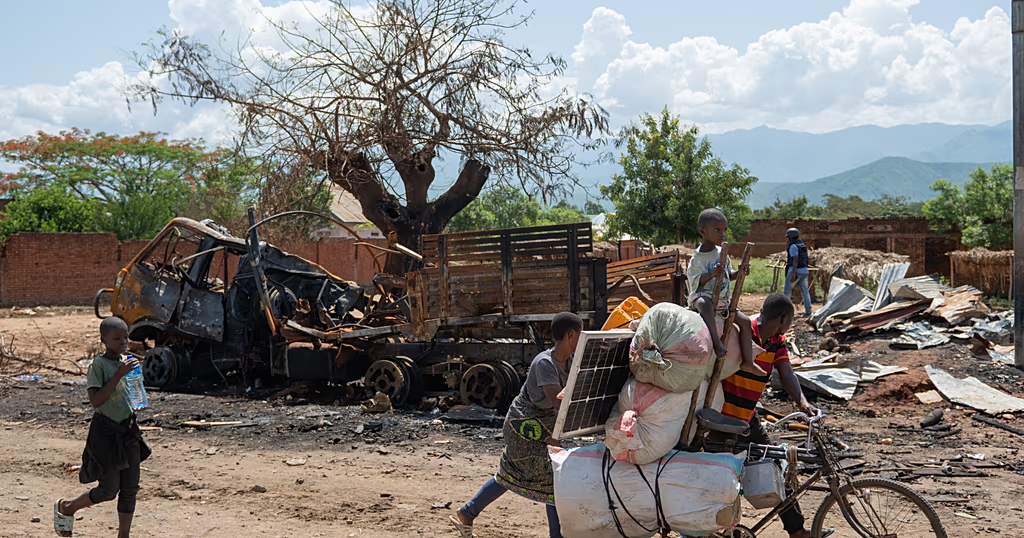
The Democratic Republic of Congo (DRC) has accused Rwanda of killing over 1,500 civilians in the eastern DRC since early December, following the launch of a fresh offensive by the Kigali-backed M23 militia. The Congolese government, supported by humanitarian sources and state services, described the attacks as a clear act of aggression against national sovereignty and a serious violation of international law. M23 rebels have taken control of key eastern cities, escalating tensions in the region.
Key Points:
Actionable Takeaways:
Contextual Insights:
The conflict in the eastern DRC, particularly the involvement of the M23 militia and the accusations against Rwanda, underscores the volatile nature of the region. This context is crucial for understanding the broader implications for the travel industry. Recent trends indicate a growing emphasis on safety and security in travel planning, with consumers increasingly prioritizing destinations that offer stable environments. Thought leaders in the travel sector are likely to emphasize risk management and security measures as key factors in future travel planning and destination promotion. Additionally, the situation may prompt increased collaboration between governments, NGOs, and the private sector to address humanitarian and security challenges, potentially leading to innovations in travel insurance and safety protocols.
Read the Complete Article.
Get curated travel AI insights — choose the newsletters that matter to you.
This spot is reserved for brands with a compelling story for the travel trade. They use this space to cut...
Read moreDetailsALTOUR Expands into Thailand, Strengthening Corporate Travel Network Across Southeast Asia BANGKOK, THAILAND (25 March, 2026) – ALTOUR, a leading...
Read moreDetails


Comprehensive Summarization: The article introduces Khadak Raj Paudel, the newly appointed Minister for Culture, Tourism and Civil Aviation of Nepal,...
Read moreDetails