






No products in the cart.
- Latest
- Trending

Controversy grows in DRC over alleged tolerance of anti-Tutsi rhetoric
Article Summary:
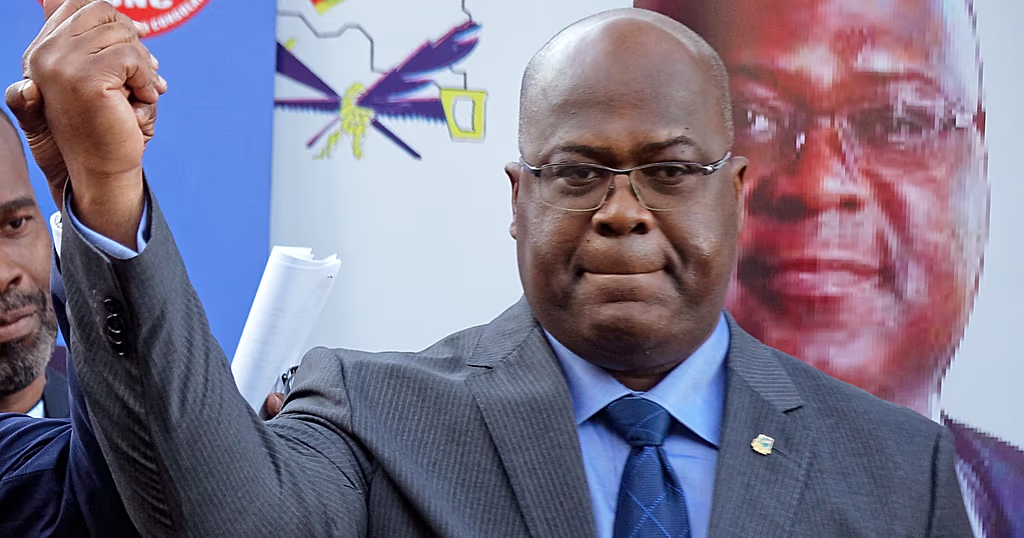
The Democratic Republic of Congo is experiencing growing controversy over allegations of government tolerance for anti-Tutsi rhetoric. President Félix Tshisekedi met with two Congolese expatriates from the United States, Jean-Claude Mubenga and Kalonji Kabamba wa Mulumba, on December 22nd. The meeting reportedly focused on national unity and sovereignty. However, critics argue that the meeting sent the wrong message. The following day, Mubenga posted inflammatory content online, using dehumanizing language and praising armed groups accused of targeting Kinyarwanda-speaking civilians.
Key Points:
Actionable Takeaways:
Contextual Insights:
The controversy in the Democratic Republic of Congo reflects broader challenges faced by the travel industry in regions with political instability. Recent trends indicate a growing emphasis on risk assessment and mitigation strategies in travel planning. Thought leaders in the industry are increasingly advocating for the integration of geopolitical risk analysis into travel itineraries and investment decisions. This article aligns with these trends by highlighting the direct impact of political rhetoric on travel safety and stability. As the travel industry continues to evolve, the ability to navigate and adapt to political and social dynamics will be crucial for stakeholders aiming to mitigate risks and ensure safe travel experiences.
Read the Complete Article.
Get curated travel AI insights — choose the newsletters that matter to you.
This spot is reserved for brands with a compelling story for the travel trade. They use this space to cut...
Read moreDetailsALTOUR Expands into Thailand, Strengthening Corporate Travel Network Across Southeast Asia BANGKOK, THAILAND (25 March, 2026) – ALTOUR, a leading...
Read moreDetails


Comprehensive Summarization: The article highlights the significant impact of geopolitical tensions involving the United States, Israel, and Iran on the...
Read moreDetails