










No products in the cart.
- Latest
- Trending

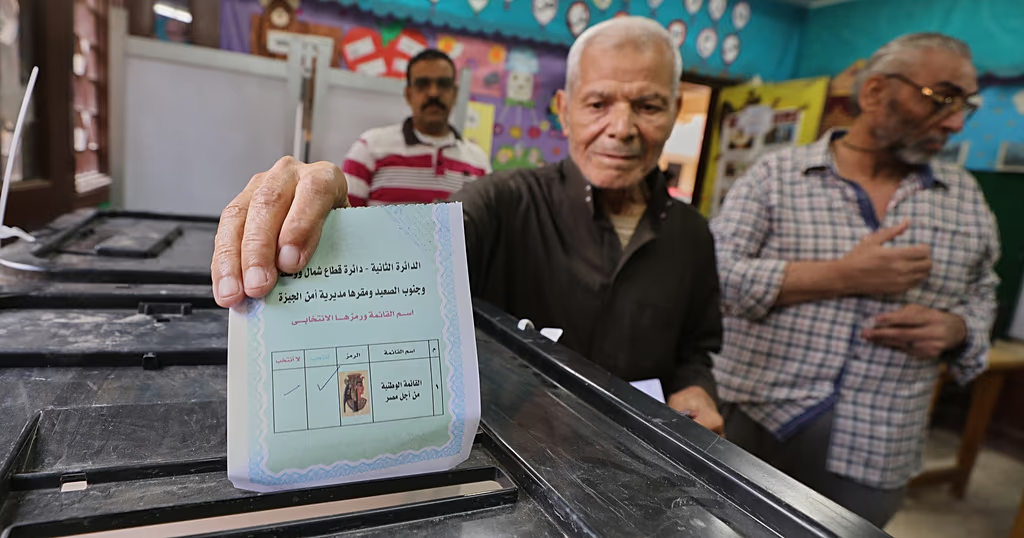
Egypt votes in parliamentary elections
Article Summary:
The article reports the commencement of the first phase of Egypt’s parliamentary election, which began on Monday. Nearly 63 million eligible voters will participate in this phase to elect 568 members of the House of Representatives. The voting is taking place in 14 provinces, with the results expected by November 18. The second phase of voting is scheduled for November 24-25, covering the remaining 13 provinces.
Key Points:
Actionable Takeaways:
Political Engagement and Voter Turnout: The high number of eligible voters (63 million) participating in the first phase of Egypt’s parliamentary election indicates a significant level of political engagement. This could suggest a growing interest in democratic processes and a desire for representation in the House of Representatives. For travel industry stakeholders, this could imply an increase in political tourism or events related to the election, potentially opening new market opportunities.
Contextual Insights:
The article’s context is deeply rooted in the political landscape of Egypt, particularly the electoral process. The timing of the election phases and the high voter turnout reflect broader trends in democratic engagement within the region. From a travel industry perspective, understanding these political dynamics is crucial for anticipating market shifts. For instance, the election could influence travel trends by attracting tourists interested in political events or those looking to engage with the local political scene. Additionally, the article highlights the importance of real-time information dissemination, a trend that aligns with the increasing reliance on digital platforms for travel planning and updates. As the travel industry continues to evolve, staying informed about political developments can provide valuable insights into emerging market opportunities and consumer behavior.
Read the Complete Article.
Get curated travel AI insights — choose the newsletters that matter to you.
ALTOUR Expands into Thailand, Strengthening Corporate Travel Network Across Southeast Asia BANGKOK, THAILAND (25 March, 2026) – ALTOUR, a leading...
Read moreDetails


Comprehensive Summarization: AerCap, a global aircraft finance and leasing company, has entered into lease agreements with Ethiopian Airlines for two...
Read moreDetails