





No products in the cart.
- Latest
- Trending

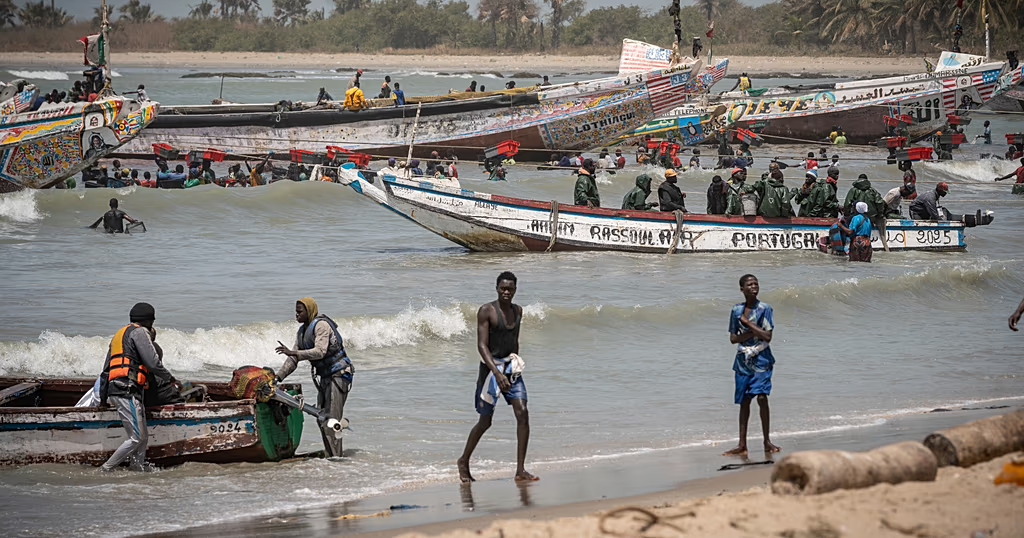
The Gambia: Dozens missing after boat carrying over 200 migrants capsized
Article Summary:
On New Year’s Eve, a boat carrying over 200 migrants capsized off the coast of the Gambia, resulting in dozens of people being reported missing. According to Gambian President Adama Barrow, at least 102 survivors have been rescued, and seven bodies have been recovered from the boat that capsized in the North Bank region of northwest Gambia. The national emergency response plan has been activated, and the government has deployed resources to assist in the rescue and recovery efforts. Some survivors are receiving urgent medical care.
Key Points:
Actionable Takeaways:
Contextual Insights:
The article reflects current challenges in the travel industry, particularly concerning migration and maritime safety. Recent trends indicate a growing focus on safety technologies and international cooperation in managing migration flows. Thought leaders in the travel sector are increasingly advocating for the integration of advanced technologies, such as AI and IoT, to enhance safety and response capabilities. The incident also highlights the critical role of fintech in managing the financial aspects of emergency responses, including compensation and relief efforts. As the travel industry continues to evolve, addressing these challenges will be crucial for ensuring safe and efficient travel, particularly in regions with high migration activity.
Read the Complete Article.
Get curated travel AI insights — choose the newsletters that matter to you.
This spot is reserved for brands with a compelling story for the travel trade. They use this space to cut...
Read moreDetailsALTOUR Expands into Thailand, Strengthening Corporate Travel Network Across Southeast Asia BANGKOK, THAILAND (25 March, 2026) – ALTOUR, a leading...
Read moreDetails


Comprehensive Summarization: The article announces a major hotel refurbishment scheme launched by Abu Dhabi, specifically targeting Al Ain, as part...
Read moreDetails