










No products in the cart.
- Latest
- Trending

German, Egyptian foreign ministers want full implementation of Gaza ceasefire
Article Summary:
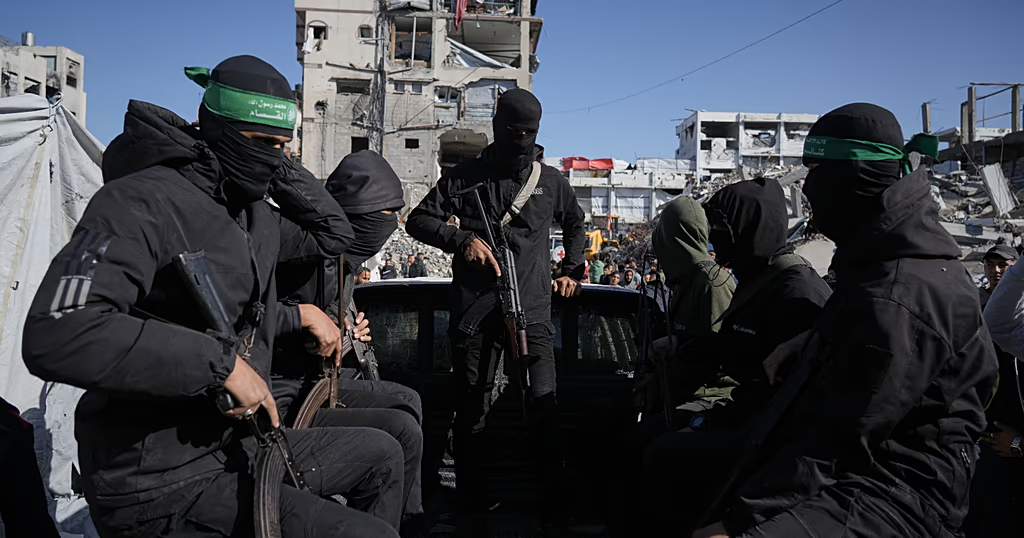
Germany’s Foreign Minister, Johann Wadephul, emphasized on Tuesday the critical importance of implementing the first phase of the ceasefire in the Gaza conflict. This phase includes the handover of all mortal remains of hostages and the continuous improvement of humanitarian aid distribution. Speaking alongside Egyptian Foreign Minister Badr Abdelatty in Berlin, Wadephul highlighted Egypt’s significant mediation efforts. He also reiterated that disarming Hamas and ending Hamas’s rule are central to achieving a better future for Gaza.
Key Points:
Actionable Takeaways:
Contextual Insights:
The article reflects the ongoing challenges and diplomatic efforts in the Gaza conflict, a region with significant implications for global security and humanitarian efforts. The emphasis on ceasefire implementation and humanitarian aid distribution aligns with current industry trends towards socially responsible travel and tourism. As the travel industry continues to evolve, there is a growing emphasis on ethical travel practices, including supporting regions in need and contributing to humanitarian causes. This article provides a forward-looking perspective on how diplomatic efforts and humanitarian aid can influence travel trends, particularly in regions with high geopolitical tensions. The insights also highlight the potential for travel startups and fintech innovations to support humanitarian efforts through travel packages that include contributions to aid distribution.
Read the Complete Article.
Get curated travel AI insights — choose the newsletters that matter to you.
ALTOUR Expands into Thailand, Strengthening Corporate Travel Network Across Southeast Asia BANGKOK, THAILAND (25 March, 2026) – ALTOUR, a leading...
Read moreDetails


Comprehensive Summarization: The article reports on recent developments concerning Iranian nationals holding residence visas in the UAE. Reports from UAE...
Read moreDetails