








No products in the cart.
- Latest
- Trending


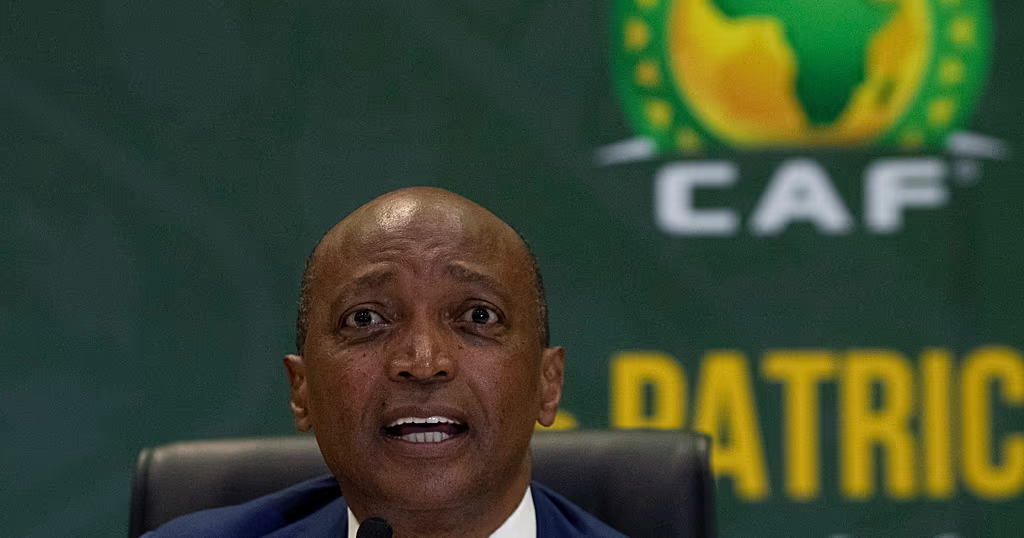
Guinea-Bissau's military junta announces National Transitional Council to oversee governing bodies
Article Summary:
Just over a week after seizing power, the military in Guinea-Bissau has established a National Transitional Council. This council will oversee transitional governing bodies and their activities, preparing the instruments of transition. The resolution published on Thursday did not specify how council members will be selected. The coup occurred three days after a closely contested presidential election, with both main contenders claiming victory. The military also plans to draft a Transitional Charter to restore constitutional legality in the country.
Key Points:
Actionable Takeaways:
Contextual Insights:
The recent coup in Guinea-Bissau highlights the ongoing challenges of political instability in certain regions, which can have far-reaching implications for international relations and economic activities, including travel and tourism. The establishment of a National Transitional Council and the drafting of a Transitional Charter are critical steps towards restoring governance and legal order. These developments underscore the importance of political stability for sustainable economic growth and the resilience of the travel industry. As the travel sector continues to evolve, staying abreast of political and governance changes in key destinations is essential for mitigating risks and capitalizing on emerging opportunities. Thought leaders in the travel industry emphasize the need for proactive risk management strategies to navigate such uncertainties effectively.
Read the Complete Article.
Get curated travel AI insights — choose the newsletters that matter to you.
ALTOUR Expands into Thailand, Strengthening Corporate Travel Network Across Southeast Asia BANGKOK, THAILAND (25 March, 2026) – ALTOUR, a leading...
Read moreDetails


Comprehensive Summarization: Dubai International Airport (DXB) is currently experiencing significant operational challenges, with 81 flights delayed and 3 flights cancelled....
Read moreDetails