




No products in the cart.
- Latest
- Trending


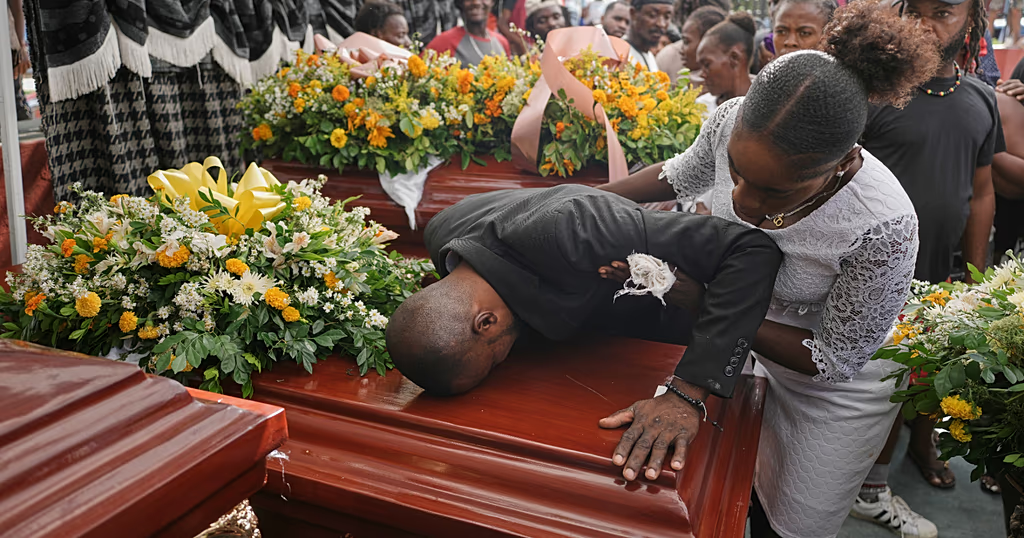
Haitian town buries its Hurricane Melissa victims
Article Summary:
Dozens of people gathered in southern Haiti to mourn those killed by Hurricane Melissa, a Category 5 storm among the strongest Atlantic storms ever recorded. The hurricane caused at least 43 deaths in Haiti, with over a dozen others still missing. Most fatalities occurred in Petit-Goave, where residents were asleep when the La Digue River began rising after midnight, leading to widespread devastation. The community’s grief was intertwined with a sense of guilt, as survivors mourned those who did not survive.
Key Points:
Actionable Takeaways:
Contextual Insights:
The article reflects the ongoing challenges faced by the travel industry in the wake of extreme weather events. Hurricane Melissa’s classification as a Category 5 storm underscores the increasing severity of hurricanes in the Atlantic, a trend that aligns with broader climate change impacts. Travel companies must adapt to these changing conditions by investing in resilient infrastructure, enhancing emergency response capabilities, and prioritizing community well-being. The integration of technology, such as real-time weather monitoring and predictive analytics, can further bolster the industry’s ability to respond effectively to such events. Furthermore, the article’s emphasis on community grief and guilt highlights the human aspect of travel disruptions, reminding stakeholders of the importance of empathy and support in recovery efforts. As the travel industry continues to evolve, these insights can guide strategic decisions aimed at enhancing safety, resilience, and community engagement in the face of natural disasters.
Read the Complete Article.
Get curated travel AI insights — choose the newsletters that matter to you.
ALTOUR Expands into Thailand, Strengthening Corporate Travel Network Across Southeast Asia BANGKOK, THAILAND (25 March, 2026) – ALTOUR, a leading...
Read moreDetails


Comprehensive Summarization: The article discusses a chauffeur service, Blacklane, which promises to "upgrade your travels" and offers "effortless travel at...
Read moreDetails