






















Travel Capitalist Ventures Expands Check Size to $10 Million to Deepen Emerging Market Conviction
Boutique Travel VC raises investment cap from $1.5M to $10M to lead rounds and support portfolio companies through growth Travel...
Read moreDetails
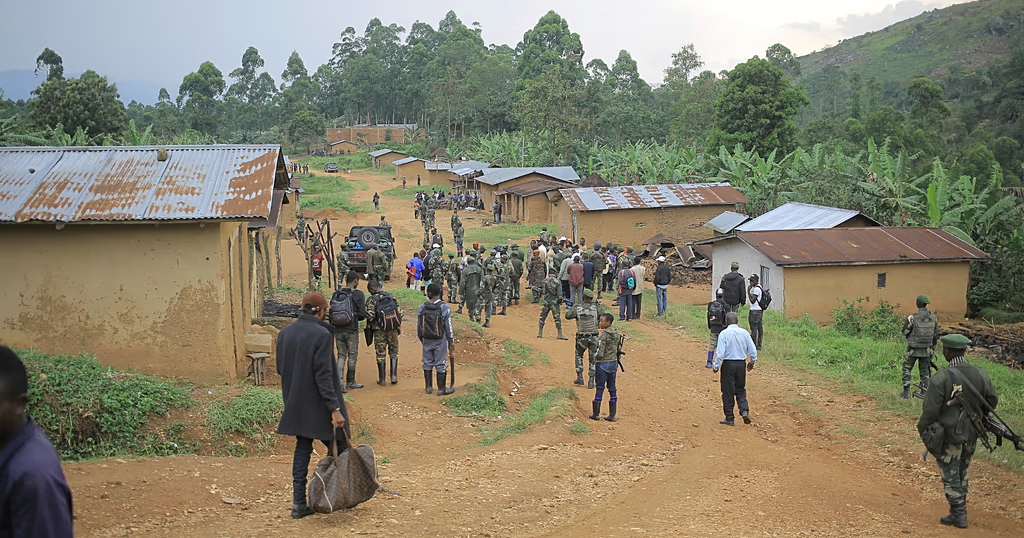
IS-linked rebels kill at least 20 in Congo village attack, army says
Comprehensive Summarization:
The article reports a tragic incident where rebels affiliated with the Islamic State group, specifically the Allied Democratic Forces (ADF), killed 66 people in eastern Democratic Republic of Congo. The attack occurred in the Irumu area, bordering Uganda, and is described as a “bloodbath” by Jean Tobie Okala, the spokesperson for the United Nations mission in Ituri. The context of the attack is set against the backdrop of potential peace talks between M23 rebels, backed by Rwanda, and the ongoing conflict in eastern Congo. The article does not delve into travel trends or insights, focusing solely on the tragic event and its implications.
Key Points:
Actionable Takeaways:
Impact on Peace Talks: The brutal attack may complicate peace negotiations between M23 rebels and the Democratic Republic of Congo, potentially delaying or undermining efforts towards a lasting resolution. This highlights the need for robust international support and intervention to ensure the safety of civilians and the success of peace initiatives.
Regional Security Concerns: The proximity of the attack to Uganda underscores the broader security challenges in the region. It emphasizes the importance of cross-border cooperation and intelligence sharing between Congo and Uganda to prevent similar incidents and maintain stability in the Great Lakes region.
Contextual Insights:
The article’s focus on a violent incident in eastern Congo provides a stark reminder of the ongoing security challenges in the region. While the article does not directly address travel trends or innovations, the context of the attack can be linked to broader industry trends such as the need for enhanced security measures in travel and tourism, particularly in regions affected by conflict. Thought leaders in the travel industry might advocate for the development of advanced security technologies and partnerships with local authorities to ensure safe travel experiences for tourists and business travelers. Additionally, the article’s timing, coinciding with potential peace talks, suggests a forward-looking perspective on the importance of stability and security in fostering sustainable travel and economic growth in the region.
Read the Complete Article.
Boutique Travel VC raises investment cap from $1.5M to $10M to lead rounds and support portfolio companies through growth Travel...
Read moreDetails



Comprehensive Summarization: Keturah Resort, currently under development in Dubai, is poised to enhance the UAE’s reputation as a wellness destination....
Read moreDetails
