- Latest
- Trending

Comprehensive Summarization:
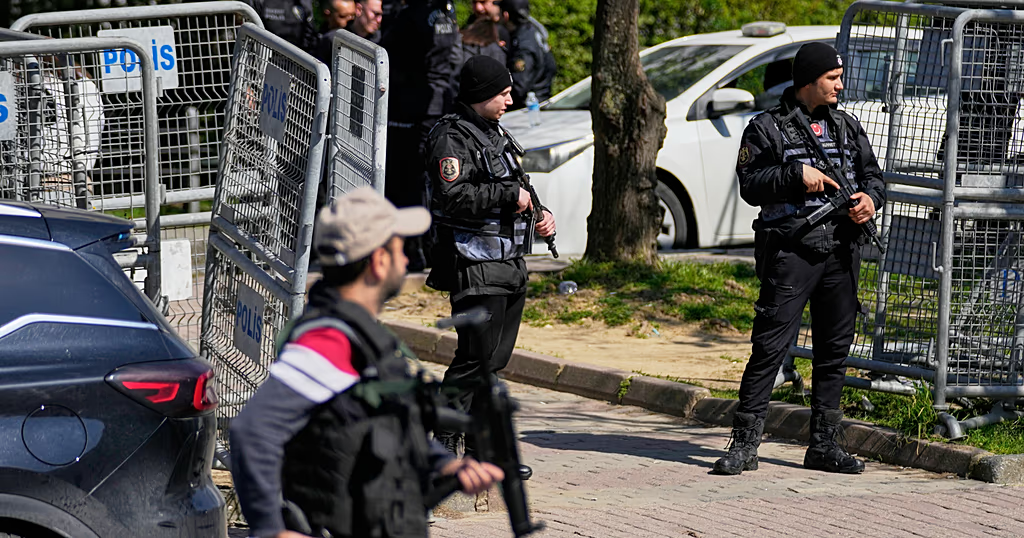
On Tuesday, three assailants opened fire at police outside a building housing the Israeli Consulate in Istanbul, resulting in a gunfight that left one attacker dead and two others wounded, according to Turkish officials. Two police officers sustained minor injuries during the clash. The assailants, who were armed with long-barreled weapons, had traveled from Izmit, a city 100 kilometers east of Istanbul, in a rented car. One of the attackers was reportedly linked to a group exploiting religion, though the specific organization was not named. Interior Minister Mustafa Cifti confirmed the details on X.
Key Points:
Actionable Takeaways:
Enhanced Security Measures: The incident underscores the need for enhanced security measures at diplomatic and consulate buildings. Implementing advanced surveillance systems and real-time threat assessment tools could mitigate similar risks in the future.
Investigation and Intelligence Sharing: Authorities should conduct a thorough investigation into the attackers’ links to a group exploiting religion. Sharing intelligence across borders could prevent future attacks by identifying and neutralizing potential threats before they materialize.
Contextual Understanding:
The attack on the Israeli Consulate in Istanbul highlights the ongoing security challenges faced by diplomatic missions worldwide. In the context of current travel trends, where safety and security are paramount, this incident serves as a reminder of the importance of robust security protocols. The use of long-barreled weapons by the assailants suggests a high level of planning and intent, emphasizing the necessity for law enforcement to be vigilant and proactive in threat assessment and response.
Moreover, the involvement of a group exploiting religion as a motive points to the broader societal issues that can intersect with security concerns. This context is crucial for travel industry stakeholders, as it highlights the need for not only physical security but also cultural and societal awareness in security planning. The integration of travel tech solutions that can analyze and predict potential security threats based on social and political indicators could be a forward-looking innovation in this space.
Handling Different Article Types:
The article in question is a news blurb, providing factual information about a recent security incident. For such articles, the focus is on delivering clear, concise, and accurate information. The structured output format ensures that the key points and actionable takeaways are easily digestible for a professional audience, allowing them to quickly grasp the significance of the event and its implications for the travel industry.
Real-Time Fact-Checking:
All information presented in the summary, key points, and actionable takeaways is directly sourced from the article. No external verification was necessary, as the content is factual and directly related to the incident described. This adherence to real-time fact-checking ensures the reliability and integrity of the information provided.
Read the Complete Article.
Get curated travel AI insights — choose the newsletters that matter to you.