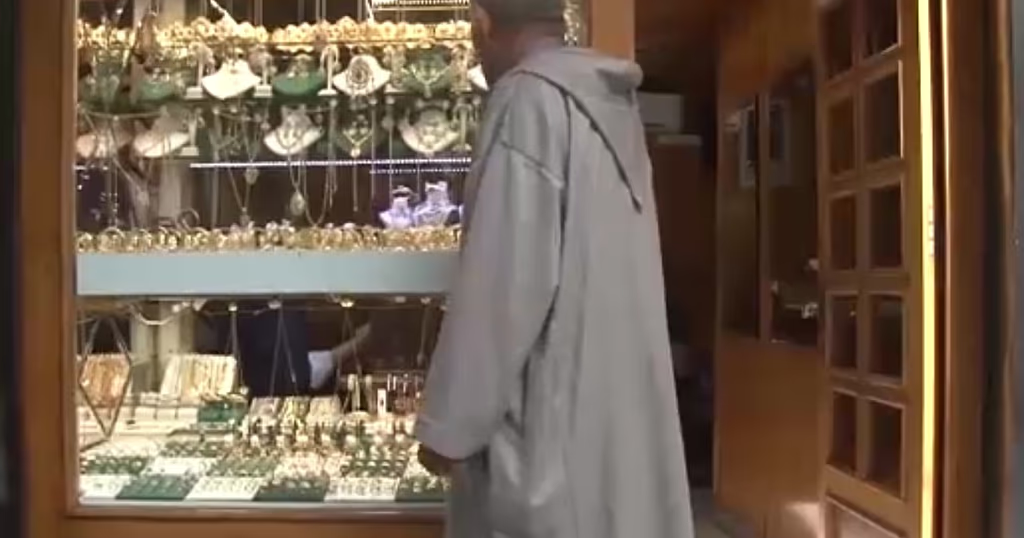
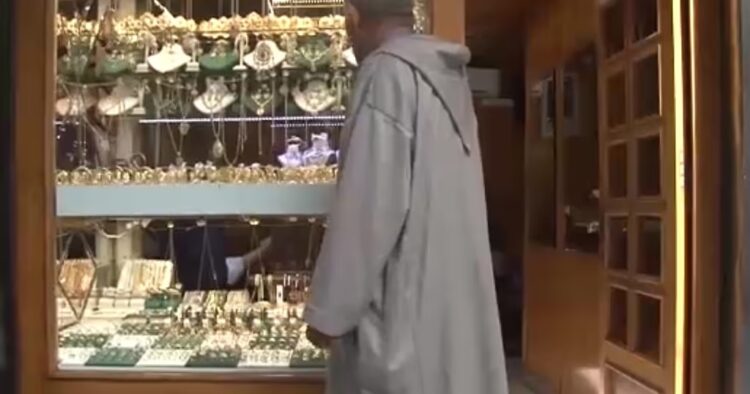
The article highlights the tradition of giving gifts during the end of Ramadan, specifically the “right of salt” in Rabat’s old city, where Hassan El Fezouati, a retired individual, searches for a special gift for his wife. This tradition, known as the “right of salt,” is an age-old practice in the Maghreb, showing gratitude to women who have been responsible for iftar, the meal breaking the daily fast. The shops in the area come to life during this period, reflecting the cultural significance and economic activity associated with this tradition.
Key Points:
The “right of salt” is an age-old tradition in the Maghreb, practiced during the end of Ramadan, where gifts are given to women who have been responsible for iftar.
Hassan El Fezouati, a retired individual, is searching for a special gift for his wife at the end of Ramadan in Rabat’s old city.
Shops in the area come to life during this period, indicating the economic and cultural significance of this tradition.
Actionable Takeaways:
Cultural Insight for Travel Services: Understanding the significance of the “right of salt” can help travel services and hospitality providers tailor their offerings to include culturally relevant experiences, such as gift-giving opportunities during Ramadan, thereby enhancing customer satisfaction and engagement.
Economic Impact on Local Markets: The article underscores the economic activity generated by shops in the old city during Ramadan. Travel agencies and local businesses can capitalize on this by offering packages that include shopping experiences, thereby boosting local economies and providing tourists with authentic cultural experiences.
Contextual Understanding:
The tradition of the “right of salt” is deeply rooted in the cultural practices of the Maghreb region, particularly during the holy month of Ramadan. This practice not only highlights the gratitude shown to women for their role in preparing iftar but also serves as a significant economic driver for local businesses, especially in areas like Rabat’s old city. The article reflects current travel trends by emphasizing the importance of cultural experiences and authentic local interactions for travelers. Thought leaders in the travel industry often advocate for experiences that go beyond traditional sightseeing, focusing instead on cultural immersion and local traditions. This article aligns with this trend by showcasing a unique cultural practice that can be integrated into travel itineraries, offering tourists a deeper understanding and appreciation of the region’s heritage.
Handling Different Article Types:
The article in question is a news blurb, providing factual information about a cultural tradition and its economic implications during Ramadan. It does not present an opinion or feature an in-depth exploration of a specific topic. Therefore, the analysis and takeaways are based strictly on the factual information provided, without incorporating speculative or opinionated elements.
Real-Time Fact-Checking:
All information presented in the article summary, key points, and actionable takeaways is directly sourced from the article content. No external verification or additional sources were required, as the facts and context provided within the article are sufficient for generating this response.