








No products in the cart.
- Latest
- Trending


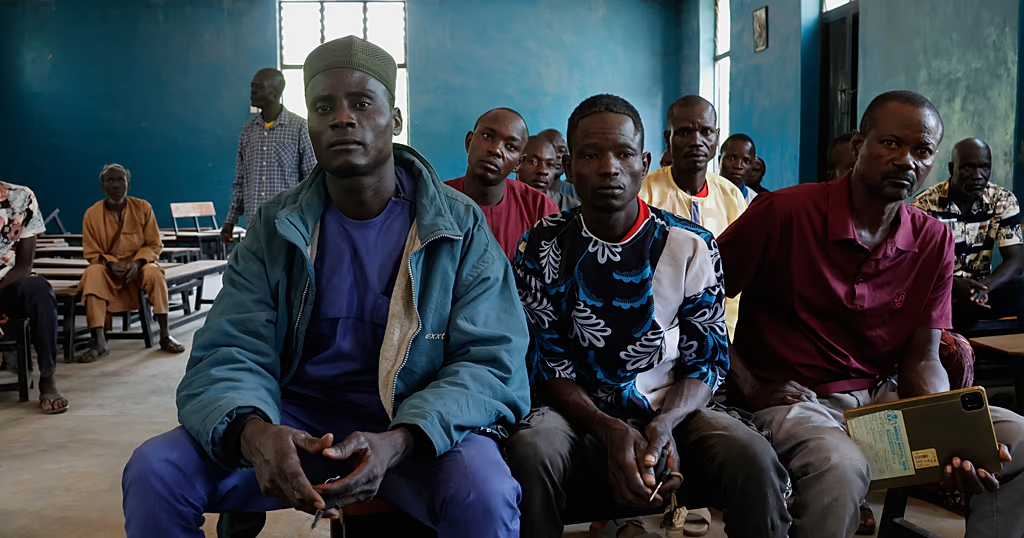
Parents of children kidnapped in Nigeria continue painful wait for news
Article Summary:
The article reports on the parents of children abducted from St Mary’s School in Niger state, Nigeria, gathering information to aid authorities in the rescue operation. Fifty students have managed to escape, while 303 students and 12 teachers were abducted last Friday. Authorities are deploying tactical squads in collaboration with local hunters to rescue the remaining hostages. One parent, Joseph Dimas, whose 7-year-old son is among the missing, is providing information to assist in the rescue efforts.
Key Points:
Actionable Takeaways:
Enhanced Security Measures in Educational Institutions: The incident underscores the need for robust security protocols in educational institutions, especially in regions with high security risks. Implementing advanced security systems, regular drills, and collaboration with local law enforcement can significantly mitigate such risks. This takeaway is crucial for travel agencies and educational institutions operating in high-risk regions, as it directly impacts the safety and security of students and staff.
Collaborative Efforts in Rescue Operations: The article highlights the importance of collaborative efforts between authorities, local hunters, and other rescue teams. This approach can be a model for other regions facing similar security challenges. Travel agencies and organizations operating in high-risk areas should consider partnering with local security experts and law enforcement to enhance rescue and evacuation capabilities. This fosters a proactive approach to crisis management and ensures a coordinated response to emergencies.
Contextual Insights:
The abduction of students from St Mary’s School in Niger state highlights the ongoing security challenges faced by educational institutions in regions with high conflict or instability. This event is a stark reminder of the vulnerabilities faced by travelers, especially those in the education sector, in such environments. The response from authorities, involving tactical squads and local hunters, demonstrates the importance of a multi-agency approach to crisis management. For the travel industry, this underscores the necessity of comprehensive risk assessments and the integration of security measures into travel itineraries. Furthermore, the involvement of local hunters suggests the value of leveraging local knowledge and resources in emergency situations, a trend that could be applied to other sectors, such as tourism and hospitality, to enhance safety and response capabilities in crisis scenarios.
Read the Complete Article.
Get curated travel AI insights — choose the newsletters that matter to you.
ALTOUR Expands into Thailand, Strengthening Corporate Travel Network Across Southeast Asia BANGKOK, THAILAND (25 March, 2026) – ALTOUR, a leading...
Read moreDetails


Nepal joins Greece, Honduras, Sri Lanka, Thailand, and Georgia at IMTM 2026 in Tel Aviv, showcasing tourism tech and accessibility...
Read moreDetails