Comprehensive Summarization:
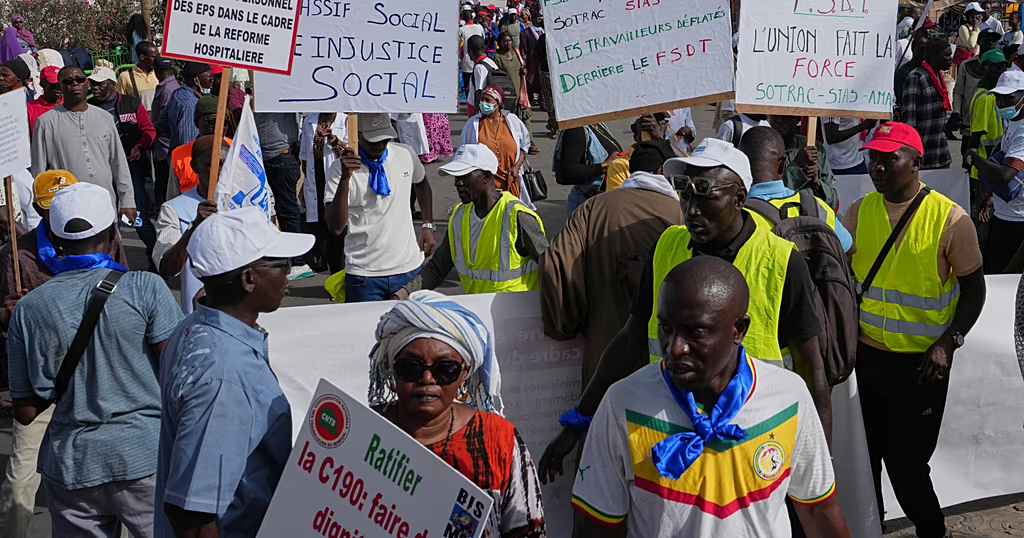
The article reports on a significant protest in Senegal’s capital, Dakar, where hundreds of workers, union members, and opposition supporters marched to voice their discontent over broken government promises and a worsening cost-of-living crisis. The protest was organized by the country’s main labor unions and the opposition coalition, Front for the Defense of Democracy and the Republic (FDR). Mody Guiro, secretary-general of the National Confederation of Senegalese Workers, highlighted that the government had broken a previous deal that had frozen strikes in exchange for promises of better wages and working conditions. The article underscores the severe economic challenges Senegal is facing, including a severe debt crisis, which is exacerbating the living conditions of its citizens.
Key Points:
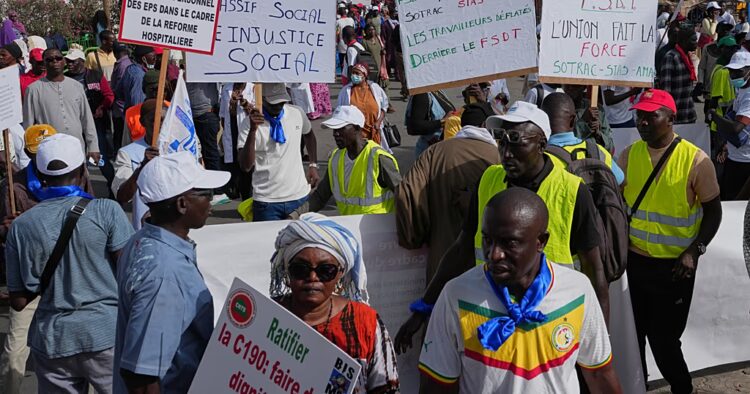
- Hundreds of workers and opposition supporters marched in Dakar to protest broken government promises and worsening cost-of-living conditions.
- The protest was organized by Senegal’s main labor unions and the opposition coalition, FDR.
- Mody Guiro, secretary-general of the National Confederation of Senegalese Workers, stated that the government had betrayed a previous deal regarding strikes, wages, and working conditions.
- Senegal is grappling with a severe debt crisis, which is contributing to the economic hardships faced by its citizens.
Actionable Takeaways:
-
Economic Policy Review: Governments in countries facing severe debt crises should review and possibly renegotiate labor agreements to ensure they align with the economic realities and living conditions of their citizens. This could help in stabilizing the workforce and reducing protests, as seen in Senegal.
-
Investment in Social Welfare: Countries with high debt and cost-of-living issues should prioritize investments in social welfare programs to improve the quality of life for their citizens. This could include better wages, working conditions, and other support measures, as highlighted by the labor unions in Senegal.
Contextual Understanding:
The article reflects the current economic challenges faced by Senegal, particularly its severe debt crisis, which is impacting the cost of living and the overall well-being of its citizens. The protest highlights the growing discontent among the workforce due to broken promises regarding wages and working conditions. This situation is not unique to Senegal; many countries are grappling with similar economic issues, leading to increased labor unrest and calls for policy reforms. From a travel industry perspective, such economic instability can affect tourism, as potential visitors may be deterred by concerns over safety, economic conditions, and the overall quality of life in the destination. Understanding these broader economic contexts is crucial for travel professionals to anticipate and mitigate potential impacts on travel trends and consumer behavior.
Handling Different Article Types:
The article in question is a news blurb, providing factual information about a protest in Senegal and its economic context. For such articles, the focus should be on delivering concise, factual summaries, extracting key points directly from the text, and providing actionable insights that are directly relevant to the presented facts. This approach ensures that the content remains accurate, actionable, and aligned with the professional audience’s needs.
Read the Complete Article.