






















Travel Capitalist Ventures Expands Check Size to $10 Million to Deepen Emerging Market Conviction
Boutique Travel VC raises investment cap from $1.5M to $10M to lead rounds and support portfolio companies through growth Travel...
Read moreDetails
South Africa still battling FMD in cattle, mass vaccination campaign launched
Comprehensive Summarization:
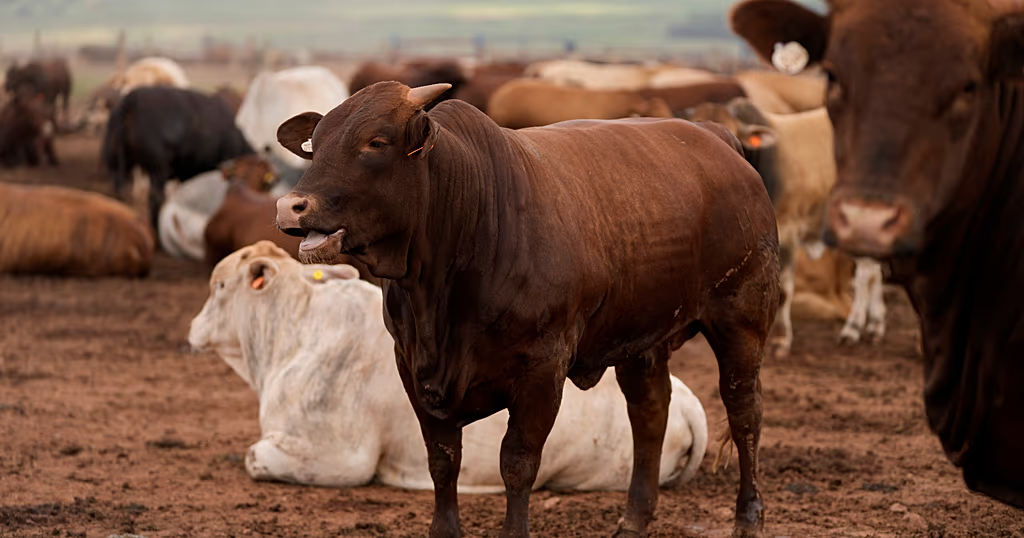
South Africa has initiated a large-scale vaccination program for cattle to combat a severe outbreak of foot-and-mouth disease, which has rapidly spread across the country’s livestock industry. As of the article’s publication, over 297,000 cattle have been affected, leading to the culling of more than 120,000 animals to prevent further spread. This outbreak poses significant risks, including potential meat shortages, job losses, and millions in revenue losses, as countries like China and Zambia have already banned South African meat exports. The situation underscores the critical importance of disease control in maintaining the stability of the livestock industry and the broader economy.
Key Points:
Actionable Takeaways:
Enhanced Biosecurity Measures: Implementing stricter biosecurity protocols in livestock farms can help prevent the spread of diseases like foot-and-mouth. This includes quarantine measures for affected areas and enhanced monitoring systems to detect outbreaks early.
Diversification of Markets: Countries and businesses should explore diversifying their markets to reduce dependency on single export markets. This strategy can mitigate the economic impact of trade bans and ensure more stable revenue streams.
Investment in Disease Control Technologies: Investing in advanced disease control technologies, such as rapid diagnostic tests and more effective vaccines, can improve the speed and efficiency of outbreak responses. This not only helps in controlling the spread of diseases but also reduces economic losses.
Contextual Understanding:
The article reflects the ongoing challenges faced by the livestock industry in South Africa due to the foot-and-mouth disease outbreak. The rapid spread of the disease and the subsequent international trade bans highlight the interconnectedness of global markets and the potential economic repercussions of such outbreaks. The emphasis on vaccination as a control measure underscores the importance of proactive public health measures in agriculture. From a travel industry perspective, the article also serves as a reminder of the broader economic implications of health crises, which can indirectly affect travel and tourism sectors through supply chain disruptions and reduced consumer confidence.
Handling Different Article Types:
The article in question is a news brief, providing factual information about a significant event in the livestock industry. The structured approach ensures that the summary, key points, and actionable takeaways are directly derived from the article’s content, maintaining factual accuracy and relevance. For other types of articles, such as opinion pieces or feature articles, the same structured approach would be applied, ensuring that insights are grounded in the provided facts and context.
Read the Complete Article.
Boutique Travel VC raises investment cap from $1.5M to $10M to lead rounds and support portfolio companies through growth Travel...
Read moreDetails



Comprehensive Summarization: Uber has announced its acquisition of Blacklane, a Berlin-based global chauffeur service platform, in a deal expected to...
Read moreDetails
