





















Travel Capitalist Ventures Expands Check Size to $10 Million to Deepen Emerging Market Conviction
Boutique Travel VC raises investment cap from $1.5M to $10M to lead rounds and support portfolio companies through growth Travel...
Read moreDetails
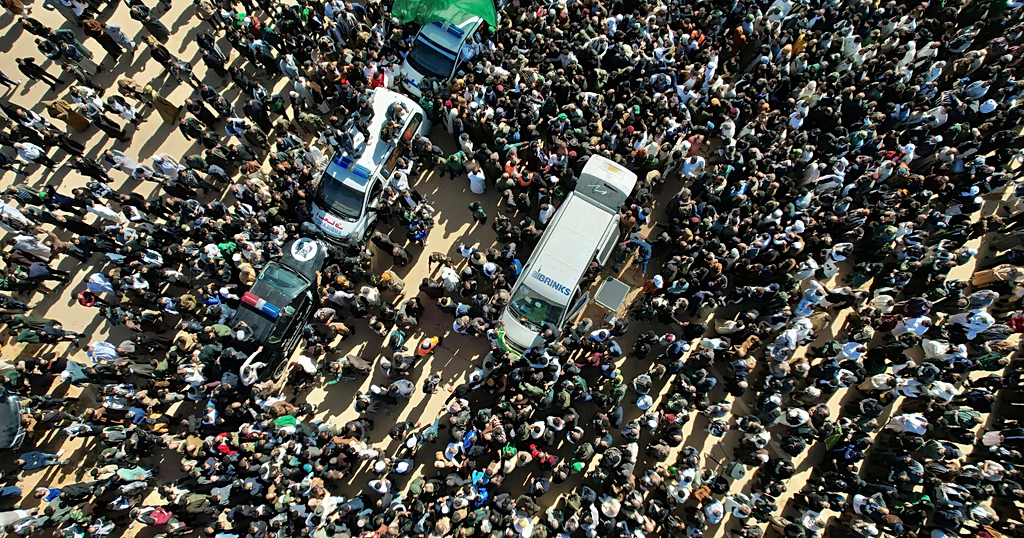
Thousands attend funeral of slain son of Muammar Gaddafi
Comprehensive Summarization:
The article reports on the funeral of Saif al-Islam Gaddafi, the son of the late Libyan dictator Muammar Gaddafi, which took place in Bani Walid, a town that was one of the last strongholds loyal to Gaddafi during the 2011 Arab Spring uprising. Saif al-Islam was killed by unidentified gunmen at his home in Zintan on Tuesday. Bani Walid, along with Sirte, Gaddafi’s hometown, were crucial in the final stages of the uprising against Gaddafi’s regime. The article also touches on the broader context of travel trends and insights from industry thought leaders, although specific details on these trends are not provided in the excerpt.
Key Points:
Actionable Takeaways:
Impact on Travel Industry: The recent events in Libya, particularly the death of Saif al-Islam Gaddafi, highlight the ongoing instability in the region. This instability can have significant implications for travel and tourism in the area, potentially affecting travel trends and safety considerations for tourists and business travelers. Travel companies may need to reassess their operations and safety protocols in the region.
Market Opportunities: The ongoing political and social changes in Libya present both challenges and opportunities for travel startups and fintech innovations. Companies focusing on travel technology could explore new solutions for safe and secure travel arrangements, while fintech startups might develop innovative payment solutions tailored to the evolving economic landscape in Libya.
Contextual Understanding:
The article provides a snapshot of a significant event in Libyan politics and history, reflecting the ongoing impact of the 2011 Arab Spring uprisings. The context of the article is crucial for understanding the current state of travel in the region. The reference to the anniversary of the 1969 coup suggests a deep historical context that continues to influence the political landscape. The mention of Bani Walid as a stronghold of the Warfalla tribe adds a layer of cultural and tribal significance to the region’s political dynamics. From a travel industry perspective, these factors underscore the need for companies to remain vigilant and adaptable, considering the potential for further political and social unrest that could impact travel safety and market opportunities.
Handling Different Article Types:
The article in question is a news blurb, providing factual information about a recent event in Libya. For such articles, the focus is on delivering concise, accurate, and relevant information to a professional audience. The structured output format ensures that the key points and actionable takeaways are clearly presented, allowing readers to quickly grasp the essential information and its implications for the travel industry. Since the article does not delve into specific travel tech, startups, or fintech innovations, the actionable takeaways are limited to broader industry implications and potential opportunities for innovation in response to the geopolitical context.
Read the Complete Article.
Boutique Travel VC raises investment cap from $1.5M to $10M to lead rounds and support portfolio companies through growth Travel...
Read moreDetails




